Looking for a pesto recipe with no nuts that delivers the same bright, herbaceous punch as the classic? This nut-free pesto swaps traditional pine nuts for seeds, creating a creamy, vibrant sauce that works beautifully on pasta, vegetables, and sandwiches.
Whether you have a nut allergy, simply prefer to avoid them, or just want to try something different, this recipe proves that amazing pesto doesn’t need nuts to shine. Let’s explore how to make it.
Why You’ll Love This Recipe
This pesto recipe with no nuts delivers everything you want from pesto: rich texture, bold basil flavor, and incredible versatility, without any tree nuts.
- Naturally nut-free and safe for those with allergies or sensitivities.
- Ready in under 10 minutes with just a food processor.
- Packed with fresh basil, garlic, and quality olive oil for authentic flavor.
- Works on pasta, bruschetta, soups, grilled meats, and so much more.
- Keeps well in the fridge for quick meals throughout the week.
My Experience Making This Recipe
I developed this recipe years ago when a friend with a severe nut allergy came to dinner and I refused to serve store-bought pesto. The moment I tasted the first batch, I realized I’d been missing out.
The sunflower seeds create a creamier texture than I expected, and the garlic and lemon brighten everything without overpowering the basil. My family now requests this version even when nuts aren’t a concern.
What surprised me most was how quickly it comes together. I went from deciding to make it to having it ready for fresh pasta in about eight minutes total.
Recipe Overview
- Recipe Name: Pesto Recipe No Nuts
- Servings: Makes about 1 cup
- Prep Time: 5 minutes
- Cook Time: 0 minutes
- Total Time: 5 minutes
- Course: Sauce
- Cuisine: Italian
- Calories per Serving: 180 (per 2 tablespoons)
Equipment You Will Need
- Food processor
- Measuring cups and spoons
- Cutting board and knife
- Rubber spatula
- Glass jar for storage
Ingredients for Pesto Recipe No Nuts
- 2 cups fresh basil leaves, loosely packed
- 1/2 cup sunflower seeds, raw or lightly roasted
- 3 cloves garlic, peeled
- 1/2 cup extra virgin olive oil
- 1/2 cup freshly grated Parmesan cheese
- 2 tablespoons fresh lemon juice
- 1/2 teaspoon sea salt
- 1/4 teaspoon black pepper
Ingredient Notes and Substitutions
- Sunflower Seeds: These provide the creamy body that nuts traditionally offer. Raw seeds will blend smoother than roasted, though roasted adds deeper flavor. If you can’t find sunflower seeds, pumpkin seeds work equally well with a slightly earthier taste.
- Fresh Basil: Use only fresh basil for authentic pesto flavor. Dried basil becomes bitter when blended raw. If fresh basil is unavailable, fresh mint or a mix of basil and parsley can substitute, though the flavor profile shifts noticeably.
- Extra Virgin Olive Oil: This is where quality matters. Use a fruity, cold-pressed oil you actually enjoy eating. Refined or light olive oil tastes flat and thin by comparison.
- Parmesan Cheese: Buy a block and grate it yourself for the best melting and texture. Pre-grated versions contain anti-caking agents that prevent smooth blending.
- Lemon Juice: Fresh lemon juice is non-negotiable. Bottled juice tastes chemical and mutes the basil. If lemons are unavailable, white wine vinegar works in a pinch at half the quantity.
How to Make Pesto Recipe No Nuts
Step 1: Measure and Prepare Your Basil
Measure two cups of fresh basil leaves and gently pat them dry with paper towels. Moisture on the leaves will make the pesto watery and dilute the flavor.
Step 2: Toast the Sunflower Seeds
If using raw sunflower seeds, warm them in a dry skillet over medium heat for 2 to 3 minutes, stirring frequently, until fragrant and lightly golden. Toasting brings out their natural nutty sweetness and deepens the flavor.
Step 3: Add Seeds and Garlic to Food Processor
Place the toasted sunflower seeds and three peeled garlic cloves into your food processor. Pulse for about 30 seconds until the mixture resembles coarse breadcrumbs, breaking down the seeds enough to release their oils without turning them into paste.
Step 4: Add Basil in Batches
Add the basil in two batches, pulsing between additions to prevent the leaves from overheating or bruising. You want to blend just until the basil is roughly chopped and begins to break down, which takes about 10 to 15 pulses per batch.
Step 5: Pour in Half the Olive Oil
Drizzle in half of your olive oil while pulsing gently. The oil helps the blender move everything around and prevents the mixture from sticking to the sides.
Step 6: Add Cheese, Lemon Juice, and Seasoning
Add the grated Parmesan cheese, lemon juice, salt, and pepper to the food processor. Pulse for about 10 seconds to combine without overblending, which would turn the cheese gummy.
Step 7: Stream in Remaining Oil
With the food processor running on low speed, slowly drizzle in the remaining olive oil. This final addition creates a smooth, creamy texture while preventing the pesto from becoming too thick or breaking.
Step 8: Taste and Adjust
Transfer the pesto to a small bowl and taste it. Add extra salt, lemon juice, or pepper to match your preference, then pulse once or twice to blend any final adjustments.
Pro Tip: Don’t over-blend your pesto. A little texture makes it taste fresher and prevents the oils from separating, which happens when you overwork the mixture and generate heat.
Tips for the Best Pesto Recipe No Nuts
- Use a food processor rather than a blender, which tends to over-blend and warm the pesto. A mortar and pestle works too if you’re patient.
- Chill your ingredients for a few minutes before blending to keep the basil bright green and prevent browning.
- Taste as you go. Parmesan saltiness varies by brand, so you may need less salt than the recipe specifies.
- If the pesto seems too thick, thin it with an extra tablespoon of olive oil at a time rather than more lemon juice, which can overpower the basil.
- Make pesto just before serving when possible for the brightest flavor, though it keeps well for several days in the fridge.
- Reserve some whole basil leaves and a sprinkle of seeds to stir in at the very end for visual appeal and texture contrast.
Common Mistakes to Avoid
- Using dried basil or old basil that’s been sitting in the fridge for weeks will result in dull, bitter flavor. Fresh basil is the star here, so don’t compromise.
- Skipping the toasting step on raw seeds leaves them bland and gritty. Two minutes in a hot pan makes all the difference in flavor and texture.
- Blending the pesto too much breaks down the seeds and oils, creating a separated, greasy mess instead of a creamy sauce. Pulse gently and stop when everything is just combined.
- Using low-quality olive oil or refined vegetable oil creates a thin, flavorless pesto that tastes nothing like the real thing. Invest in good olive oil here.
- Adding the lemon juice too early or in too large amounts can cause the basil to turn brown and bitter. Add it near the end and use a light hand.
Serving Suggestions
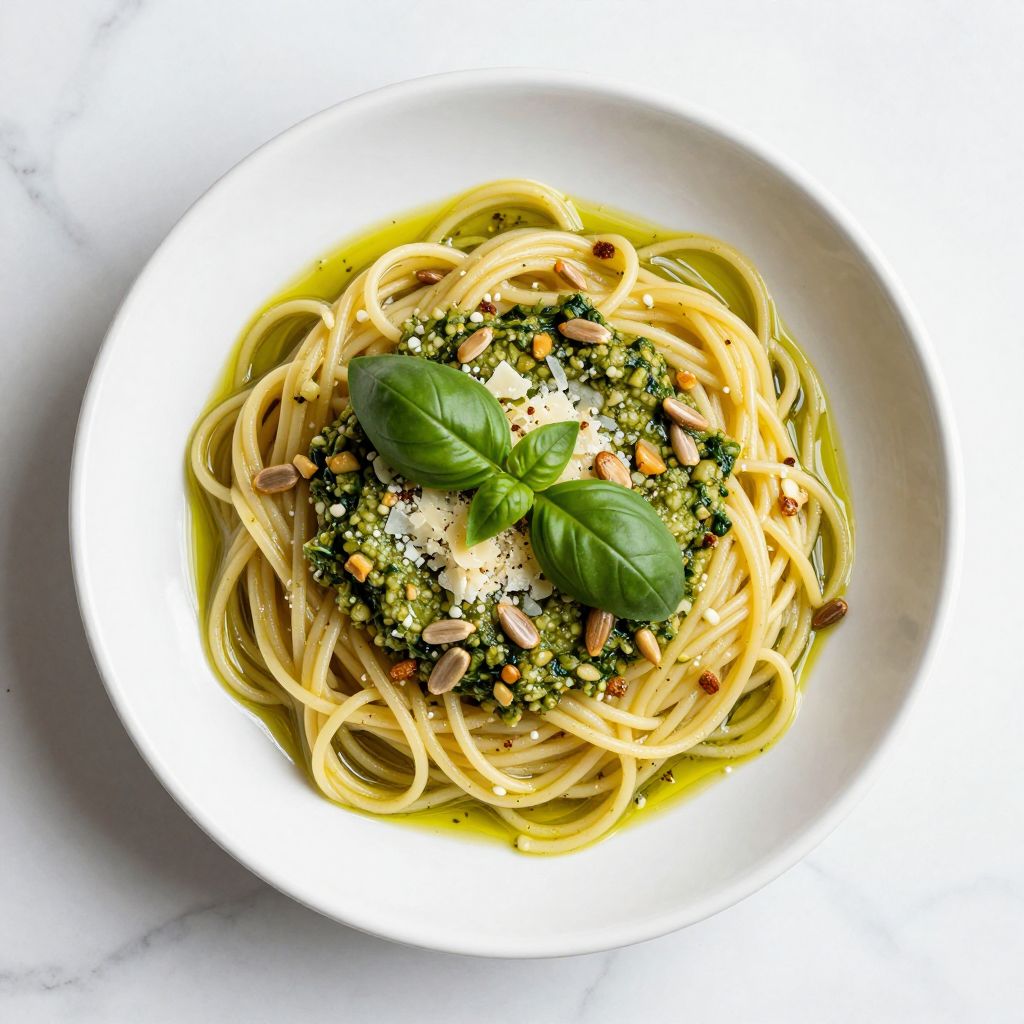
This nut-free pesto deserves to be used liberally. Toss it with warm pasta for a complete meal, or spread it onto grilled bread, fish, and vegetables for instant flavor.
- Toss with hot pasta and a splash of pasta water for a simple dinner.
- Spread on grilled bread, then top with fresh tomatoes and mozzarella.
- Dollop onto creamy soups like tomato bisque or butternut squash for herbal brightness.
- Mix into mayonnaise or Greek yogurt for a sandwich spread with serious flavor.
- Brush onto grilled chicken, fish, or vegetables just before serving.
Variations to Try
- Arugula Pesto: Replace half the basil with peppery arugula for a sharper, more assertive flavor that pairs beautifully with beef or aged cheeses.
- Mint and Basil Pesto: Swap one cup of basil for fresh mint for a lighter, more refreshing version perfect for summer pasta or grain bowls.
- Roasted Red Pepper Pesto: Add one roasted red pepper and reduce the basil to 1.5 cups for a sweeter, slightly smoky variation that pairs well with white beans or grilled vegetables.
- Herb Garden Pesto: Mix basil with fresh parsley, oregano, and thyme for a more complex herbal profile that works on everything from soups to roasted meats.
- Spicy Seed Pesto: Add one-quarter teaspoon of red pepper flakes and substitute half the sunflower seeds with pumpkin seeds for extra depth and gentle heat.
Dietary Adaptations
- Gluten-Free: This recipe is naturally gluten-free as written. Simply confirm your Parmesan comes from a gluten-free facility if needed.
- Dairy-Free: Replace the Parmesan with nutritional yeast at the same amount. The flavor shifts slightly earthier, but the creaminess remains intact.
- Vegan: Use nutritional yeast instead of Parmesan and confirm your olive oil is vegan-certified. The pesto tastes just as vibrant.
- Low-Carb or Keto: This recipe fits both diets perfectly as is, with only about four grams of carbs per two-tablespoon serving, making it ideal for keto pasta alternatives or veggie dips.
Storage and Reheating
Refrigerator
Store pesto in an airtight glass container with a thin layer of olive oil on top to prevent browning. It keeps for up to five days.
- Keep the container in the coldest part of your fridge, away from the door where temperature fluctuates.
- Stir gently before using if any oil has separated.
Freezer
Pesto freezes beautifully for up to three months. Freeze it in ice cube trays first, then transfer the frozen cubes to a freezer bag for easy portioning.
- Each cube equals about one tablespoon, perfect for thawing exactly what you need.
- Thaw at room temperature for 20 minutes before using, or add straight to hot pasta.
Reheating
Never heat pesto on the stove, which damages the basil and separates the oils. Instead, stir it into hot pasta off the heat, or thaw it gently at room temperature.
- If serving cold, simply take it straight from the fridge and use it within an hour.
- For pasta, add pesto to cooked, drained pasta and stir gently with reserved pasta water to loosen it.
Nutrition Information
| Nutrient | Amount |
|---|---|
| Calories | 180 |
| Total Fat | 18g |
| Saturated Fat | 3g |
| Carbohydrates | 4g |
| Fiber | 1g |
| Sugar | 0g |
| Protein | 6g |
| Sodium | 280mg |
| Cholesterol | 4mg |
Nutritional values are based on one serving calculated as two tablespoons of finished pesto. Values may vary slightly depending on specific ingredient brands and preparation methods.
Frequently Asked Questions
Can I use pumpkin seeds instead of sunflower seeds?
Yes, absolutely. Pumpkin seeds create a slightly earthier, richer flavor and work beautifully in this pesto. Use the same amount and toast them the same way.
How do I prevent my pesto from turning brown?
Keep basil cool before blending, avoid over-processing, and store finished pesto with a thin layer of olive oil on top to prevent air exposure. Lemon juice also helps slow oxidation.
Can I make this pesto ahead of time?
Yes, it keeps refrigerated for up to five days in an airtight container. For longer storage, freeze it in ice cube trays and thaw as needed.
What if my pesto is too thick?
Thin it gradually with extra virgin olive oil, adding just one tablespoon at a time and stirring between additions. Avoid adding more lemon juice, which can overpower the basil.
Is this pesto really as creamy as nut-based versions?
Yes, toasted sunflower seeds release natural oils that create the same rich, creamy texture as pine nuts or walnuts. Many people find it even smoother.
Can I use frozen basil?
Frozen basil becomes mushy and loses its bright color and fresh flavor. Stick with fresh basil for the best results, or use fresh herb substitutes if basil isn’t available.
Final Thoughts
This pesto recipe with no nuts proves that you don’t need tree nuts to make incredible pesto. Sunflower seeds deliver the creamy richness you expect while keeping the recipe friendly to those with allergies, all while tasting absolutely delicious.
Make a batch this week and toss it with your favorite pasta, spread it on grilled bread, or stir it into soup. Once you taste how quick and vibrant it is, you’ll find yourself reaching for it constantly.
Pesto Recipe No Nuts
Ingredients
Equipment
Method
- Measure two cups of fresh basil leaves and gently pat them dry with paper towels to remove any moisture.
- If using raw sunflower seeds, warm them in a dry skillet over medium heat for 2 to 3 minutes, stirring frequently, until fragrant and lightly golden.
- Place the toasted sunflower seeds and three peeled garlic cloves into the food processor. Pulse for about 30 seconds until the mixture resembles coarse breadcrumbs.
- Add the basil in two batches, pulsing between additions about 10 to 15 times per batch until the basil is roughly chopped and begins to break down.
- Drizzle in half of the olive oil while pulsing gently to help the mixture blend and prevent sticking.
- Add the grated Parmesan cheese, fresh lemon juice, sea salt, and black pepper to the food processor. Pulse for about 10 seconds to combine without overblending.
- With the food processor running on low speed, slowly drizzle in the remaining olive oil to create a smooth, creamy texture.
- Transfer the pesto to a small bowl and taste it. Adjust salt, lemon juice, or pepper as desired, then pulse once or twice to blend any final adjustments.