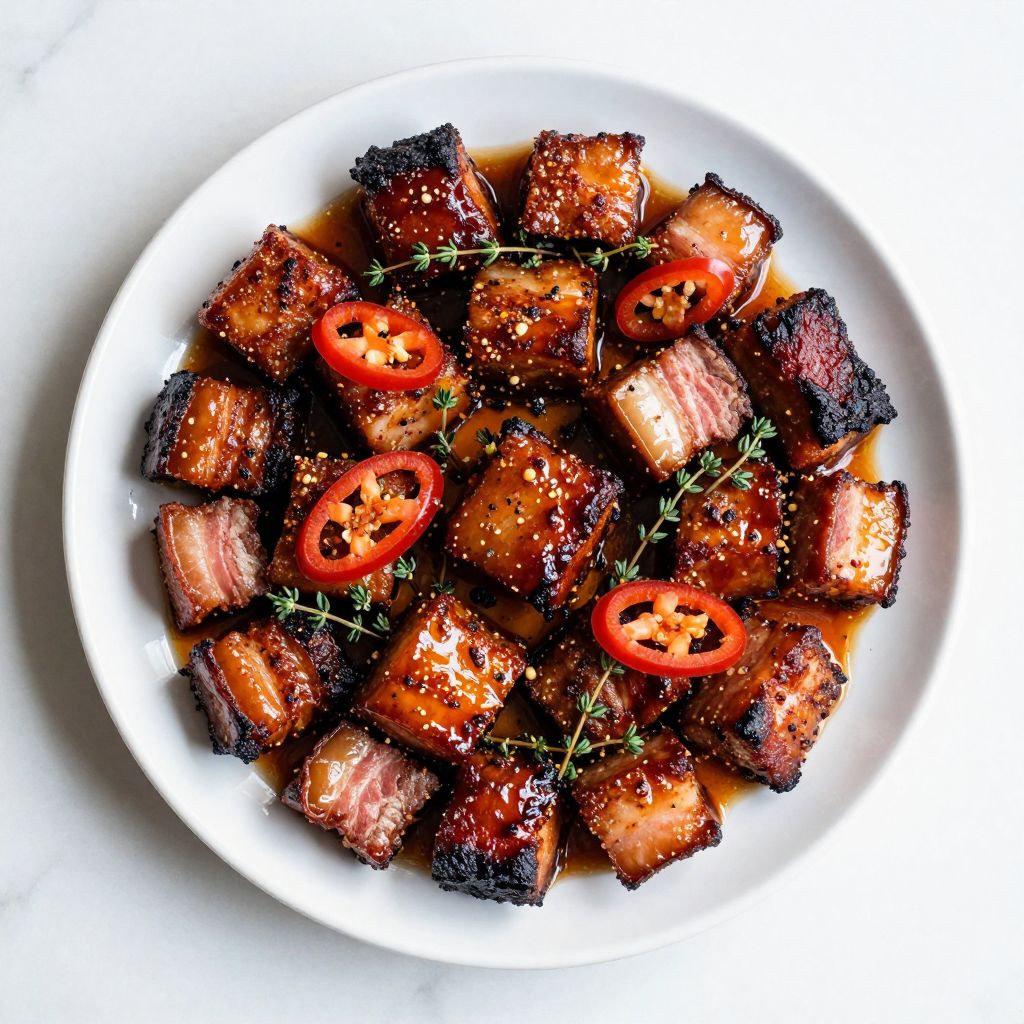
Pork belly burnt ends oven recipe delivers smoky, caramelized exterior with juicy, tender meat inside, all without a smoker. These sticky, glazed cubes transform humble pork belly into a show-stopping appetizer or main course that tastes like it came from a pitmaster’s kitchen.
If you’ve craved burnt ends but lack outdoor smoking equipment, this oven method works beautifully and produces results just as impressive. Keep reading to learn exactly how to nail this recipe in your home kitchen.
Why You’ll Love This Recipe
This dish combines the best of barbecue flavor with real convenience and accessibility. You get restaurant-quality results without special equipment or hours of babysitting a smoker.
- Crispy, caramelized edges with melt-in-the-mouth tender interiors
- Bold, smoky, slightly sweet flavor profile that impresses everyone
- Works entirely in a standard home oven with no special gear needed
- Makes an excellent appetizer for parties or a hearty main course
- Leftovers reheat beautifully and taste just as good the next day
My Experience Making This Recipe
The first time I made pork belly burnt ends in my oven, I was skeptical that I could replicate that authentic smoky bark without a smoker. When I pulled the pan out after the final glaze stage, the aroma alone converted me into a believer.
My family devoured the entire batch in under twenty minutes, which rarely happens with any appetizer I make. The combination of crispy exteriors and buttery centers had everyone asking for the recipe before they’d even finished chewing.
Since that first batch, I’ve made these at least a dozen times for potlucks and dinner parties, and they never fail to be the star of the table. People genuinely cannot believe they came from a home oven rather than a professional smoker.
Recipe Overview
- Recipe Name: Pork Belly Burnt Ends Oven Recipe
- Servings: 6 to 8 people
- Prep Time: 20 minutes
- Cook Time: 3 hours
- Total Time: 3 hours 20 minutes
- Course: Appetizer or Main Course
- Cuisine: American Barbecue
- Calories per Serving: 520 calories
Equipment You Will Need
- Sharp chef’s knife for cutting the pork belly
- Large cutting board
- 9×13 inch baking pan or roasting pan
- Meat thermometer or instant-read thermometer
- Aluminum foil for tenting
- Small saucepan for warming the glaze
- Silicone basting brush or pastry brush
- Paper towels for blotting excess moisture
Ingredients for Pork Belly Burnt Ends Oven Recipe
- 2 pounds pork belly (skin removed, cut into 1.5-inch cubes)
- 3 tablespoons smoked paprika
- 2 tablespoons kosher salt
- 1 tablespoon garlic powder
- 1 tablespoon onion powder
- 1 tablespoon brown sugar
- 2 teaspoons black pepper
- 1 teaspoon cayenne pepper
- 1/2 cup barbecue sauce (your favorite brand works fine)
- 1/4 cup honey
- 2 tablespoons butter
- 1 tablespoon apple cider vinegar
- 1/4 cup beef broth
Ingredient Notes and Substitutions
- Pork belly: This fatty cut renders during cooking and becomes incredibly tender, creating that signature texture. Substitute with pork shoulder cubes if needed, though you’ll lose some of that buttery texture that makes burnt ends special.
- Smoked paprika: Adds authentic smoky depth that mimics a smoker’s flavor. Regular paprika works in a pinch, but you’ll lose that signature smoke note.
- Brown sugar: Caramelizes on the exterior and balances heat with sweetness. White sugar works identically but lacks the molasses depth.
- Barbecue sauce: Choose a sauce you genuinely enjoy eating straight from a spoon. Any style (vinegar-based, tomato-based, mustard-based) works, as long as you like it.
- Honey: Adds shine and sweetness to the glaze that naturally browns in the oven’s heat. Maple syrup swaps one-to-one and creates a slightly different flavor profile.
- Apple cider vinegar: Brings tang and cuts through richness, preventing the dish from becoming one-note sweet. Regular white vinegar works but lacks the fruit notes.
How to Make Pork Belly Burnt Ends Oven Recipe
Step 1: Prepare Your Pork Belly
Start by removing the skin from your pork belly if it still has it attached, as skin won’t soften during cooking and prevents browning. Cut the belly into 1.5-inch cubes, which is the sweet spot for even cooking and maximum surface area for that crispy exterior.
Step 2: Mix Your Dry Rub
In a small bowl, whisk together the smoked paprika, kosher salt, garlic powder, onion powder, brown sugar, black pepper, and cayenne pepper. This spice blend is what gives burnt ends their distinctive barbecue flavor and creates a flavorful crust as they cook.
Step 3: Season the Meat
Place your pork belly cubes in a large bowl and sprinkle the dry rub generously over them, tossing well to coat every surface. The seasoning needs to stick to all sides so you get that bark-like crust throughout cooking, not just on top.
Step 4: Arrange and Initial Roast
Spread the seasoned pork cubes in a single layer in your 9×13 inch baking pan, making sure they don’t overlap or crowd together. Roast uncovered at 300 degrees Fahrenheit for 45 minutes to render out some of the fat and allow the meat to start browning.
At 300 degrees, the meat cooks gently enough to stay tender while the rub begins forming that flavorful crust. Too high a temperature would dry out the interior before the exterior develops properly.
Step 5: Remove and Drain Excess Fat
After 45 minutes, carefully pour off most (but not all) of the rendered fat from the pan into a separate container for disposal. Leave about two tablespoons of fat in the pan, as this keeps the meat moist and adds flavor during the next roasting phase.
Step 6: Second Roast Phase
Return the pan to the oven and increase the temperature to 375 degrees Fahrenheit, roasting for another 45 minutes to an hour. At this higher temperature, the exterior browns and crisps more aggressively while the inside stays tender, creating that contrast burnt ends are known for.
Step 7: Prepare and Apply the Glaze
While the pork continues roasting, combine the barbecue sauce, honey, butter, apple cider vinegar, and beef broth in a small saucepan over low heat, stirring until the butter melts completely. The broth thins the sauce so it coats evenly without clumping, while the honey and vinegar create a glossy finish with sweet-tart balance.
When the pork has completed its second roasting phase, remove the pan from the oven and brush the glaze generously over every cube. Return immediately to the oven at 375 degrees for 20 minutes, allowing the glaze to caramelize and stick to the meat.
Step 8: Final Glaze and Finish
Remove the pan, stir the burnt ends gently to coat them evenly with the accumulated juices, then brush on a second coat of glaze. Return to the oven for a final 15 to 20 minutes, until the exterior is deeply caramelized and sticky, with crispy edges that look almost charred (but aren’t).
The meat should reach an internal temperature of 190 to 205 degrees Fahrenheit when checked with a meat thermometer. This high temperature ensures the fat has rendered completely and the meat is fall-apart tender.
Pro Tip: Don’t skip draining the rendered fat between roasting phases. Leaving it creates a greasy, soggy bottom rather than crispy, caramelized edges.
Tips for the Best Pork Belly Burnt Ends Oven Recipe
- Cut your pork belly into uniform 1.5-inch cubes so everything cooks at the same rate. Uneven sizes mean either dry or undercooked pieces.
- Use a meat thermometer and aim for 190 to 205 degrees Fahrenheit internal temperature for maximum tenderness and fat rendering.
- Pat the pork cubes dry with paper towels before seasoning, which helps the rub stick better and allows the exterior to brown more effectively.
- Don’t skip the fat draining step. This single action transforms the bottom from soggy to crispy and improves the overall texture dramatically.
- Make your glaze fresh rather than using cold sauce straight from the bottle, as warm glaze coats more evenly and caramelizes better in the oven.
- If the cubes are browning too fast, tent loosely with foil and lower the oven temperature to 350 degrees to slow the process.
Common Mistakes to Avoid
- Cutting the pork too small (under one inch) causes it to dry out before proper caramelization happens. Aim for 1.5 inches minimum.
- Crowding the pan prevents air circulation and steam trapping, resulting in boiled rather than roasted meat. Use a larger pan or cook in batches.
- Skipping the initial low-temperature roast phase and jumping straight to high heat browns the exterior before the interior cooks through properly.
- Using cold glaze straight from the bottle means it won’t adhere or caramelize as effectively as warmed glaze does.
- Not checking the internal temperature leads to guessing, which often means either undercooked fat or dried-out meat.
Serving Suggestions
Burnt ends shine as a standalone appetizer with toothpicks for easy grabbing, or serve them piled high as a main course over rice or with crusty bread on the side. The accumulated pan juices are liquid gold, so spoon them over whatever you’re serving with the pork.
- Serve on a platter with pickled vegetables and fresh jalapeños for contrast
- Pile on brioche buns with coleslaw for a simple sandwich
- Pair with baked beans and cornbread for a full barbecue spread
- Top creamy mashed potatoes with burnt ends and pan juices
- Serve alongside grilled corn and a sharp vinegar-based slaw
Variations to Try
- Spicy version: Double the cayenne pepper and add a quarter teaspoon of ghost pepper to the dry rub for serious heat. The sweet glaze balances the fire beautifully.
- Korean-inspired: Replace the barbecue sauce with gochujang mixed with soy sauce and rice vinegar, then finish with sesame seeds and green onions. This creates a completely different but equally delicious flavor profile.
- Brown sugar bourbon glaze: Swap the honey and apple cider vinegar for bourbon and extra brown sugar in the glaze for a richer, deeper sweetness. The alcohol cooks off, leaving behind complex caramel notes.
- Maple and thyme: Use maple syrup instead of honey and add a tablespoon of fresh thyme to the dry rub for an earthy, sophisticated twist. This version pairs beautifully with roasted root vegetables.
- Coffee and chili powder: Add two tablespoons of instant coffee powder and an extra teaspoon of chili powder to the rub for unexpected depth. The coffee enhances the smoke flavor without tasting like coffee.
Dietary Adaptations
- Gluten-free: Check that your barbecue sauce is certified gluten-free, as many brands contain hidden gluten. Everything else in the recipe is naturally gluten-free.
- Dairy-free: Replace the butter with olive oil or coconut oil in the glaze at a one-to-one ratio. You’ll lose a tiny bit of richness but maintain excellent flavor.
- Low-carb/keto: Omit the honey and brown sugar from the rub, and use a sugar-free barbecue sauce in the glaze. The result is less sweet but still smoky and deeply flavored.
- Whole30 compliant: Use a Whole30-approved barbecue sauce, replace the honey with coconut aminos, and skip the brown sugar entirely. The pork itself fits perfectly within the protocol.
Storage and Reheating
Refrigerator
Store leftovers in an airtight container with some of the pan juices for three to four days. The meat stays moist and flavorful when stored with its cooking liquid.
- Keep the juices with the meat to maintain moisture
- Separate into single-serving portions for easy reheating
- Ensure the container is airtight to prevent drying
Freezer
Freeze burnt ends in a freezer-safe container or bag for up to three months. Including some of the pan juices prevents freezer burn and keeps the meat tender.
- Freeze with pan juices for best results
- Use freezer bags for space efficiency or containers for easy storage
- Label with the date for reference
Reheating
Reheat in a 325-degree oven, covered with foil, for 15 to 20 minutes until warmed through. You can also reheat gently in a skillet over medium-low heat for five to ten minutes, stirring occasionally.
- Oven method preserves texture best and prevents drying
- Stovetop reheating is faster for smaller portions
- Add a splash of broth or water if the mixture seems dry
Nutrition Information
| Nutrient | Amount |
|---|---|
| Calories | 520 |
| Total Fat | 42g |
| Saturated Fat | 16g |
| Carbohydrates | 18g |
| Fiber | 0g |
| Sugar | 14g |
| Protein | 38g |
| Sodium | 820mg |
| Cholesterol | 115mg |
These values are estimates based on standard ingredient databases and assume eight servings. Actual nutrition varies based on the specific barbecue sauce and brands used.
Frequently Asked Questions
Can I make this recipe on the stovetop instead of in the oven?
You can brown the cubes in a Dutch oven on the stovetop, then transfer to the oven for finishing, but you won’t get the same even caramelization from direct oven heat. The oven’s surrounding heat creates that signature crust all over, not just on the contact side.
How far in advance can I prepare the pork for cooking?
Season the cubes up to 24 hours ahead and store them covered in the refrigerator, which actually helps the rub penetrate the meat deeper. Remove from the fridge 30 minutes before roasting so they cook evenly.
Can I double this recipe for a larger crowd?
Absolutely, just use two baking pans side by side and rotate them halfway through cooking. The cooking times remain the same, but watch that both pans brown at the same rate and rotate their oven positions if needed.
Why does my glaze slide off the pork instead of sticking?
This happens when the pan juices are too thin or the pork surface is too wet from rendered fat. Make sure to drain excess fat before glazing, and ensure your glaze is warm enough to adhere properly.
What’s the difference between these and traditional smoked burnt ends?
Smoked burnt ends spend more time at lower temperatures in a smoker, developing deeper smoke flavor that our oven version approximates with smoked paprika. The oven version cooks faster and develops a slightly crisper exterior, while smoked versions are often more tender and penetrated deeper with smoke.
Final Thoughts
Pork belly burnt ends prove that exceptional barbecue doesn’t require special equipment or secret techniques, just patience and the right approach. This oven method delivers that crispy, caramelized exterior and tender, juicy interior that makes burnt ends legendary.
Make this recipe for your next gathering and watch it disappear faster than you’d expect. Your guests won’t believe you made restaurant-quality burnt ends at home, and you’ll have a recipe you’ll return to over and over.
Pork Belly Burnt Ends Oven Recipe
Ingredients
Equipment
Method
- Remove the skin from the pork belly if attached and cut into 1.5-inch cubes.
- In a small bowl, whisk together smoked paprika, kosher salt, garlic powder, onion powder, brown sugar, black pepper, and cayenne pepper to make the dry rub.
- Pat the pork belly cubes dry with paper towels, then place them in a large bowl and toss with the dry rub, coating every surface.
- Spread the seasoned pork cubes in a single layer in a 9x13 inch baking pan, ensuring they do not overlap or crowd.
- Roast uncovered at 300 degrees Fahrenheit for 45 minutes to render fat and begin browning.
- After 45 minutes, carefully drain most of the rendered fat from the pan, leaving about two tablespoons of fat.
- Return the pan to the oven and increase temperature to 375 degrees Fahrenheit. Roast for another 45 minutes to one hour until exterior is browned and crisp.
- While roasting, combine barbecue sauce, honey, butter, apple cider vinegar, and beef broth in a small saucepan over low heat. Stir until butter melts and glaze is smooth.
- Remove the pan from oven after second roast, brush glaze generously over every pork cube, then return to oven at 375 degrees for 20 minutes to caramelize glaze.
- Remove pan, stir burnt ends gently to coat with accumulated juices, then brush on a second coat of glaze.
- Return to oven for a final 15 to 20 minutes, until exterior is deeply caramelized and sticky with crispy edges.
- Check meat internal temperature with a thermometer; it should reach 190 to 205 degrees Fahrenheit for tender, rendered pork belly.