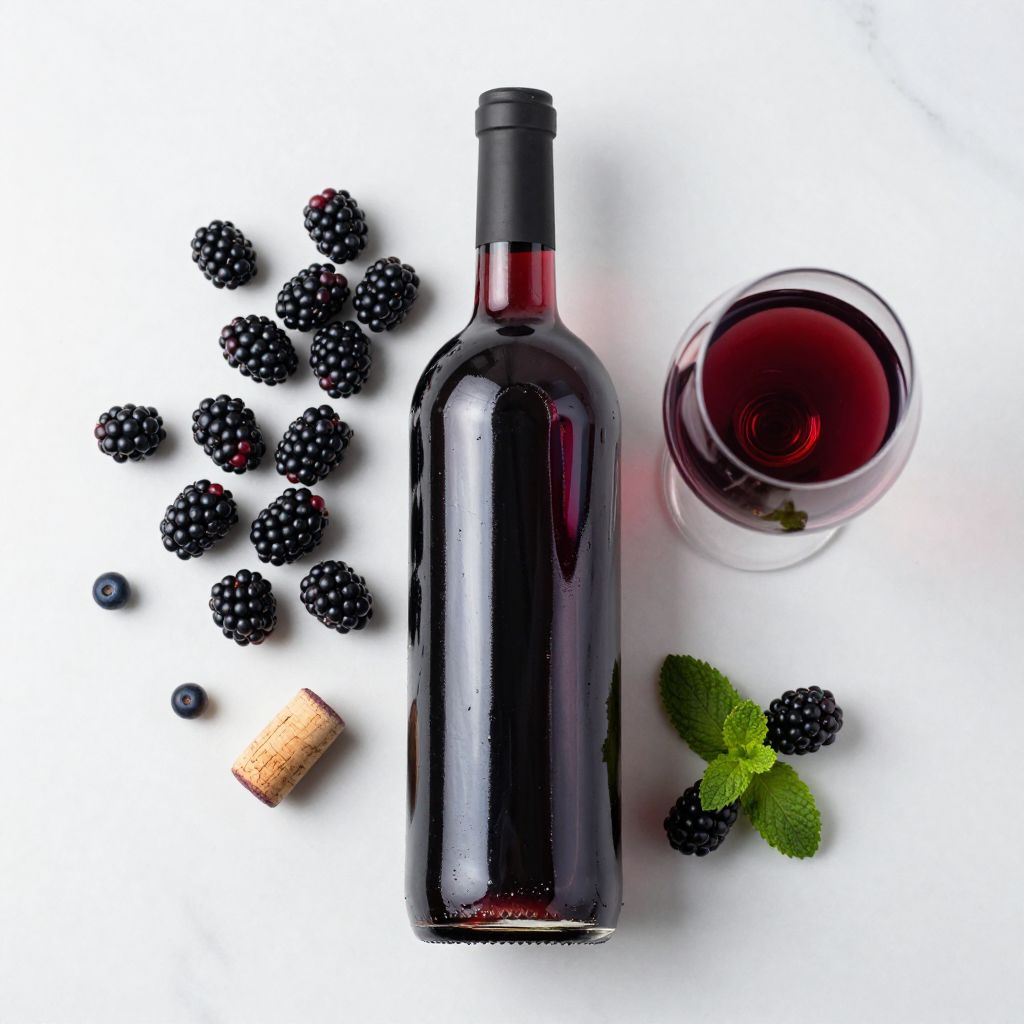
Ingredients
Equipment
Method
- Sanitize all equipment by soaking in sanitizer solution for at least 20 minutes, then rinse with filtered water.
- Crush the blackberries by hand in a large pot or bucket until a chunky pulp consistency is reached.
- Heat 1 gallon of water to about 160°F (71°C) and dissolve 2.5 to 3 pounds of sugar completely.
- Pour the warm sugar water over the crushed blackberries to create the must.
- Stir in yeast nutrient, acid blend, and tannin powder evenly throughout the must.
- Allow the mixture to cool to 70 to 75°F (21 to 24°C), approximately 4 to 8 hours depending on ambient temperature.
- Rehydrate the wine yeast in lukewarm water for 15 minutes, then stir it into the cooled must.
- Cover the bucket loosely with a clean cloth and ferment at room temperature (65 to 75°F / 18 to 24°C) for 5 to 7 days, stirring once daily.
- After primary fermentation slows, strain out the berry pulp using a fine mesh strainer or cheesecloth, pressing gently.
- Siphon the clear wine into a sanitized 1-gallon glass carboy, attach airlock and rubber bung stopper.
- Allow secondary fermentation to continue for 4 to 6 weeks in a cool, dark place.
- Check specific gravity every 2 weeks with a hydrometer until it stabilizes at 0.990 or below for three consecutive readings.
- Rack the wine into a clean carboy again, leaving sediment behind, and fit the airlock.
- Age the wine for at least 3 to 6 months in a cool, dark place to clarify and develop flavors.
- If wine remains cloudy after 4 months, rack it again to improve clarity.
- Siphon the finished wine into clean, sanitized bottles and seal with caps or corks.
- Label each bottle with vintage date and 'Blackberry Wine'. Store sealed bottles at 50 to 60°F (10 to 15°C) on their side if corked.
Notes
Keep a small sample of finished wine in a jar with a loose cap at room temperature to check for spoilage. Store opened bottles upright in the refrigerator and consume within 3 to 5 days. Pairs well with aged cheeses, roasted meats, and dark chocolate desserts.