Cacio e Pepe is one of Rome’s most iconic pasta dishes, and this version follows the method championed by chef Stanley Tucci, who has made this simple yet elegant recipe famous worldwide. With just four ingredients and less than 20 minutes of cooking time, you get a creamy, peppery masterpiece that proves restaurant-quality food doesn’t need a long ingredient list.
This is not a dish you can rush, but the payoff is absolutely worth the attention. Let’s walk through how to make it perfectly.
Why You’ll Love This Recipe
Cacio e Pepe delivers maximum flavor with minimum fuss, making it perfect for weeknight dinners or impressing guests with minimal prep.
- Only four ingredients: pasta, Pecorino Romano, black pepper, and salt.
- Ready in under 20 minutes from start to finish.
- No cream needed; the starch and cheese create a naturally silky sauce.
- Teaches you a fundamental Italian cooking technique that elevates all your pasta dishes.
- Endlessly customizable once you master the base recipe.
My Experience Making This Recipe
The first time I made Cacio e Pepe the traditional way, I failed spectacularly. The cheese clumped, the sauce broke, and I ended up with a gritty mess that looked nothing like the silky versions I’d eaten in Rome.
Everything clicked when I slowed down and understood the science: tempering the cheese in starch water before combining it with pasta is the only way to prevent lumps. Once I nailed that step, I made this dish at least twice a week.
My family now requests it constantly, and guests are always shocked that something this luxurious came from just four pantry staples. The Tucci method of finishing with freshly cracked pepper directly over the plated pasta adds a visual and flavor punch that’s honestly impressive.
Recipe Overview
- Recipe Name: Cacio e Pepe
- Servings: 2
- Prep Time: 5 minutes
- Cook Time: 10 minutes
- Total Time: 15 minutes
- Course: Main
- Cuisine: Italian (Roman)
- Calories per Serving: 450
Equipment You Will Need
- Large pot for pasta water
- Colander
- Microplane or box grater for cheese
- Pepper mill or grinder for fresh black pepper
- Large skillet or saute pan
- Wooden spoon or heat-resistant spatula
- Measuring cups and spoons
- Kitchen scale (optional but recommended for cheese)
Ingredients for Cacio e Pepe
- 1 pound spaghetti or tonnarelli (long, thin Roman pasta)
- 2 cups Pecorino Romano cheese, finely grated (about 7 ounces)
- 2 tablespoons freshly cracked black pepper, plus more for serving
- Salt for pasta water
Ingredient Notes and Substitutions
- Pecorino Romano is a sharp, salty sheep’s milk cheese that creates the creamy base through its starch interaction. If unavailable, Parmigiano-Reggiano works but produces a milder, less traditional result, so increase the amount to 2.5 cups.
- Black pepper must be freshly cracked and coarse. Pre-ground pepper loses its oils and punch within weeks. Invest in a quality pepper mill for the best flavor.
- Tonnarelli pasta has a squared shape that holds sauce better than standard spaghetti. You can substitute with spaghetti, linguine, or bucatini without major issues.
- The pasta water’s starch is crucial to the sauce. Never skip this or use plain water to thin the sauce.
How to Make Cacio e Pepe
Step 1: Bring Water to a Rolling Boil
Fill a large pot three-quarters full with cold water and place it over high heat. Once the water reaches a rolling boil, add a generous handful of salt (it should taste like seawater).
Salting the water properly seasons the pasta from within and prevents a bland final dish. Rushing this step or under-salting is one of the most common mistakes home cooks make.
Step 2: Toast the Black Pepper
While waiting for water to boil, place a large skillet over medium heat and add the cracked black pepper. Toast it for 1 to 2 minutes, shaking occasionally, until fragrant.
Toasting releases the pepper’s essential oils and deepens its flavor. This small step transforms black pepper from a background spice into a star ingredient.
Step 3: Add Pasta to Boiling Water
Once the water is at a full, rolling boil, add the spaghetti or tonnarelli and stir immediately to prevent sticking. Cook according to package directions, but aim for al dente, which typically takes 8 to 10 minutes.
Al dente pasta has enough structure to hold the sauce without becoming mushy. Overcooked pasta will turn into mush and won’t coat properly.
Step 4: Reserve Pasta Water Before Draining
About 1 minute before the pasta finishes cooking, place a liquid measuring cup near the stove. When the pasta is nearly done, use a mug or small bowl to scoop out at least 1.5 cups of starchy pasta water and set it aside.
This starchy water is your secret weapon for creating a silky sauce without cream. The starch binds the cheese and prevents clumping.
Step 5: Drain the Pasta
Drain the pasta in a colander, shaking gently to remove excess water but leaving the pasta slightly damp. Do not rinse the pasta with cold water, as the residual starch and heat are essential for sauce-making.
This is when many recipes fail. The pasta must still be hot so it can properly emulsify with the cheese and starch.
Step 6: Combine Cheese and Pasta Water
In a small bowl, whisk the grated Pecorino Romano cheese with 1 cup of the reserved pasta water until you have a smooth, pourable mixture. This step is critical and prevents lumpy cheese in your final dish.
By dissolving the cheese in starch water first, you’re creating a stable emulsion that will cling to the pasta instead of clumping. This is the Tucci method’s secret.
Step 7: Combine Pasta, Pepper, and Cheese Mixture
Remove the skillet with toasted pepper from the heat and immediately add the hot drained pasta. Toss constantly and quickly pour the cheese and water mixture over the pasta while tossing continuously.
The heat from the pasta and pan, combined with constant tossing, creates the creamy sauce. This happens fast, so stay focused and keep moving.
Step 8: Adjust Consistency and Serve
If the sauce looks too thick, add a splash more reserved pasta water, a few tablespoons at a time, tossing continuously. The finished sauce should coat each strand silkily without pooling at the bottom of the pan.
Divide into bowls immediately and top each serving with a generous crack of fresh black pepper. Serve right away, as the pasta will continue to absorb moisture and thicken.
Pro Tip: Keep the residual heat going by tossing off the burner rather than over active flame, which prevents the cheese from breaking into grainy curds.
Tips for the Best Cacio e Pepe
- Use a kitchen scale to measure cheese precisely. Eyeballing can result in too much or too little, which throws off the entire sauce balance.
- Grate cheese on a Microplane immediately before cooking. Pre-grated cheese contains anticaking agents that prevent proper emulsification.
- Work fast from step 7 onward. The window between perfect sauce and broken sauce is about 30 seconds.
- Never let the mixture come to a boil after adding cheese. High heat causes the cheese to separate and become grainy.
- Taste the pasta water before using it to make sure it’s salty enough. If it tastes bland, the sauce will too.
- Freshly crack pepper directly over the plated dish for maximum aroma and texture contrast.
Common Mistakes to Avoid
- Adding cheese directly to hot pasta without tempering it first causes immediate clumping and a grainy, broken sauce.
- Using pre-ground pepper sacrifices the dish’s signature peppery punch and aroma since the oils have already oxidized.
- Under-salting the pasta water results in a flat, underseasoned final dish that tastes like it’s missing something.
- Cooking over high heat after combining ingredients causes the cheese to separate and the sauce to become granular.
- Rinsing the drained pasta with cold water removes the starch layer needed to bind the sauce to each strand.
Serving Suggestions
Cacio e Pepe is best served immediately in warm bowls with a crack of fresh pepper and nothing else. The simplicity is the point.
- Pair with a crisp white wine like Pinot Grigio or Vermentino to cut through the richness.
- Serve with crusty bread to soak up any sauce that pools at the bottom of the bowl.
- Add a simple green salad tossed with lemon and olive oil to balance the heavy pasta.
- Follow with a light dessert like sorbet or fresh fruit to avoid feeling overstuffed.
- Enjoy alone as a late-night meal, Roman-style, with just a glass of wine.
Variations to Try
- Add fresh guanciale or pancetta: Dice and render 4 ounces of guanciale until crispy, then toss into the finished dish for a richer, meatier version that’s closer to a Carbonara.
- Mix in fresh herbs: Tear in fresh mint or basil at the last second for a lighter, fresher twist that still honors the original.
- Try a half Pecorino, half Parmigiano blend: This softens the sharpness slightly while keeping the dish recognizable and delicious.
- Finish with crispy breadcrumbs: Toast panko with olive oil and garlic, then scatter over the finished dish for textural contrast and richness.
- Use red pepper instead of black: Freshly cracked red or pink peppercorns create a milder heat and slightly floral note that’s intriguing.
Dietary Adaptations
- Gluten-free: Substitute with gluten-free pasta (rice or chickpea varieties work best). The cooking time may vary, so follow package directions and reserve pasta water the same way.
- Dairy-free: Use nutritional yeast mixed with crushed cashews as a cheese substitute, though the result will be noticeably different in texture and umami depth.
- Vegan: Follow the dairy-free adaptation and add a squeeze of lemon juice to brighten the flavors and replace the cheese’s sharp bite.
- Low-carb or keto: Swap pasta for zucchini noodles or shirataki noodles and reduce serving size. The sauce will work, but the starch-binding effect will be weaker.
Storage and Reheating
Refrigerator
Cacio e Pepe is best eaten immediately, but leftovers keep for up to 2 days in an airtight container. The pasta will absorb liquid and become thicker as it sits.
- Store in a shallow airtight container to cool quickly.
- Keep leftovers separate from any sauce to reheat gently.
Freezer
Freezing is not recommended as the sauce texture breaks and the pasta becomes mushy upon thawing. If you must freeze, store for no more than 1 month.
- Freeze in a flat container for faster thawing.
- Thaw overnight in the refrigerator before reheating.
Reheating
Reheat gently over low heat in a skillet, adding a splash of pasta water to restore creaminess. Never use a microwave, which will make the pasta rubbery.
- Heat for 2 to 3 minutes over low flame, stirring constantly.
- Add black pepper and extra cheese if the flavors have dulled.
Nutrition Information
| Nutrient | Amount |
|---|---|
| Calories | 450 |
| Total Fat | 18g |
| Saturated Fat | 11g |
| Carbohydrates | 58g |
| Fiber | 2g |
| Sugar | 1g |
| Protein | 16g |
| Sodium | 680mg |
| Cholesterol | 42mg |
Nutritional values are approximate and based on standard ingredients. Exact amounts vary by brand and preparation method.
Frequently Asked Questions
Can I use Parmigiano-Reggiano instead of Pecorino Romano?
Yes, but the result will be milder and less authentic. Parmigiano is nuttier and less salty, so increase the amount to 2.5 cups and add a pinch of salt to the cheese mixture to compensate.
Can I make this ahead of time?
No. Cacio e Pepe must be assembled and eaten immediately because it’s based on the heat interaction between pasta and cheese. Making it ahead results in a clumpy, broken sauce.
What if my sauce breaks or looks grainy?
This happens when the mixture gets too hot after the cheese is added. Remove from heat immediately and vigorously whisk in cold pasta water, a tablespoon at a time, off the heat until it comes back together.
How do I know when the sauce is the right consistency?
The sauce should cling to each strand and look glossy, not pooling at the bottom like soup or clumpy like mac and cheese. It will continue to thicken slightly as it sits, so err on the side of slightly loose.
Do I really need to toast the black pepper?
Yes. Toasting releases the essential oils that make black pepper shine, transforming it from a background spice into the dish’s signature flavor. Skip this and your Cacio e Pepe will taste flat and one-dimensional.
Can I use a food processor to grate the cheese?
You can, but hand-grating on a Microplane produces finer, more consistent shreds that emulsify better. Food processor shreds are sometimes too chunky and won’t bind properly.
Why does the recipe use so much black pepper?
Black pepper is not a supporting player in Cacio e Pepe; it’s the star alongside the cheese. The 2 tablespoons of toasted, cracked pepper creates the dish’s signature peppery heat and aroma.
Final Thoughts
Cacio e Pepe taught me that sometimes the simplest recipes contain the most important lessons. Mastering this dish means understanding emulsification, heat control, and how a handful of quality ingredients can create something unforgettable.
Make this tonight, follow each step carefully, and taste how the magic happens. Once you nail it, you’ll understand why Roman cooks have perfected this dish for centuries.
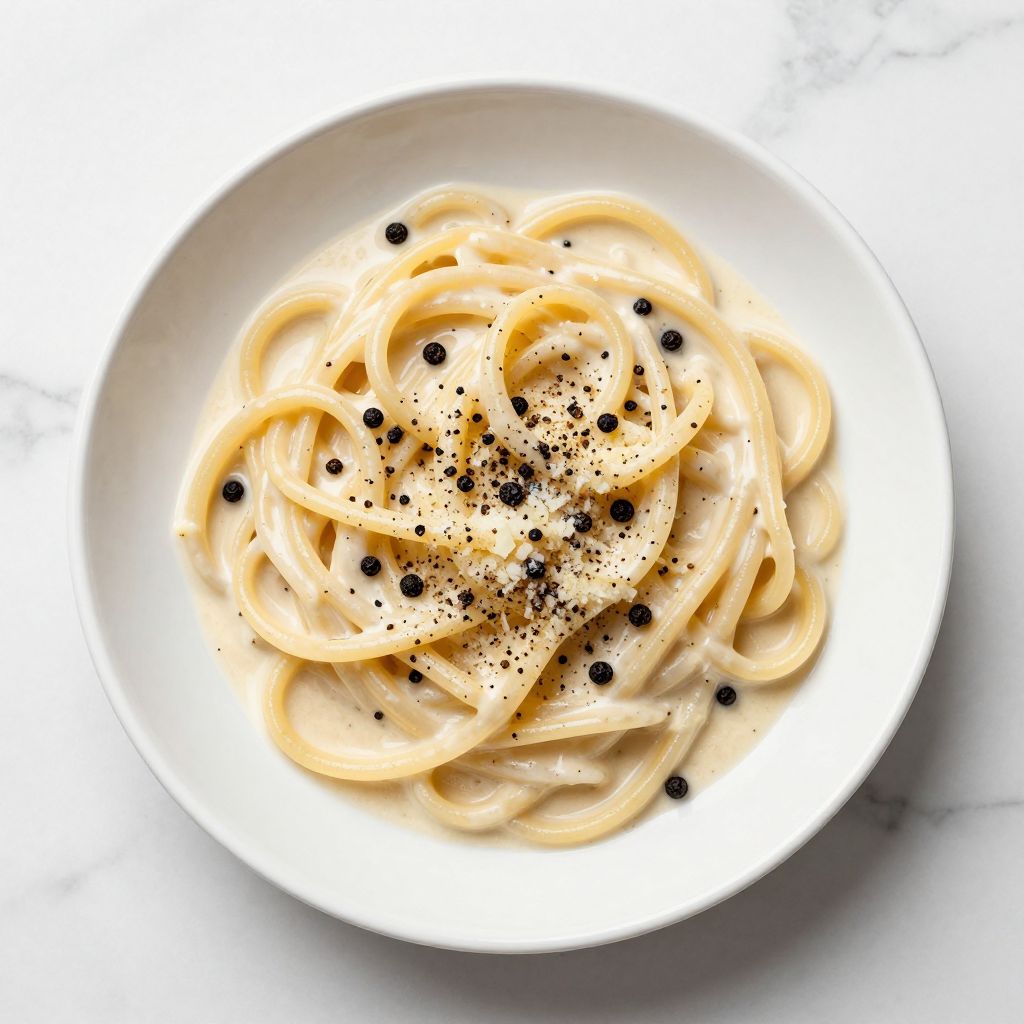
Cacio e Pepe
Ingredients
Equipment
Method
- Fill a large pot three-quarters full with cold water and bring it to a rolling boil over high heat. Once boiling, add a generous handful of salt, enough to make the water taste like seawater.
- While waiting for the water to boil, place a large skillet over medium heat. Add the freshly cracked black pepper and toast it for 1 to 2 minutes, shaking occasionally, until fragrant.
- Add the spaghetti or tonnarelli to the boiling salted water. Stir immediately to prevent sticking and cook according to package directions until al dente, usually 8 to 10 minutes.
- About 1 minute before the pasta finishes cooking, use a mug or small bowl to scoop out at least 1.5 cups of starchy pasta water and set it aside.
- Drain the pasta in a colander, shaking gently to remove excess water but leaving the pasta slightly damp. Do not rinse the pasta.
- In a small bowl, whisk the finely grated Pecorino Romano cheese with 1 cup of the reserved hot pasta water until you create a smooth, pourable mixture.
- Remove the skillet with toasted black pepper from the heat. Immediately add the hot drained pasta to the skillet, toss constantly, and quickly pour the cheese and pasta water mixture over the pasta while continuing to toss constantly to create a creamy sauce.
- If the sauce is too thick, gradually add additional reserved pasta water, a few tablespoons at a time, while continuously tossing until the sauce coats the pasta silkily without pooling.
- Divide the pasta into bowls immediately and top each serving with a generous crack of fresh black pepper. Serve right away.