Squid is one of the most versatile and underrated proteins in the kitchen, and this recipe will change how you think about cooking it. With tender, perfectly charred squid paired with bright citrus and garlic, you’ll create a restaurant-quality dish in under 30 minutes.
Whether you’re cooking for weeknight dinner or impressing guests, this squid recipe delivers restaurant-grade results at home without fussy techniques or hard-to-find ingredients.
Why You’ll Love This Recipe
This dish comes together faster than you’d expect while tasting like you spent hours in the kitchen.
- Quick cook time means squid hits the pan for just minutes, staying tender instead of rubbery.
- Minimal ingredients let the natural sweetness and briny flavor of squid shine.
- Works equally well as an elegant appetizer or light main course.
- Impressively easy to scale up for entertaining without extra stress.
- Tastes even better the next day, making it perfect for meal prep.
My Experience Making This Recipe
I was honestly intimidated by squid the first time I cooked it, convinced I’d end up with rubber bands on my plate. Once I learned the two golden rules, everything changed: buy fresh or properly frozen squid and never overcook it.
The first time I made this version, my dinner guests came back for thirds, and someone actually asked for the recipe on their way out. That’s when I knew I’d cracked something special.
Now I make this at least twice a month because it’s become my go-to when I want something that feels fancy but takes 20 minutes from start to finish.
Recipe Overview
- Recipe Name: Garlic and Lemon Squid
- Servings: 4
- Prep Time: 15 minutes
- Cook Time: 8 minutes
- Total Time: 23 minutes
- Course: Appetizer or Main Course
- Cuisine: Mediterranean
- Calories per Serving: 220
Equipment You Will Need
- Large cutting board
- Sharp chef’s knife
- Paper towels
- Large skillet or cast iron pan
- Wooden spoon or silicone spatula
- Measuring spoons and cups
- Small bowl for mixing marinade
- Tongs
Ingredients for Garlic and Lemon Squid
- 2 pounds fresh or thawed squid, cleaned and cut into rings and tentacles
- 1/4 cup extra virgin olive oil
- 6 cloves garlic, minced
- Zest and juice of 2 lemons
- 1/2 teaspoon red pepper flakes
- 1 teaspoon kosher salt
- 1/2 teaspoon black pepper
- 2 tablespoons fresh parsley, chopped
- Optional: 1/4 teaspoon smoked paprika for depth
Ingredient Notes and Substitutions
- Squid: Buy pre-cleaned squid from the seafood counter or frozen for reliability; frozen squid actually tenderizes as it thaws. Substitute octopus for a chewier texture that still handles quick cooking well.
- Extra virgin olive oil: This is your base for both flavor and cooking; it prevents sticking and adds richness. Use a lighter olive oil if you prefer a more neutral taste, though it loses some Mediterranean character.
- Fresh garlic: Minced garlic releases oils and flavor instantly in the hot pan. Garlic powder works in a pinch (use 1/4 teaspoon), but fresh delivers incomparable aromatic depth.
- Lemon: The acid cooks the squid slightly and brightens every bite. Lime or white wine vinegar both work as substitutes, shifting the flavor profile toward bright citrus or subtle tang.
- Red pepper flakes: A small pinch adds gentle heat without overwhelming delicate squid. Omit entirely if you dislike spice, or add fresh sliced chili for visual appeal.
How to Make Garlic and Lemon Squid
Step 1: Prepare Your Squid Properly
Rinse your squid under cold water and pat it completely dry with paper towels. Moisture is the enemy of a good sear, so don’t skip this step even if you’re in a hurry.
Step 2: Cut the Squid into Rings and Tentacles
Separate the tentacles from the body tube and set them aside. Slice the body into rings about 1/4 inch thick, which is the sweet spot for cooking through without drying out.
Step 3: Mince Your Garlic
Mince all six cloves as finely as possible without turning them into paste. Smaller pieces cook faster and distribute their flavor evenly throughout the oil.
Step 4: Heat Your Pan and Oil
Place a large skillet over high heat and add the olive oil, waiting until it shimmers and moves easily across the pan. This takes about two minutes and signals the oil is hot enough to sear without steaming the squid.
Step 5: Sear the Squid Quickly
Add all the squid to the hot pan in a single layer and resist moving it for the first 90 seconds. You want that caramelized crust that develops when squid makes direct contact with heat.
Step 6: Toss and Cook for Just One More Minute
Stir everything together with tongs, cooking for another minute or until the squid is opaque throughout. Overcooking by even 30 seconds turns it tough, so stay focused and keep the heat high.
Step 7: Add Garlic, Lemon, and Heat
Remove the pan from heat briefly, then add the minced garlic, red pepper flakes, and lemon zest directly to the squid. The residual heat will cook the garlic slightly without browning it to bitterness.
Step 8: Finish with Acid and Seasoning
Stir in the lemon juice, salt, and black pepper, tasting as you go since squid can vary in natural saltiness. Toss in the fresh parsley right before serving to keep it bright and herbaceous.
Pro Tip: The absolute key to tender squid is buying it fresh or properly frozen, keeping your pan screaming hot, and never cooking it for more than two to three minutes total.
Tips for the Best Garlic and Lemon Squid
- Buy squid the same day you plan to cook it, or freeze it immediately and thaw overnight in the fridge. This prevents any off flavors from developing.
- Dry your squid thoroughly before it hits the pan, as any surface moisture will steam instead of sear. Pat it three times if you need to.
- Don’t crowd the pan; if you’re doubling the recipe, work in two batches. Overcrowded squid releases moisture and steams instead of searing.
- Use a high-heat oil like olive oil or avocado oil, never butter, which burns too easily at the temperatures squid needs. The smoke point matters when you’re cooking this hot.
- Taste the squid before adding extra salt, since both lemon and the squid itself contain natural sodium. Adjust seasoning gradually rather than oversalting.
- Serve immediately while the squid is still warm and the exterior retains its slight chew. Sitting more than 10 minutes will make it tougher.
Common Mistakes to Avoid
- Cooking squid at medium heat: Low or medium heat forces moisture out and makes squid rubbery. High heat creates a quick sear that keeps the interior tender.
- Cooking squid for more than three minutes: This is the biggest culprit for tough, chewy squid. Two to three minutes maximum, whether you cook it one minute on each side or toss it constantly.
- Skipping the drying step: Wet squid cannot sear properly and will taste steamed. Paper towels are your best friend here.
- Adding cold ingredients to a hot pan: When you add lemon juice directly to the hot pan, it sizzles and cooks the garlic faster. Cold lemon juice cools the pan and slows everything down.
- Buying squid in questionable condition: Squid has a strong smell when fresh; if it smells like low tide after a storm, it’s too old. Buy from a reputable fishmonger or stick with frozen.
Serving Suggestions
This squid shines on its own as an appetizer, but it also pairs beautifully with sides that let its bright flavor lead. Consider what else you’re serving and let the Mediterranean flavors guide you.
- Crusty bread for soaking up every drop of the garlicky oil.
- A simple arugula salad dressed with olive oil and lemon for contrast.
- Roasted potatoes or polenta to anchor it as a main course.
- Creamy white beans tossed with the squid and pan drippings.
- Over linguine or spaghetti with extra parsley and reserved pan oil.
Variations to Try
- Spicy Squid: Double the red pepper flakes and add fresh sliced Thai chilies for heat that builds with each bite. The flavors shift from bright and fresh to hot and aromatic.
- Squid with White Wine: After searing, deglaze the pan with 1/2 cup dry white wine before adding garlic and lemon. This adds acidity and body that makes the dish feel richer.
- Squid Ink Pasta: Toss the cooked squid with squid ink pasta, reserving the pan oil to dress everything together. The visual drama and earthy squid ink flavor create something restaurant-worthy.
- Mediterranean Squid: Add capers, Kalamata olives, and sun-dried tomatoes to the pan in the last minute. This version skews more Greek with complex salty and briny flavors.
- Squid with Tomato: Stir in 1 cup crushed tomatoes after searing, simmer for two minutes, then finish with basil. This turns squid into a light but satisfying pasta sauce.
Dietary Adaptations
- Gluten-free: This recipe is naturally gluten-free as written. Just confirm your ingredients come from certified sources if you have celiac disease.
- Dairy-free: Squid contains no dairy, so this recipe is already dairy-free. Serve with dairy-free bread if you’re pairing it with sides.
- Vegan or Vegetarian: Substitute hearts of palm or oyster mushrooms cut into similar shapes, though cooking time drops to 90 seconds since they’re more delicate. The flavor profile changes significantly but the technique remains the same.
- Low-carb or Keto: This recipe is already low-carb with minimal carbohydrates. Pair it with zucchini noodles or cauliflower rice instead of traditional pasta.
Storage and Reheating
Refrigerator
Store leftover squid in an airtight container for up to three days. The squid will continue to firm slightly as it cools.
- Keep the pan oil and garlic with the squid to preserve moisture and flavor.
- Don’t store it without the oil, which dries out the delicate meat.
Freezer
Freeze squid in an airtight freezer bag or container for up to three months. The quality declines after that as ice crystals form and damage the texture.
- Freeze with the oil to protect against freezer burn.
- Label with the date so you remember when you made it.
Reheating
Reheat gently in a skillet over low heat for two to three minutes, stirring occasionally. High heat will toughen the squid again, so patience is key.
- Add a splash of water or white wine to prevent sticking.
- Serve over pasta or with fresh bread to stretch leftover squid further.
Nutrition Information
| Nutrient | Amount |
|---|---|
| Calories | 220 |
| Total Fat | 12g |
| Saturated Fat | 2g |
| Carbohydrates | 3g |
| Fiber | 0g |
| Sugar | 0g |
| Protein | 28g |
| Sodium | 420mg |
| Cholesterol | 65mg |
These values are calculated for the base recipe and will vary slightly depending on your exact squid size and how much pan oil clings to each serving. Always consult nutritional databases if you have specific dietary tracking needs.
Frequently Asked Questions
Can I use frozen squid instead of fresh?
Absolutely, and honestly frozen squid works just as well as fresh when properly thawed. Thaw it overnight in the refrigerator, pat it dry, and cook exactly the same way.
Why does my squid always turn out rubbery?
You’re almost certainly cooking it too long or at too low a temperature. Squid needs high heat and just two to three minutes maximum; anything beyond that toughens it significantly.
Can I make this ahead of time?
The squid is best eaten fresh, but you can prep everything else in advance and cook it while your guests arrive. Cleaning squid takes the longest, so handle that step hours ahead if you prefer.
What if I can’t find squid at my store?
Most supermarket seafood departments can special order it with 24 hours notice, or try an Italian market or Asian grocery store. If squid remains unavailable, shrimp works with the same cooking time and technique.
How do I clean squid if it isn’t pre-cleaned?
Hold the body under cold running water and pull the tentacles and innards away, discarding them. Rinse the inside of the tube and peel off the thin purple skin, then pat everything dry before slicing.
Can I grill this squid instead of pan-searing?
Yes, and it’s stunning over charcoal. Thread squid onto skewers, brush with the garlic oil mixture, and grill over high heat for 60 to 90 seconds per side, finishing with fresh lemon and parsley.
Final Thoughts
This squid recipe proves that restaurant-quality food doesn’t require hours of prep or complicated techniques. You just need good ingredients, high heat, and the confidence to cook squid for two minutes instead of twenty.
Make this dish tonight and watch it become a regular rotation in your kitchen like it has in mine. Your dinner guests will be impressed, and you’ll feel like a pro every single time.
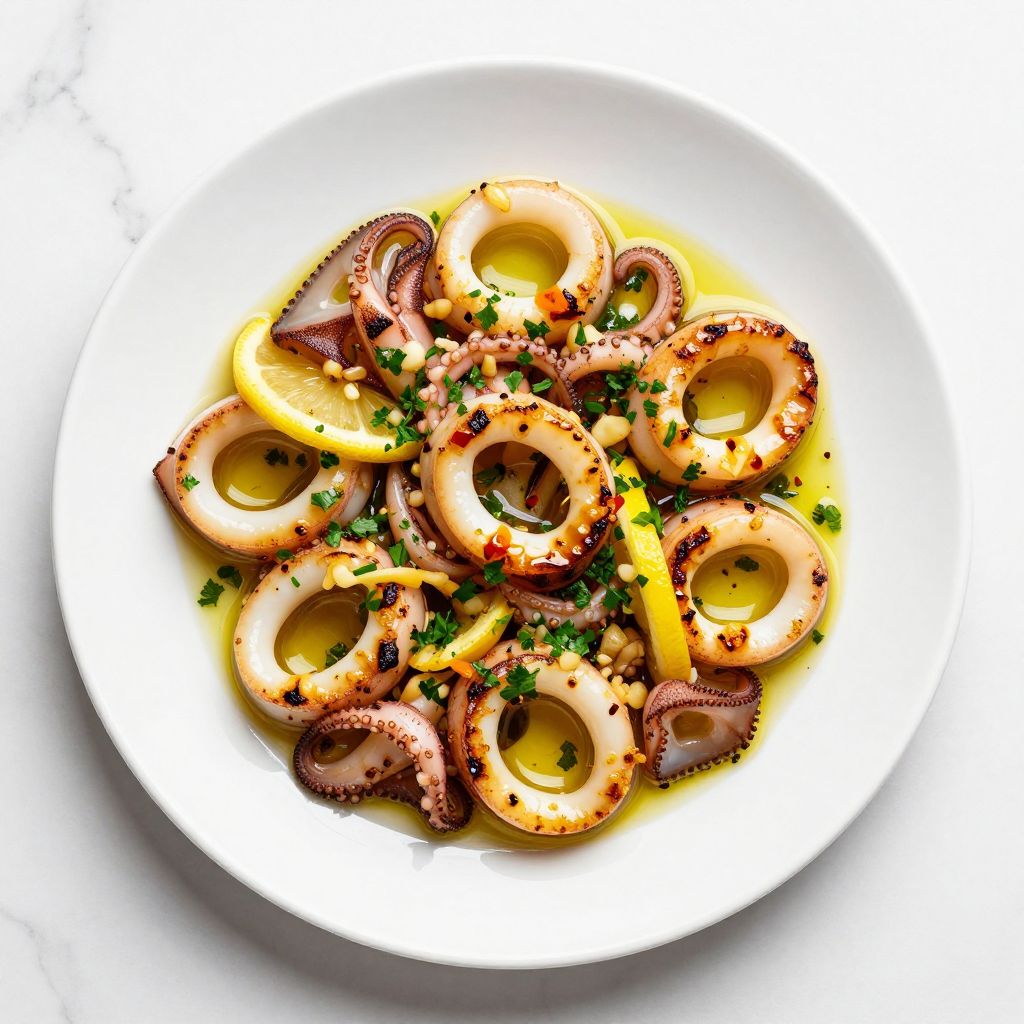
Garlic and Lemon Squid
Ingredients
Equipment
Method
- Rinse your squid under cold water and pat it completely dry with paper towels. Moisture prevents a good sear.
- Separate the tentacles from the body tube and set them aside. Slice the body into rings about 1/4 inch thick.
- Mince all six cloves of garlic as finely as possible without turning into a paste.
- Place a large skillet over high heat and add the olive oil. Wait about 2 minutes until the oil shimmers and moves easily across the pan.
- Add all the squid to the hot pan in a single layer. Do not move it for the first 90 seconds to allow a caramelized crust to form.
- Stir the squid with tongs and cook for another 1 minute or until the squid is opaque throughout. Avoid overcooking.
- Remove the pan from heat briefly. Add the minced garlic, red pepper flakes, and lemon zest to the squid. Residual heat will cook the garlic slightly.
- Stir in the lemon juice, kosher salt, and black pepper. Taste and adjust seasoning as squid may vary in saltiness.
- Toss in fresh parsley right before serving to keep its bright flavor.