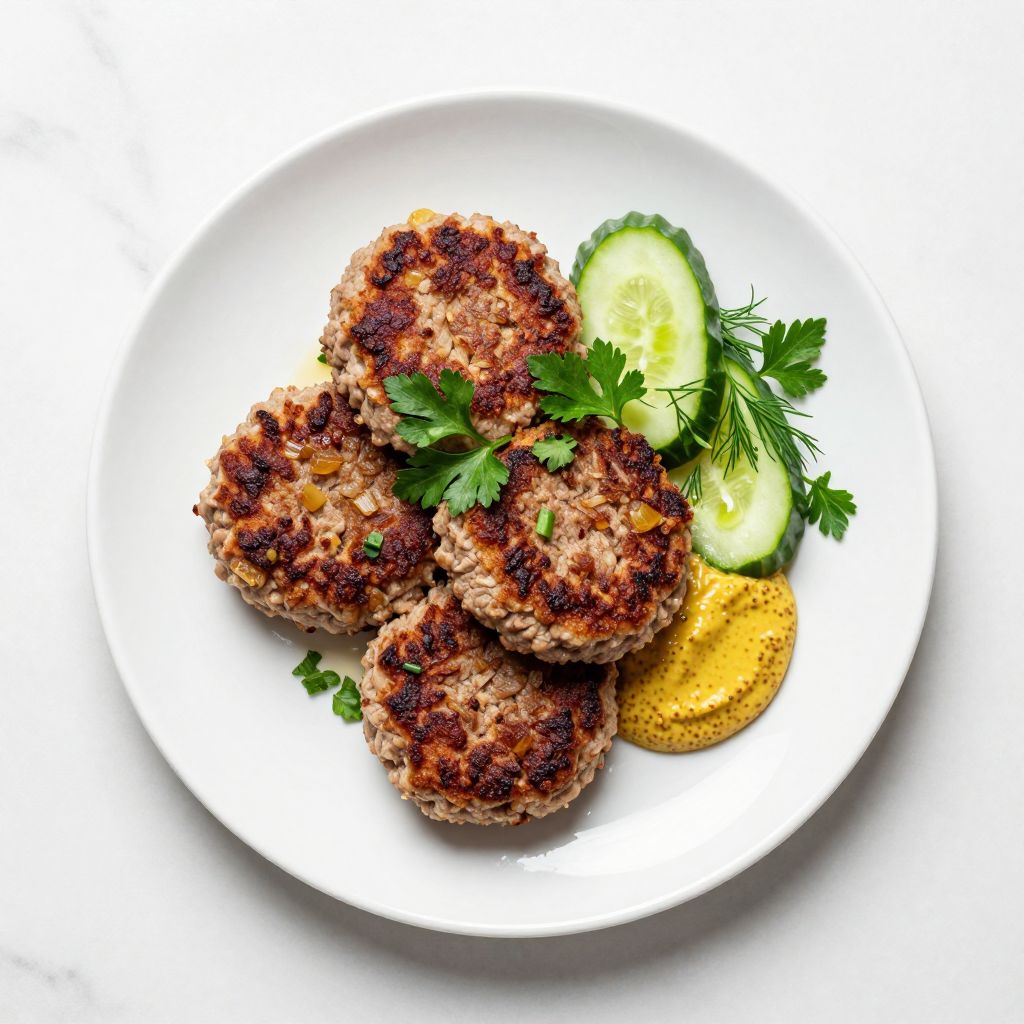
Frikadellen are German meatballs that sit somewhere between a burger and a traditional meatball, crispy on the outside and juicy within. These golden-brown patties are studded with onions and bread, then pan-fried until irresistible, making them a beloved comfort food across Germany and beyond. You’ll find yourself reaching for seconds before the first batch even cools.
This recipe walks you through making authentic frikadellen that taste like they came straight from a Berlin kitchen. Whether you serve them at a weeknight dinner or a casual gathering, they disappear fast.
Why You’ll Love This Recipe
Frikadellen hit that sweet spot between simple ingredients and serious flavor. They’re quick to prepare, endlessly customizable, and genuinely crowd-pleasing.
- Ready in under 30 minutes from start to finish
- Uses pantry staples: ground meat, bread, onions, and eggs
- Crispy exterior with a tender, juicy center every time
- Freezer-friendly for meal prep and quick weeknight dinners
- Pairs beautifully with mustard, pickles, potatoes, or salad
My Experience Making This Recipe
The first time I made frikadellen, I was skeptical that bread could work inside a meatball. Then I bit into one and understood why Germans have been making these for generations.
What struck me most was the texture contrast: that crispy, golden crust giving way to a surprisingly moist interior that stays tender even when reheated. My family devoured a double batch in one sitting, which tells you everything you need to know.
Since then, I’ve tested variations with pork, beef, and chicken, and I keep coming back to the traditional beef and pork combination. The slight sweetness from caramelized onions balanced with mustard and bread crumbs creates an addictive flavor profile that feels both comforting and sophisticated.
Recipe Overview
- Recipe Name: Frikadellen (German Meatballs)
- Servings: 12 frikadellen (serves 4 as a main, 6 as an appetizer)
- Prep Time: 15 minutes
- Cook Time: 12 minutes
- Total Time: 27 minutes
- Course: Main Dish or Appetizer
- Cuisine: German
- Calories per Serving: 185 (per frikadel)
Equipment You Will Need
- Large mixing bowl
- 12-inch skillet or frying pan
- Wooden spoon or spatula
- Paper towels
- Measuring cups and spoons
- Knife and cutting board
- Fork for mixing
Ingredients for Frikadellen
- 1 pound ground beef (80/20 blend works best)
- 1/2 pound ground pork (adds juiciness and subtle sweetness)
- 1 medium onion, finely diced
- 1 cup fresh bread crumbs (from day-old bread, not panko)
- 1/3 cup whole milk
- 2 large eggs
- 2 tablespoons Dijon mustard
- 1 tablespoon fresh parsley, chopped (optional but nice)
- 1 teaspoon salt
- 1/2 teaspoon black pepper
- 1/4 teaspoon ground nutmeg (traditional, adds warmth)
- 3 tablespoons vegetable oil (for pan-frying)
Ingredient Notes and Substitutions
- Ground Beef and Pork: This combination keeps frikadellen moist while providing deep savory flavor. You can use all beef (1.5 pounds) if pork is unavailable, though they’ll be slightly denser.
- Fresh Bread Crumbs: These absorb liquid and keep the interior tender unlike panko, which stays too crunchy. Pulse day-old white or wheat bread in a food processor, then soak in milk before mixing.
- Eggs: They bind everything together while adding richness. You need two for this amount of meat; one won’t hold the mixture together properly.
- Dijon Mustard: This adds subtle tang and depth that balances the bread. Yellow mustard works in a pinch but tastes less refined.
- Nutmeg: A pinch adds German-style warmth that most people can’t identify but definitely notice. Skip it only if you strongly dislike the spice.
How to Make Frikadellen
Step 1: Prepare Your Bread Mixture
Tear your day-old bread into small pieces and pulse in a food processor until you have coarse crumbs, about 1 cup total. Pour the milk over the crumbs in a small bowl and let them soak for 2 minutes to soften.
This step matters because it ensures the bread breaks down into the mixture rather than creating chewy chunks. Soaked bread also keeps the finished frikadellen incredibly moist.
Step 2: Finely Dice Your Onion
Cut your onion into pieces as small as you can manage, aiming for pieces no larger than a grain of rice. Smaller pieces distribute evenly throughout the meat and cook through by the time the frikadellen finish.
If you have a food processor, pulse the onion until minced; this saves time and ensures consistency. You want no large chunks that might create pockets of raw onion flavor.
Step 3: Combine All Ingredients
Add the ground beef, ground pork, minced onion, and soaked bread crumbs to a large mixing bowl. Pour in the eggs, mustard, parsley, salt, pepper, and nutmeg.
Using a fork or your hands (clean hands work best), mix everything together until just combined. The key word here is “just”: overmixing develops gluten in the bread and makes frikadellen tough and dense rather than tender.
Step 4: Test Your Seasoning
Pinch off a small piece of the mixture and cook it briefly in a hot skillet to taste the seasoning. This saves you from finishing a whole batch only to realize you need more salt or mustard.
The mixture should taste savory and slightly mustardy, with a hint of warmth from the nutmeg. Adjust salt or mustard now if needed.
Step 5: Shape the Frikadellen
Wet your hands slightly under cool water to prevent sticking. Scoop roughly 2 tablespoons of mixture per frikadel and gently shape into slightly flattened patties about 2.5 inches wide and 1 inch thick.
Slightly flattened patties cook more evenly than balls and brown beautifully on both sides. Handle them gently; overly compact patties become tough.
Step 6: Heat Your Skillet
Pour 3 tablespoons of vegetable oil into a 12-inch skillet and set it over medium-high heat. Let the oil heat for about 1 minute until it shimmers but doesn’t smoke.
The oil must be hot enough to create a crispy crust immediately, but not so hot that the outside burns before the inside cooks through. You’re aiming for medium-high heat, not blazing.
Step 7: Pan-Fry the First Batch
Carefully place 6 frikadellen into the hot oil, leaving space between each one. They should sizzle immediately and smell incredible within seconds.
Let them cook undisturbed for 3 to 4 minutes on the first side until golden brown and crispy. Resist the urge to poke or flip them early; they need time to develop that crust.
Step 8: Flip and Finish Cooking
Using a spatula, flip each frikadel gently and cook for another 3 to 4 minutes on the second side until golden brown all over. The internal temperature should reach 160 degrees Fahrenheit if you have a meat thermometer.
Transfer the finished batch to a paper towel-lined plate to drain excess oil. Repeat steps 7 and 8 with the remaining 6 frikadellen, adding a bit more oil to the pan if needed.
Pro Tip: Don’t overcrowd the pan because it lowers the oil temperature and causes steaming instead of browning, so cook in two batches even if it takes a few extra minutes.
Tips for the Best Frikadellen
- Use freshly ground meat from the butcher counter rather than pre-packaged ground meat, which can contain excess moisture and additives that affect texture.
- Keep your hands and work surface cool while shaping; warm hands warm the meat, which causes the fat to break down and makes the mixture mushy.
- Don’t skip the soaking step for bread crumbs; dry bread crumbs create dense, dry frikadellen no matter how careful you are with other steps.
- Cook frikadellen in batches rather than crowding the pan; overcrowding steams them instead of crisping the exterior.
- Let finished frikadellen rest on paper towels for a few minutes to drain oil while they’re still warm and crispy.
- Serve frikadellen warm or at room temperature, never cold straight from the fridge, as chilling makes them rubbery.
Common Mistakes to Avoid
- Overmixing the meat mixture: This develops gluten and compacts the frikadellen, making them tough and chewy instead of tender and juicy.
- Skipping the bread soaking step: Dry bread crumbs absorb moisture from the meat during cooking, creating dense, dry patties no matter what else you do right.
- Cooking over too high heat: High heat burns the exterior before the inside cooks through, leaving you with crispy outsides and cold centers.
- Crowding the pan: Too many frikadellen at once lowers the oil temperature, causing them to steam instead of brown, resulting in pale, greasy patties.
- Using panko or store-bought breadcrumbs: These don’t absorb liquid properly and create unpleasant crunchy pockets throughout the finished dish.
Serving Suggestions
Frikadellen shine in traditional German style with tangy mustard and pickled vegetables, but they’re equally at home on a modern dinner plate with roasted vegetables and fresh salad. The key is pairing them with something bright to cut through the richness.
- Serve with whole grain mustard and thinly sliced rye bread for the classic German experience
- Pair with creamy mashed potatoes and a cucumber salad dressed with vinegar and dill
- Top with fried eggs and serve over buttered egg noodles for a satisfying main course
- Tuck into soft rolls with crispy fried onions and spicy mayo for casual sandwiches
- Serve at room temperature on a platter with assorted mustards, pickles, and fresh herbs for entertaining
Variations to Try
- All-Pork Version: Substitute 1.5 pounds of ground pork for the beef and pork mix, which yields sweeter, more delicate frikadellen with a lighter texture.
- Beef Only: Use 1.5 pounds of ground beef if pork isn’t available, producing richer, more intensely savory frikadellen with a denser crumb.
- Chicken Variation: Replace half the beef with ground chicken and add extra herbs like thyme and sage for lighter frikadellen that feel less heavy.
- Caramelized Onion Version: Cook diced onions in butter over medium heat for 8 to 10 minutes until golden and sweet, then fold into the mixture for deeper complexity.
- Herb-Forward Style: Add 2 tablespoons each of fresh dill and chives, plus 1 teaspoon of caraway seeds for an herbaceous twist on the classic.
Dietary Adaptations
- Gluten-Free: Replace regular bread crumbs with gluten-free breadcrumbs or crushed gluten-free crackers in the same amount, though the texture will be slightly less tender.
- Dairy-Free: Substitute the milk with unsweetened almond milk or vegetable broth in equal amounts; the mixture will be equally moist.
- Vegan: Use 1 pound each of plant-based ground meat and mushroom-based meat substitute, plus flax eggs (2 tablespoons ground flax mixed with 5 tablespoons water) instead of regular eggs.
- Low-Carb/Keto: Replace bread crumbs with almond flour or crushed pork rinds in a 1-to-1 ratio; this creates slightly denser but still juicy frikadellen.
Storage and Reheating
Refrigerator
Cooked frikadellen keep in an airtight container for up to 4 days. Let them cool completely before sealing to prevent condensation.
- Store in shallow containers so they cool evenly
- Separate layers with parchment paper to prevent sticking
Freezer
Freeze cooked frikadellen for up to 3 months by laying them on a baking sheet until solid, then transferring to freezer bags. This prevents them from clumping together.
- Flash-freeze on a baking sheet for 2 hours before bagging
- Label with the date so you remember how long they’ve been frozen
Reheating
Reheat refrigerated frikadellen gently in a 350-degree oven for 8 to 10 minutes until warmed through, which preserves crispness better than microwaving. Frozen frikadellen need 15 to 18 minutes in the oven straight from the freezer.
- Arrange on a baking sheet in a single layer for even heating
- Cover loosely with foil if they’re browning too quickly
- Never microwave, as this makes them rubbery and soggy
Nutrition Information
| Nutrient | Amount |
|---|---|
| Calories | 185 |
| Total Fat | 11 g |
| Saturated Fat | 4.5 g |
| Carbohydrates | 6 g |
| Fiber | 0 g |
| Sugar | 1 g |
| Protein | 20 g |
| Sodium | 420 mg |
| Cholesterol | 72 mg |
Nutritional values are estimates based on USDA data and standard ingredients. Individual nutrition varies by specific products and preparation methods used.
Frequently Asked Questions
Can I make frikadellen ahead of time?
Yes, shape the raw patties up to 8 hours ahead, cover them with plastic wrap, and refrigerate until ready to cook. You can also freeze shaped raw patties for up to 2 months and cook them directly from frozen, adding 2 to 3 minutes to the cooking time.
Why did my frikadellen fall apart in the pan?
This happens when the mixture isn’t bound properly, usually from not enough egg or skipping the bread soaking step. Make sure you use two eggs and soak the bread crumbs in milk for at least 2 minutes before mixing.
Can I bake frikadellen instead of pan-frying?
You can bake them at 400 degrees for 12 to 15 minutes on a greased baking sheet, but they won’t develop the same crispy, golden crust that makes them special. Pan-frying takes only 8 minutes total and gives far superior results.
What’s the difference between frikadellen and meatballs?
Frikadellen are flattened patties, not round balls, and they contain bread soaked in milk rather than dry breadcrumbs, making them distinctly tender and moist. Frikadellen are also traditionally cooked in a skillet rather than baked.
Can I use a meat grinder to mince the onion?
Yes, grinding onion works beautifully and saves time, though the result will be slightly wetter than hand-minced onion. Adjust by reducing the milk by 1 tablespoon if the mixture seems too wet.
How do I know when frikadellen are cooked through?
The internal temperature should reach 160 degrees Fahrenheit at the thickest part. If you don’t have a thermometer, cut the largest one in half; there should be no pink inside and the juices should run clear.
Final Thoughts
Frikadellen deserve a place on your regular rotation because they’re genuinely easy to make, impressively delicious, and satisfy everyone from picky eaters to food enthusiasts. Once you nail the basic recipe, you’ll find yourself experimenting with herbs, spice
Frikadellen (German Meatballs)
Ingredients
Equipment
Method
- Tear day-old bread into small pieces and pulse in a food processor until coarse crumbs (about 1 cup). Pour milk over crumbs in a small bowl and let soak for 2 minutes to soften.
- Finely dice the onion into pieces no larger than a grain of rice, or pulse in a food processor until minced.
- In a large mixing bowl, combine ground beef, ground pork, minced onion, and soaked bread crumbs.
- Add eggs, Dijon mustard, parsley, salt, black pepper, and ground nutmeg to the bowl.
- Mix everything together gently with a fork or clean hands until just combined, avoiding overmixing.
- Pinch off a small piece of mixture and cook briefly in a hot skillet to taste seasoning. Adjust salt or mustard if needed.
- Wet hands slightly with cool water. Scoop about 2 tablespoons of mixture per frikadel and shape into slightly flattened patties approximately 2.5 inches wide and 1 inch thick.
- Heat 3 tablespoons vegetable oil in a 12-inch skillet over medium-high heat until shimmering but not smoking (about 1 minute).
- Place 6 frikadellen into hot oil, leaving space between each. Cook undisturbed for 3 to 4 minutes until golden brown and crispy on the first side.
- Flip each frikadel gently and cook for another 3 to 4 minutes on the second side until golden brown and cooked through (internal temperature 160°F).
- Transfer cooked frikadellen to a paper towel-lined plate to drain excess oil.
- Repeat cooking steps with remaining patties, adding more oil if needed. Avoid overcrowding the pan.