Mascarpone frosting is the creamy, luxurious base that transforms ordinary desserts into something truly special. Made with just a handful of ingredients, this Italian-inspired frosting delivers a silky texture and subtle sweetness that pairs beautifully with cakes, cupcakes, and pastries.
If you’ve ever tasted a tiramisu or Italian wedding cake, you already know how magical mascarpone can be. This frosting is foolproof once you understand the few key techniques that keep it from becoming grainy or overwhipped, and I’ll walk you through every detail to ensure your frosting turns out restaurant-quality every single time.
Why You’ll Love This Recipe
This mascarpone frosting strikes the perfect balance between decadence and simplicity. It whips up in minutes and requires no special equipment or advanced baking skills.
- Silky, smooth texture that spreads like butter without any grittiness
- Subtly sweet with a rich, tangy flavor that doesn’t overpower delicate cakes
- Holds up beautifully on warm days thanks to mascarpone’s natural stability
- Versatile enough for any flavor profile, from vanilla to lemon to chocolate
- Ready in under 10 minutes with no chilling or complicated steps
My Experience Making This Recipe
The first time I made this frosting, I made the rookie mistake of whipping the mascarpone too aggressively and ended up with a broken, grainy mess. That one mishap taught me exactly how gentle this ingredient demands to be treated.
Once I nailed the technique, I used this frosting for my daughter’s tenth birthday cake, and her friends asked for the recipe. What impressed me most was how it stayed creamy and didn’t melt, even sitting in a warm kitchen for three hours.
I’ve since made it dozens of times, experimenting with everything from espresso to fresh raspberry puree stirred in. Every single batch has been consistent, smooth, and absolutely foolproof when you follow the right approach.
Recipe Overview
- Recipe Name: Mascarpone Frosting
- Servings: Makes enough to frost one 9-inch two-layer cake or 24 cupcakes
- Prep Time: 10 minutes
- Cook Time: 0 minutes
- Total Time: 10 minutes
- Course: Dessert
- Cuisine: Italian-inspired
- Calories per Serving: 120
Equipment You Will Need
- Medium mixing bowl
- Electric mixer or whisk
- Rubber spatula
- Measuring cups and spoons
- Offset spatula or knife for spreading
- Piping bag and tips (optional, for decorative frosting)
Ingredients for Mascarpone Frosting
- Mascarpone cheese, 16 ounces (one pound), at room temperature
- Powdered sugar, 1 1/2 cups, sifted
- Heavy cream, 1/4 cup, cold
- Vanilla extract, 1 teaspoon
- Fine sea salt, 1/8 teaspoon
Ingredient Notes and Substitutions
- Mascarpone cheese: This Italian cream cheese creates the frosting’s signature richness and stability. If unavailable, mix 8 ounces cream cheese with 1/2 cup heavy cream and 1 tablespoon sour cream as a substitute, though the flavor will be slightly tangier.
- Powdered sugar: Sifting removes lumps that would create grittiness and ensures smooth blending. Granulated sugar left unsifted will result in a grainy, unpleasant texture that’s hard to fix.
- Heavy cream: This adds lightness and prevents the frosting from becoming too dense. Light cream or half-and-half works in a pinch, but the frosting will be richer and less fluffy.
- Vanilla extract: Pure vanilla enhances mascarpone’s subtle flavor without overpowering it. Almond extract, lemon zest, or espresso powder can replace vanilla for flavored variations.
- Salt: A tiny pinch balances sweetness and deepens the overall flavor. Omitting it won’t break the recipe, but you’ll notice the sweetness feels flatter.
How to Make Mascarpone Frosting
Step 1: Bring Mascarpone to Room Temperature
Remove mascarpone from the refrigerator 30 to 45 minutes before you start. Cold mascarpone will be stiff and lump-prone when you try to blend it, while room-temperature mascarpone incorporates smoothly and whips to the perfect consistency.
Step 2: Sift Your Powdered Sugar
Place powdered sugar in a fine-mesh sieve and sift it directly into a small bowl. Sifting breaks up clumps and aerates the sugar, which prevents grainy texture and ensures even sweetness distribution throughout the frosting.
Step 3: Combine Mascarpone and Sugar
Add the room-temperature mascarpone to your mixing bowl and pour the sifted powdered sugar over it. Using a rubber spatula, fold the two ingredients together gently until just combined, working carefully to avoid overworking the mascarpone.
Step 4: Mix on Low Speed
Turn on your electric mixer to the lowest speed setting and mix for about 30 seconds, just until sugar is fully incorporated and no white streaks remain. Mixing on low prevents the mascarpone from becoming overworked, which causes it to break down and separate.
Step 5: Add Cold Heavy Cream
Pour the cold heavy cream into the bowl along with the vanilla extract and salt. Keep the mixer on low speed and blend for another 30 to 45 seconds until the frosting is smooth, light, and spreadable.
Step 6: Check Consistency and Stop Mixing
The frosting should be creamy and hold soft peaks when you lift the beaters, never stiff or fluffy like buttercream. Turn off the mixer immediately when you reach this stage; even a few extra seconds of mixing can tip it toward breaking.
Step 7: Taste and Adjust Flavoring
Spoon a small amount onto your finger and taste it to confirm the sweetness and vanilla intensity work for your cake. If you want a stronger vanilla flavor, add another 1/4 teaspoon and fold it in by hand with a spatula.
Step 8: Use Immediately or Refrigerate
This frosting is ready to spread right away and won’t firm up much, making it perfect for layer cakes. You can cover it tightly and refrigerate for up to 4 hours if you prefer, but let it sit at room temperature for 10 minutes before spreading if it does get cold.
Pro Tip: The moment you suspect you’ve mixed too long and the frosting feels broken or separated, stop immediately and fold in a tablespoon of cold heavy cream with a spatula; this often brings it right back together.
Tips for the Best Mascarpone Frosting
- Always use full-fat mascarpone and never substitute it with cream cheese alone; the fat content is what gives this frosting its luxurious texture and prevents weeping or separation over time.
- Have all ingredients at the proper temperature before you start: mascarpone warm and cream cold creates the best emulsion and prevents graininess.
- Use a low mixer speed throughout and keep mixing sessions short; this is not the time to admire your mixer’s power setting.
- Sift your powdered sugar twice if you notice any lumps, since even tiny sugar crystals will be visible and felt on your palate once the frosting is spread.
- For a less sweet frosting that’s more authentic to Italian traditions, reduce powdered sugar to 1 cup and increase heavy cream to 1/2 cup.
- Pipe this frosting while it’s fresh from the bowl for the most defined piped details; it doesn’t hold sharp peaks like buttercream, but it creates elegant, soft swirls.
Common Mistakes to Avoid
- Using cold mascarpone straight from the fridge causes lumps and uneven mixing that no amount of whisking can fully fix; plan ahead and let it sit out.
- Skipping the sifting step introduces powdered sugar lumps that create a gritty, unpleasant mouthfeel that ruins an otherwise silky frosting.
- Overmixing is the number one destroyer of mascarpone frosting, transforming it from creamy to grainy and broken in seconds; treat your mixer with restraint.
- Adding warm heavy cream instead of cold disrupts the emulsion and causes the frosting to become separated and watery.
- Waiting too long to frost your cake after making this frosting can result in it weeping slightly; use it within a couple of hours for best results.
Serving Suggestions
This frosting shines on delicate cakes like angel food, chiffon, or sponge cake where its subtle flavor won’t compete with the crumb. It also pairs beautifully with fruit-forward desserts and light spice cakes.
- Spread between layers of a classic vanilla or almond layer cake for understated elegance
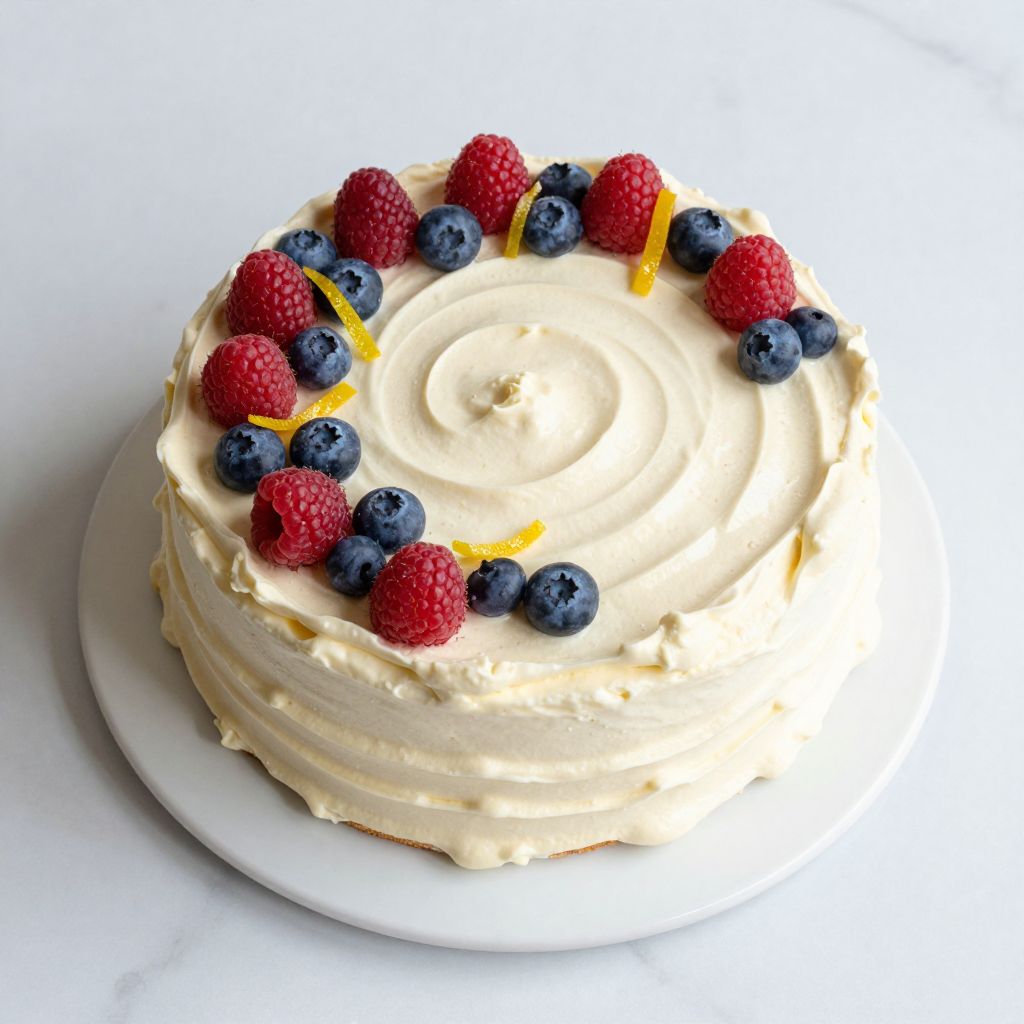
- Top cupcakes with a generous dollop and finish with fresh berries or candied lemon zest
- Pipe onto individual meringue nests with whipped cream and fresh strawberries for an impressive plated dessert
- Swirl onto warm brownies or chocolate cookies for an indulgent contrast of flavors
- Use as a filling between two butter cookies or ladyfingers, then dust with cocoa powder for homemade tiramisu
Variations to Try
- Espresso Mascarpone Frosting: Dissolve 1 tablespoon of instant espresso powder in 1 tablespoon of hot water, cool slightly, and fold it in after the cream. This creates a sophisticated coffee flavor that pairs wonderfully with chocolate or vanilla cakes.
- Lemon Mascarpone Frosting: Replace vanilla with 1 teaspoon of lemon zest and 1/2 teaspoon of lemon juice, adding brightness and tanginess. This is magical on white cake or paired with fresh berries.
- Berry Mascarpone Frosting: Fold in 1/2 cup of fresh raspberry or strawberry puree after the cream is incorporated for a fruity, vibrant frosting. Note that this will be slightly softer and more spreadable than the plain version.
- Honey Mascarpone Frosting: Reduce powdered sugar to 1 cup and add 2 tablespoons of honey along with the cream for a warmer, more nuanced sweetness. This works beautifully on spice cakes or poundcake.
- Salted Caramel Mascarpone Frosting: Fold in 1/4 cup of high-quality salted caramel sauce after the cream for a decadent, sweet-and-salty combination that pairs with almost any cake.
Dietary Adaptations
- Gluten-Free: This recipe is naturally gluten-free as written; simply verify that your powdered sugar and any add-ins like espresso powder are certified gluten-free, with no cross-contamination.
- Dairy-Free: Replace mascarpone with a high-quality dairy-free cream cheese mixed with coconut cream, though the flavor profile will shift and the texture will be slightly less rich.
- Vegan: Use a vegan butter and vegan cream cheese whipped with aquafaba or coconut cream to mimic the texture; the frosting will be less stable but still functional for immediate use.
- Low-Carb/Keto: Replace powdered sugar with powdered erythritol or monk fruit sweetener in the same quantity; some brands may require slight adjustments, so taste and tweak as needed.
Storage and Reheating
Refrigerator
Store covered mascarpone frosting in an airtight container for up to 4 days. The frosting will firm up slightly when cold, so remove it 15 to 20 minutes before you plan to use or serve it.
- Keep it in the coldest part of your fridge, away from any strong-smelling foods
- If condensation forms on the lid, pat it dry before opening to prevent water from dripping into the frosting
- Frosted cakes can stay refrigerated for up to 2 days before the frosting starts to separate slightly
Freezer
You can freeze unfrosted mascarpone frosting for up to 3 months in a freezer-safe container. Thaw it in the refrigerator overnight and re-whip gently on low speed before using.
- Freeze the frosting in smaller portions so you can thaw only what you need
- Do not freeze frosted cakes, as the frosting’s texture will degrade significantly after thawing
Reheating
This frosting does not require reheating; simply bring it to room temperature before serving. If it was refrigerated, remove it 15 to 20 minutes before you plan to eat the cake or cupcakes.
- Never microwave mascarpone frosting, as heat will cause it to separate and break
- If the frosting seems stiff after refrigeration, let it sit at room temperature longer rather than applying heat
Nutrition Information
| Nutrient | Amount |
|---|---|
| Calories | 120 |
| Total Fat | 10g |
| Saturated Fat | 6g |
| Carbohydrates | 8g |
| Fiber | 0g |
| Sugar | 8g |
| Protein | 2g |
| Sodium | 45mg |
| Cholesterol | 35mg |
These values are approximate and based on standard ingredient brands. Actual nutrition will vary slightly depending on specific products and portion sizes.
Frequently Asked Questions
Can I make this frosting ahead of time?
Yes, you can refrigerate this frosting for up to 4 days in an airtight container. Let it come to room temperature for 15 to 20 minutes before using, and you may want to give it a gentle stir with a spatula to refresh its texture.
What happens if my frosting breaks or becomes grainy?
Try adding a tablespoon of cold heavy cream and folding it in gently with a spatula; this often brings separated frosting right back together. If that doesn’t work, you can try starting over with fresh mascarpone, as broken frosting rarely recovers completely.
Can I use mascarpone frosting on a warm cake?
You can, but it will be softer and may weep slightly if your kitchen is very warm. For best results, let your cake cool completely to room temperature, and consider chilling the frosting for 30 minutes before spreading it on.
What’s the difference between mascarpone frosting and cream cheese frosting?
Mascarpone is sweeter and richer than cream cheese with a more delicate, velvety texture. Cream cheese frosting is tangier and more stable, making it better for thick, stiff frosting, while mascarpone is ideal when you want subtle elegance.
Can I substitute the heavy cream with milk or another liquid?
Heavy cream is important for creating the right texture and stability, so you really shouldn’t skip it. If you must substitute, use equal parts heavy cream and whole milk, though your frosting will be slightly less rich and stable.
How much frosting do I need for a two-layer 9-inch cake?
This recipe makes plenty for a two-layer 9-inch cake with a nice thick layer between the cakes and a generous coating on the outside. You’ll have about 1 cup leftover, which is perfect for decorating or eating by the spoonful.
Is mascarpone frosting stable enough for piping?
Yes, it pipes beautifully, though it creates soft, elegant swirls rather than sharp peaks like buttercream. Keep it refrigerated until you’re ready to pipe, and work quickly since it’s softer than other frostings.
Final Thoughts
Making mascarpone frosting is one of those kitchen skills that feels fancy but requires only a light touch and a few minutes of your time. Once you understand how gently this ingredient needs to be treated, you’ll find yourself reaching for this recipe again and again.
Your next cake is waiting for this frosting, so give it a try and see why Italian bakers have trusted mascarpone for generations. The silky texture and subtle sweetness will make you wonder why you ever settled for anything else.
Mascarpone Frosting
Ingredients
Equipment
Method
- Remove mascarpone from the refrigerator 30 to 45 minutes before you start to bring it to room temperature.
- Place powdered sugar in a fine-mesh sieve and sift it directly into a small bowl to remove clumps and aerate the sugar.
- Add the room-temperature mascarpone to your mixing bowl and pour the sifted powdered sugar over it.
- Using a rubber spatula, fold the mascarpone and powdered sugar together gently until just combined, avoiding overworking the mascarpone.
- Turn on your electric mixer to the lowest speed setting and mix for about 30 seconds until the sugar is fully incorporated and no white streaks remain.
- Pour the cold heavy cream into the bowl along with the vanilla extract and fine sea salt.
- Keep the mixer on low speed and blend for another 30 to 45 seconds until the frosting is smooth, light, and spreadable.
- Stop mixing immediately once the frosting holds soft peaks and is creamy; do not overmix to avoid breaking or graininess.
- Taste the frosting and adjust vanilla by adding up to an additional 1/4 teaspoon if desired, folding it in gently by hand.
- Use frosting immediately for best results or cover tightly and refrigerate for up to 4 hours; allow to sit at room temperature for 10 minutes before spreading if chilled.