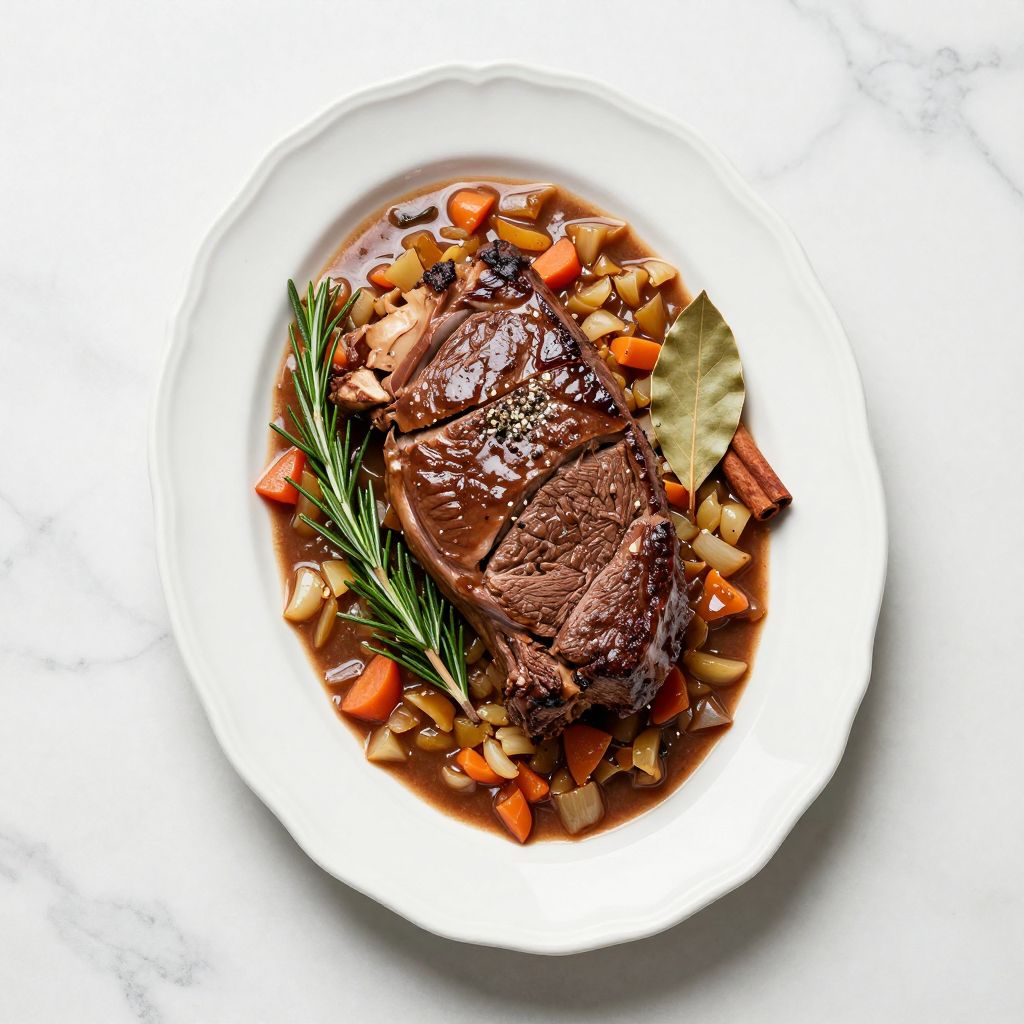
Stracotto is the Italian pot roast that will make you rethink everything you thought you knew about braised beef. This slow-cooked Tuscan masterpiece transforms a humble cut of beef into fork-tender perfection, bathed in a rich wine-infused sauce that practically begs for crusty bread.
Whether you’re planning a cozy Sunday dinner or impressing guests with authentic Italian comfort food, this recipe delivers every time. Let me walk you through exactly how to create this stunning dish in your own kitchen.
Why You’ll Love This Recipe
This stracotto recipe has earned a permanent spot in my dinner rotation, and I’m confident it will earn one in yours too.
- Incredibly tender beef that falls apart at the mere suggestion of a fork
- A deeply flavored sauce built from simple pantry staples and good red wine
- Mostly hands-off cooking time that lets you tackle other tasks or simply relax
- Impressive presentation that looks like you spent all day in the kitchen
- Leftovers that somehow taste even better the next day
My Experience Making This Recipe
The first time I made stracotto, the aroma that filled my kitchen had my neighbors knocking on the door asking what I was cooking. That deep, wine-scented fragrance mingling with herbs and caramelized onions is genuinely intoxicating.
When I finally lifted the lid after three hours of braising, the beef had transformed into this gorgeous, mahogany-colored roast surrounded by the most luxurious sauce. One gentle press with a spoon, and the meat yielded instantly.
My family devoured it alongside creamy polenta, and the silence at the table spoke volumes. Now it’s become our go-to request for special occasions and chilly weekends alike.
Recipe Overview
- Recipe Name: Traditional Tuscan Stracotto
- Servings: 6 to 8
- Prep Time: 25 minutes
- Cook Time: 3 hours 30 minutes
- Total Time: 3 hours 55 minutes
- Course: Main Course
- Cuisine: Italian, Tuscan
- Calories per Serving: 485
Equipment You Will Need
- Large Dutch oven or heavy-bottomed braising pot with lid
- Kitchen twine for tying the roast
- Wooden spoon
- Meat thermometer
- Sharp chef’s knife and cutting board
- Measuring cups and spoons
- Tongs for handling the roast
Ingredients for Stracotto
For the Beef
- 3 to 4 pounds beef chuck roast, tied with kitchen twine
- 2 tablespoons olive oil
- 2 teaspoons kosher salt
- 1 teaspoon freshly ground black pepper
For the Braising Liquid
- 1 large onion, finely diced
- 2 medium carrots, finely diced
- 2 celery stalks, finely diced
- 4 garlic cloves, minced
- 2 tablespoons tomato paste
- 1 bottle (750ml) dry red wine, preferably Chianti or Sangiovese
- 1 cup beef broth
- 2 sprigs fresh rosemary
- 4 sprigs fresh thyme
- 2 bay leaves
- 4 whole cloves
- 1 cinnamon stick
Ingredient Notes and Substitutions
- Beef chuck roast: This cut has the perfect fat marbling for long braising, keeping the meat moist and tender. You can substitute beef bottom round or brisket, though cooking times may vary slightly.
- Red wine: The wine forms the backbone of the sauce, so choose something you would actually drink. A Merlot or Cabernet Sauvignon works if you cannot find Italian varietals.
- Tomato paste: This adds concentrated umami depth and helps create the rich color. Sun-dried tomato paste offers an even more intense flavor if available.
- Fresh herbs: Fresh rosemary and thyme provide aromatic complexity that dried herbs cannot match. In a pinch, use 1 teaspoon each of dried rosemary and thyme.
- Cinnamon and cloves: These warm spices are traditional in Tuscan stracotto, adding subtle depth. Skip them if you prefer a more straightforward beef flavor.
How to Make Stracotto
Step 1: Prepare and Season the Beef
Remove the beef from the refrigerator 45 minutes before cooking to bring it to room temperature. Pat it completely dry with paper towels, then season generously on all sides with salt and pepper.
Taking the meat out early ensures even cooking throughout. Wet meat will steam instead of sear, so dry it thoroughly.
Step 2: Sear the Roast
Heat olive oil in your Dutch oven over medium-high heat until it shimmers and just begins to smoke. Place the beef in the pot and sear without moving for 4 to 5 minutes per side until a deep brown crust forms.
Resist the urge to move the meat around. That gorgeous crust provides both flavor and texture to the final dish through the Maillard reaction.
Step 3: Build the Aromatic Base
Transfer the seared beef to a plate and reduce heat to medium. Add the diced onion, carrots, and celery to the pot, stirring to scrape up any browned bits from the bottom.
Cook the vegetables for 8 to 10 minutes until softened and lightly golden. Those browned bits, called fond, contain concentrated flavor that will dissolve into your sauce.
Step 4: Add Aromatics and Tomato Paste
Stir in the minced garlic and cook for about 30 seconds until fragrant. Push the vegetables to one side and add the tomato paste directly to the hot surface, letting it toast for 1 to 2 minutes while stirring.
Toasting the tomato paste removes its raw edge and deepens its flavor. You will notice it darken slightly and become incredibly aromatic.
Step 5: Deglaze with Wine
Pour in the entire bottle of red wine, scraping the bottom of the pot vigorously to release any remaining fond. Bring the wine to a boil and let it reduce by about one-third, which takes roughly 8 to 10 minutes.
Reducing the wine concentrates its flavor and cooks off the harsh alcohol. Do not skip this step or your sauce may taste boozy rather than rich.
Step 6: Assemble and Begin Braising
Return the beef and any accumulated juices to the pot. Add the beef broth, rosemary, thyme, bay leaves, cloves, and cinnamon stick, tucking the herbs around the meat.
The liquid should come about halfway up the sides of the roast. Preheat your oven to 300 degrees Fahrenheit while you bring the liquid to a gentle simmer.
Step 7: Braise Low and Slow
Cover the Dutch oven with its lid and transfer to the preheated oven. Braise for 3 to 3.5 hours, turning the meat once halfway through cooking.
The low, steady heat breaks down the tough collagen in the chuck roast, transforming it into silky gelatin. Your patience will be rewarded with impossibly tender beef.
Step 8: Check for Doneness
The stracotto is done when a fork slides into the meat with zero resistance and the beef easily pulls apart. Internal temperature should read around 200 to 205 degrees Fahrenheit.
If the meat still feels firm, cover and return to the oven in 30-minute increments. Every cut of beef is slightly different, so trust the texture over the clock.
Step 9: Rest and Finish the Sauce
Transfer the beef to a cutting board and tent loosely with foil. Remove and discard the herb sprigs, bay leaves, cloves, and cinnamon stick from the braising liquid.
Taste the sauce and adjust seasoning with salt and pepper as needed. If you prefer a thicker sauce, simmer it on the stovetop for 10 to 15 minutes while the meat rests.
Step 10: Slice and Serve
Remove the kitchen twine from the beef and slice against the grain into thick portions, or simply use two forks to pull it into chunks. Arrange on a serving platter and spoon the warm sauce generously over the top.
Slicing against the grain shortens the muscle fibers, making each bite even more tender. Serve immediately while everything is piping hot.
Pro Tip: Make your stracotto a day ahead and refrigerate it overnight in the sauce. The flavors meld and intensify dramatically, and you can easily skim off any solidified fat before reheating.
Tips for the Best Stracotto
- Choose a well-marbled chuck roast with visible fat streaks throughout for maximum tenderness and flavor.
- Do not rush the searing process. A proper crust takes time but delivers unmatched depth to your final dish.
- Use a wine you would genuinely enjoy drinking. Cooking will concentrate both good and bad qualities.
- Keep the braising liquid at a gentle simmer, never a rolling boil, to prevent the meat from becoming tough.
- Let the beef rest before slicing so the juices redistribute throughout the meat.
- Serve the sauce generously. It carries so much flavor that you want it coating every bite.
Common Mistakes to Avoid
- Skipping the sear: Without proper browning, your stracotto will lack the complex, roasted flavors that make this dish special.
- Using cheap cooking wine: Those bottles labeled “cooking wine” contain salt and additives that will ruin your sauce.
- Braising at too high a temperature: Heat above 325 degrees will toughen the meat proteins instead of gently breaking them down.
- Opening the lid too often: Each peek releases heat and moisture, extending your cooking time and drying out the roast.
- Slicing too soon: Cutting into the beef immediately causes all those beautiful juices to flood the cutting board instead of staying in the meat.
Serving Suggestions
Stracotto deserves accompaniments that can soak up its incredible sauce. Here are my favorite ways to serve it.
- Creamy soft polenta or cheesy grits
- Buttery mashed potatoes or potato puree
- Fresh pappardelle pasta tossed with a bit of the sauce
- Crusty Italian bread for sauce-mopping duties
- Simple roasted vegetables like carrots or fennel
Variations to Try
- Stracotto al Barolo: Use Barolo wine instead of Chianti for a more elegant, complex sauce worthy of special celebrations.
- Mushroom Stracotto: Add 8 ounces of sliced cremini mushrooms to the braising liquid for earthy depth and meaty texture.
- Pancetta Addition: Render 4 ounces of diced pancetta before searing the beef. The pork fat adds another layer of richness.
- Spiced Version: Add a pinch of nutmeg and extra cloves for a warmer, more aromatic profile that works beautifully in winter.
- Tomato-Forward Stracotto: Include one cup of crushed San Marzano tomatoes for a saucier, more acidic result.
Dietary Adaptations
- Gluten-Free: This recipe is naturally gluten-free as written. Verify your beef broth contains no hidden gluten.
- Dairy-Free: Stracotto contains no dairy, making it suitable for dairy-free diets without any modifications.
- Low-Carb and Keto: Serve over cauliflower mash instead of polenta or potatoes to keep carbohydrates minimal.
- Paleo: Substitute the wine with additional beef broth plus 2 tablespoons of balsamic vinegar for acidity, though the flavor profile will differ.
Storage and Reheating
Refrigerator
Store leftover stracotto in an airtight container submerged in its sauce. It keeps beautifully for up to 4 days.
- Cool completely before refrigerating
- Keep the meat in large pieces rather than shredding for better texture retention
- Skim solidified fat from the surface before reheating if desired
Freezer
Stracotto freezes exceptionally well for up to 3 months. The sauce protects the meat from freezer burn.
- Freeze in portion-sized containers for easy weeknight meals
- Leave some headspace as the liquid will expand
- Thaw overnight in the refrigerator before reheating
Reheating
Gentle reheating preserves the tender texture you worked so hard to achieve. Patience pays off here too.
- Reheat slowly in a covered pot over low heat, adding a splash of broth if needed
- Oven method: 300 degrees Fahrenheit, covered, for 20 to 30 minutes
- Avoid the microwave, which can create hot spots and toughen the meat
Nutrition Information
| Nutrient | Amount |
|---|---|
| Calories | 485 |
| Total Fat | 24g |
| Saturated Fat | 9g |
| Carbohydrates | 12g |
| Fiber | 2g |
| Sugar | 4g |
| Protein | 42g |
| Sodium | 680mg |
| Cholesterol | 125mg |
Nutritional values are estimates based on standard ingredients and may vary depending on specific products used and serving sizes.
Frequently Asked Questions
Can I make stracotto in a slow cooker?
Yes, after searing the beef and sauteing the vegetables on the stovetop, transfer everything to a slow cooker. Cook on low for 8 to 10 hours or high for 5 to 6 hours until the meat is tender.
What if I do not drink alcohol? Can I make this without wine?
You can substitute with 2 cups of beef broth plus 1/4 cup of red wine vinegar or balsamic vinegar for acidity. The flavor will be different but still delicious.
Can I prepare stracotto the day before serving?
Absolutely, and I actually recommend it. The flavors deepen overnight, and reheating gently makes the meat even more tender.
Why is my stracotto tough instead of tender?
The most common cause is not cooking it long enough. Return it to the oven, covered, and continue braising until a fork slides in effortlessly.
What cut of beef works best for stracotto?
Chuck roast is ideal because its marbling and connective tissue break down beautifully during braising. Brisket and bottom round are acceptable alternatives but may require adjusted cooking times.
Final Thoughts
Making stracotto at home is one of those rewarding cooking experiences that delivers far beyond the effort involved. The hands-on time is minimal, yet the results are spectacular enough for your most impressive dinner parties.
Give this traditional Tuscan pot roast a try this weekend and discover why Italian nonnas have been making it for generations. Once you taste that first forkful of wine-braised, meltingly tender beef, you will understand exactly why this recipe has stood the test of time.
Traditional Tuscan Stracotto
Ingredients
Equipment
Method
- Remove the beef from the refrigerator 45 minutes before cooking to bring it to room temperature. Pat it completely dry with paper towels, then season generously on all sides with salt and pepper.
- Heat olive oil in your Dutch oven over medium-high heat until it shimmers and just begins to smoke. Place the beef in the pot and sear without moving for 4 to 5 minutes per side until a deep brown crust forms. Transfer the seared beef to a plate.
- Reduce heat to medium. Add the diced onion, carrots, and celery to the pot, stirring to scrape up any browned bits from the bottom. Cook the vegetables for 8 to 10 minutes until softened and lightly golden.
- Stir in the minced garlic and cook for about 30 seconds until fragrant. Push the vegetables to one side and add the tomato paste directly to the hot surface, letting it toast for 1 to 2 minutes while stirring.
- Pour in the entire bottle of red wine, scraping the bottom of the pot vigorously to release any remaining fond. Bring the wine to a boil and let it reduce by about one-third, which takes roughly 8 to 10 minutes.
- Return the beef and any accumulated juices to the pot. Add the beef broth, rosemary, thyme, bay leaves, cloves, and cinnamon stick, tucking the herbs around the meat. Preheat your oven to 300 degrees Fahrenheit while you bring the liquid to a gentle simmer.
- Cover the Dutch oven with its lid and transfer to the preheated oven. Braise for 3 to 3.5 hours, turning the meat once halfway through cooking.
- The stracotto is done when a fork slides into the meat with zero resistance and the beef easily pulls apart. Internal temperature should read around 200 to 205 degrees Fahrenheit.
- Transfer the beef to a cutting board and tent loosely with foil. Remove and discard the herb sprigs, bay leaves, cloves, and cinnamon stick from the braising liquid. Taste the sauce and adjust seasoning with salt and pepper as needed. If you prefer a thicker sauce, simmer it on the stovetop for 10 to 15 minutes while the meat rests.
- Remove the kitchen twine from the beef and slice against the grain into thick portions, or simply use two forks to pull it into chunks. Arrange on a serving platter and spoon the warm sauce generously over the top. Serve immediately.