Ingredients
Equipment
Method
- Rinse each endive head under cold running water and pat completely dry with paper towels to remove moisture.
- Trim the very bottom of each head with a sharp knife, removing about 1/2 inch to eliminate any yellowed or damaged outer leaves, leaving the core intact.
- Peel away any yellowed, damaged, or particularly bitter-looking outer leaves and discard them, leaving mostly pale, cream-colored leaves.
- Place a large skillet with a lid over medium heat and add the butter, allowing it to melt completely and foam, smelling nutty.
- Carefully place each endive head cut-side down in the hot butter without crowding the pan. Let them brown undisturbed for 4 to 5 minutes until light golden brown develops.
- Using tongs, gently flip each endive head and brown the other cut side for another 3 to 4 minutes until both sides are lightly golden.
- Pour the broth around (not over) the endive heads, then add the lemon juice, sea salt, ground white pepper, and honey. The liquid should come about halfway up the sides of the endive.
- Reduce heat to medium-low, cover skillet with the lid, and braise gently for 20 to 25 minutes, ensuring gentle simmering but not boiling. Check halfway and add a splash more broth if liquid evaporates too quickly.
- Remove the lid, increase heat to medium, and reduce the braising liquid for 3 to 5 minutes until it forms a light glaze that coats the endive.
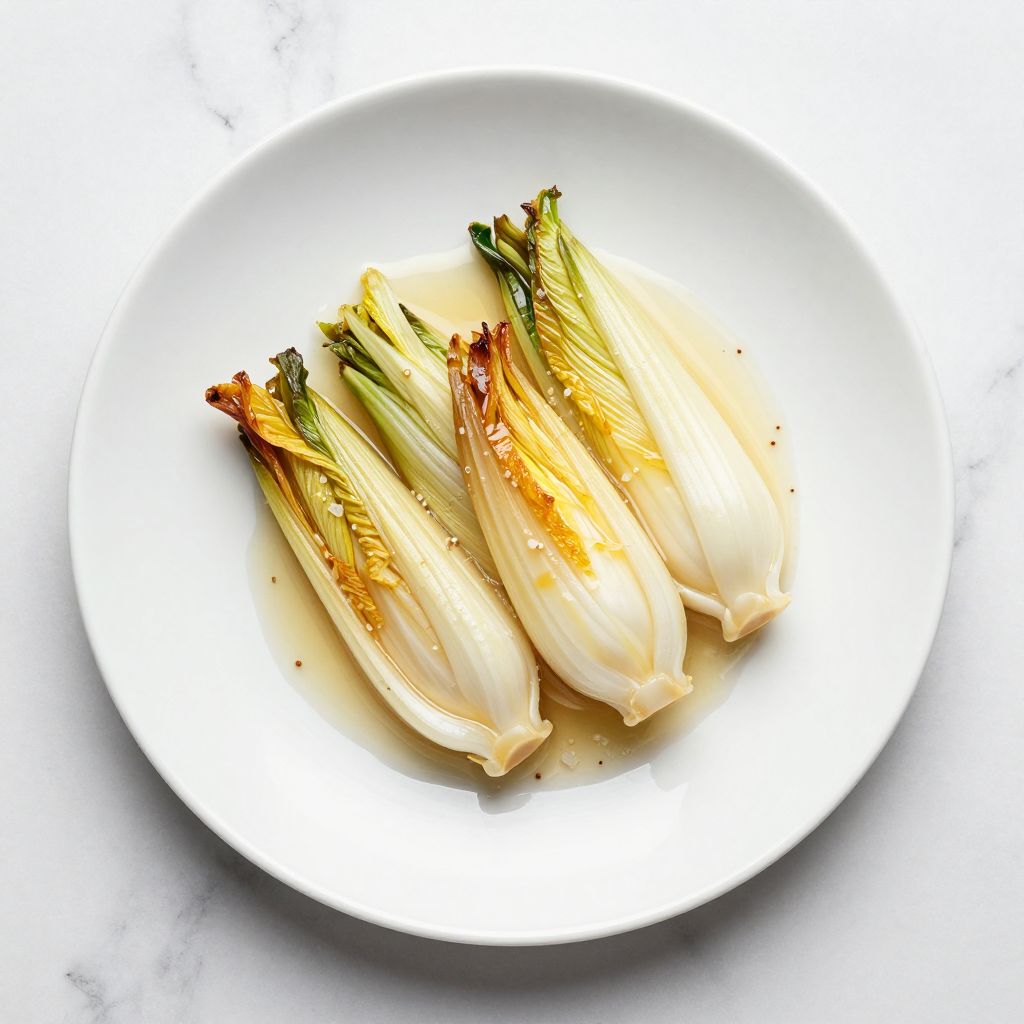
- Tilt the pan and baste the endive several times with the glaze. Endive should be fork-tender with a golden glazed appearance on cut sides. If still firm after 25 minutes, cover again and braise for 2 more minutes on low heat.
Notes
Serve as an elegant side dish warm from the skillet with the silky glaze. Store leftovers in braising liquid in an airtight container up to 4 days in the refrigerator. Reheat gently over medium-low heat, adding a splash of broth if dry.