Soba sauce is the secret weapon that transforms simple noodles into something genuinely crave-worthy. This Japanese dipping sauce balances salty, sweet, umami, and tangy flavors in perfect harmony, making it essential for anyone who loves authentic soba noodles.
Whether you serve it chilled for zaru soba or warm for noodle soups, mastering this sauce opens up a world of possibilities in your kitchen. Let’s explore how to make it fresh and keep it on hand whenever you need it.
Why You’ll Love This Recipe
This soba sauce recipe delivers restaurant-quality results with ingredients you probably already have at home. It takes just minutes to prepare and transforms your cooking in ways you won’t expect.
- Ready in under 5 minutes with zero cooking required
- Works perfectly as a dipping sauce, marinade, or noodle dressing
- Keeps for weeks in the refrigerator, giving you quick meals anytime
- Naturally balanced flavors without any artificial ingredients or MSG
- Customizable to your taste preferences with simple adjustments
My Experience Making This Recipe
I first made this sauce during a particularly lazy summer when I wanted cold noodles without the effort of a full meal. The moment I mixed those four simple ingredients together, something clicked.
My friends came over expecting takeout quality, and they were shocked when I told them I’d made the sauce myself. The balance of flavors made them keep coming back for more noodles, and I found myself making double batches just to keep up.
Now I keep a bottle in my refrigerator at all times, using it on everything from vegetables to grilled chicken. It’s become one of my most-used condiments, proving that sometimes the simplest recipes pack the biggest punch.
Recipe Overview
- Recipe Name: Soba Sauce (Tsuyu)
- Servings: 8 servings (makes about 1 cup)
- Prep Time: 5 minutes
- Cook Time: 0 minutes
- Total Time: 5 minutes
- Course: Condiment/Sauce
- Cuisine: Japanese
- Calories per Serving: 35 calories
Equipment You Will Need
- Small mixing bowl or measuring cup
- Whisk or fork for stirring
- Measuring spoons and cups
- Glass bottle or jar for storage
- Fine mesh strainer (optional, for extra smoothness)
Ingredients for Soba Sauce
- 1/2 cup dashi broth (preferably kombu and bonito flake dashi)
- 1/4 cup soy sauce (use quality shoyu, not the cheap stuff)
- 2 tablespoons mirin (sweet rice wine)
- 1 tablespoon sake (or dry white wine as a substitute)
- Bonito flakes for garnish (optional)
- Green onion, grated daikon, or wasabi for serving (optional toppings)
Ingredient Notes and Substitutions
- Dashi broth: This is the foundation that gives soba sauce its authentic depth and umami punch. If you can’t find instant dashi, steep a piece of kombu and a handful of bonito flakes in hot water for 5 minutes, then strain.
- Soy sauce: Regular soy sauce works, but quality shoyu makes a noticeable difference in flavor complexity. If you only have tamari, use it straight up without worrying about the difference.
- Mirin: This sweet rice wine balances the salt with gentle sweetness. Aji-mirin (seasoned mirin) works fine if you can’t find true mirin, though it may be slightly sweeter.
- Sake: This adds depth and a subtle dry note that prevents the sauce from tasting one-dimensional. Dry white wine or even water will work, though sake gives the most authentic result.
How to Make Soba Sauce
Step 1: Prepare Your Dashi Broth
Start with a quality dashi that’s cooled to room temperature or slightly warm. If using instant dashi powder, simply mix it with water according to package directions and let it cool for a few minutes.
This step matters because hot dashi can cause the soy sauce to lose some of its delicate flavor compounds. Room temperature dashi preserves all those nuanced tastes you’re after.
Step 2: Measure Your Soy Sauce
Pour 1/4 cup of soy sauce into a small mixing bowl, choosing a high-quality shoyu if possible. The soy sauce is your primary seasoning, so don’t skimp on quality here.
Cheap soy sauce often contains additives that create a harsh, one-dimensional flavor. A good shoyu has complexity that makes this sauce sing.
Step 3: Add the Mirin
Measure out 2 tablespoons of mirin and add it to the soy sauce. This sweet rice wine is what transforms the sauce from salty to balanced, creating that signature Japanese flavor profile.
Stir the soy sauce and mirin together until they’re combined and the mirin’s sweetness is evenly distributed throughout the soy sauce.
Step 4: Include the Sake
Add 1 tablespoon of sake to your bowl, stirring well to combine all wet ingredients. Sake brings a subtle dryness that prevents the sauce from becoming cloying or too sweet.
The alcohol will cook off over time, leaving behind only its flavor contribution, which is why it matters more than people realize.
Step 5: Pour in the Dashi Broth
Slowly add your cooled dashi broth to the bowl, stirring constantly to ensure even distribution. The dashi is what gives this sauce its authentic depth and umami quality that makes noodles absolutely irresistible.
Keep stirring until everything is well combined and no streaks of soy sauce remain visible at the bottom of the bowl.
Step 6: Taste and Adjust
Take a small spoon and taste your sauce right now, before anything else. This is your chance to adjust the flavors to match your preferences.
If it’s too salty, add a touch more dashi or a teaspoon of mirin. If it tastes flat, add a few drops more soy sauce or sake.
Step 7: Strain for Smoothness (Optional)
Pour your sauce through a fine mesh strainer into a clean bowl or jar to remove any particles or sediment. This step gives you a crystal-clear sauce that looks as good as it tastes.
Straining is optional but recommended if you want that professional, polished appearance you see in restaurants.
Step 8: Transfer to Storage Container
Pour your finished soba sauce into a clean glass jar or bottle for storage. Make sure your container is completely dry to prevent any water from diluting your sauce.
Label your jar with the date so you can track how long it’s been stored, even though this sauce lasts weeks without any issues.
Pro Tip: The key to perfect soba sauce is balance, so taste as you go and remember that flavors can shift slightly as the sauce sits in the refrigerator overnight.
Tips for the Best Soba Sauce
- Use water filtered with kombu and bonito flakes rather than instant dashi powder if you have time, as it provides noticeably richer flavor and deeper umami.
- Chill your sauce before serving it with cold soba noodles, as temperature affects how you perceive sweetness and saltiness.
- Dilute the sauce with water or more dashi when using it as a warm dipping sauce for hot noodle soups, as the concentrated version works best when chilled.
- Add fresh ginger juice or a squeeze of lemon juice if your sauce tastes flat or one-dimensional after sitting for a few days.
- Make a double or triple batch since it keeps so well, giving you quick meals for the entire week without any extra effort.
- Taste the sauce after it’s been refrigerated for a day, as flavors sometimes deepen and shift slightly during storage.
Common Mistakes to Avoid
- Using dashi that’s too hot when mixing, which can cause the soy sauce’s delicate flavors to break down and become harsh or bitter.
- Substituting regular table salt for soy sauce to save money, which creates a one-dimensional flavor that’s nothing like authentic soba sauce.
- Skipping the sake entirely, which leaves you with a sauce that tastes sweet and salty but lacks the complexity that makes this condiment special.
- Forgetting to taste and adjust before storing, so you end up with a batch that’s either too salty or too sweet for your next meal.
- Using old dashi or dashi made with low-quality ingredients, since this is the foundation that carries all the other flavors.
Serving Suggestions
This sauce is your ticket to countless noodle dishes and beyond. Here are some of the best ways to use it in your kitchen.
- Pour into small bowls as a dipping sauce for chilled zaru soba noodles on hot summer days.
- Warm gently and serve as a broth for hot soba noodles in autumn and winter months.
- Drizzle over grilled vegetables, grilled chicken, or pan-seared fish for an instant Japanese-inspired meal.
- Use as a marinade for tofu or mushrooms before grilling or pan-frying for deep umami flavor.
- Thin with water and use as a quick glaze for grilled meats or a dipping sauce for dumplings.
Variations to Try
- Spicy Soba Sauce: Add a teaspoon of sambal oelek or fresh grated wasabi for a kick that complements the umami beautifully.
- Citrus Version: Squeeze in lime juice or yuzu juice just before serving for brightness that cuts through the richness.
- Garlic Lover’s Sauce: Mince fresh garlic and let it sit in the sauce for 30 minutes before serving, adding a pungent note that wakes up your palate.
- Ginger-Forward Sauce: Add a tablespoon of fresh ginger juice for a warming spice that works especially well with cold noodles.
- Rich Dashi Version: Use kombu and shiitake mushroom dashi instead of plain bonito dashi for an earthier, deeper flavor profile.
Dietary Adaptations
- Gluten-Free: Replace regular soy sauce with tamari, which contains no wheat, and verify your mirin and sake are gluten-free certified.
- Dairy-Free: This sauce is naturally dairy-free since it contains no milk products whatsoever, so no changes needed.
- Vegan: Check that your dashi is made without bonito flakes by using kombu-only dashi instead, and verify your mirin contains no animal products.
- Low-Sodium: Use reduced-sodium soy sauce and add extra dashi to maintain flavor without the salt, though the sauce will taste noticeably different.
Storage and Reheating
Refrigerator
Store your soba sauce in a clean glass jar or bottle with a tight-fitting lid, and it will keep for up to four weeks. The cool temperature preserves all the delicate flavors and prevents any spoilage.
- Always use a clean spoon when scooping sauce out to avoid introducing bacteria
- Keep the lid tightly closed between uses to prevent evaporation
- Shake well before serving if any sediment has settled
Freezer
Soba sauce freezes beautifully for up to three months if you pour it into ice cube trays for easy portioning. Frozen sauce cubes thaw quickly and maintain their flavor profile perfectly.
- Pour sauce into silicone ice cube trays for easy removal
- Pop frozen cubes into a bag once solid for compact storage
- Thaw at room temperature for 15 minutes before using
Reheating
Heat your sauce gently in a small saucepan over medium-low heat if you need to warm it for hot noodle soups. Never boil the sauce, as high heat can damage the delicate flavors and create off-tastes.
- Warm just until steaming, about 2 to 3 minutes
- Stir occasionally to ensure even heating throughout
- Taste again and adjust seasoning if the flavors have shifted
Nutrition Information
| Nutrient | Amount |
|---|---|
| Calories | 35 |
| Total Fat | 0 g |
| Saturated Fat | 0 g |
| Carbohydrates | 5 g |
| Fiber | 0 g |
| Sugar | 4 g |
| Protein | 1 g |
| Sodium | 650 mg |
| Cholesterol | 0 mg |
These values are approximate and based on standard ingredient measurements and brands. Nutrition can vary depending on the specific products you use and how you prepare your dashi.
Frequently Asked Questions
Can I make soba sauce without sake?
Yes, you can substitute sake with dry white wine, mirin, or even water, though the flavor will be slightly different without sake’s subtle dryness. The sauce will still taste good, just less complex and more purely sweet and salty.
How far in advance can I make soba sauce?
You can make soba sauce up to four weeks ahead and store it in the refrigerator in a sealed jar. The flavors actually develop and deepen slightly after a day or two of sitting, so making it ahead is actually a smart move.
What’s the difference between soba sauce and ponzu?
Soba sauce is a mild, umami-forward dipping sauce made with dashi, while ponzu is brighter and more acidic with citrus juice. Both work on noodles, but soba sauce is the traditional choice for soba noodles specifically.
Can I use instant dashi powder instead of making dashi from scratch?
Instant dashi powder works perfectly fine and produces a sauce that’s nearly identical to the scratch version. Quality instant dashi from Japanese brands like Shimaya will give you better results than generic supermarket brands.
Why does my sauce taste bitter?
Bitterness usually comes from using dashi that was too hot when mixed, or from old soy sauce that’s oxidized. Always mix with room temperature dashi and check that your soy sauce hasn’t been open for longer than six months.
Can I dilute soba sauce to make it milder?
Absolutely, add more dashi or water to dilute the sauce and reduce its intensity. This is especially useful when serving warm sauce with hot noodles, which benefits from a thinner, more brothlike consistency.
Final Thoughts
Making your own soba sauce recipe from scratch might seem fancy, but it’s genuinely one of the easiest and most rewarding condiments you can master. Five minutes of mixing gets you restaurant-quality results that transform simple noodles into something memorable.
Keep a batch in your refrigerator and watch how many meals suddenly get better with just a small drizzle of this magic sauce. Your future self will thank you every single time you need a quick dinner or an elegant dish to impress someone you care about.
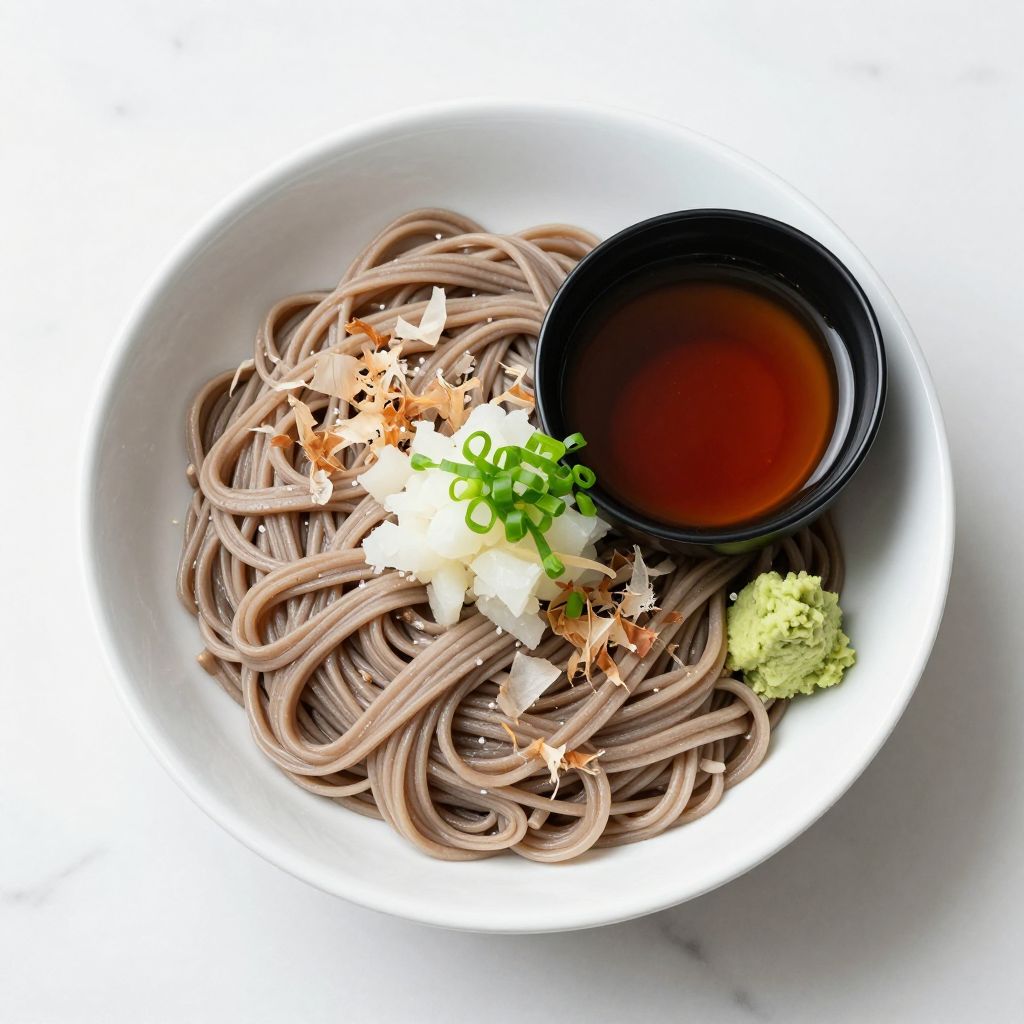
Soba Sauce (Tsuyu)
Ingredients
Equipment
Method
- Prepare your dashi broth by cooling it to room temperature or slightly warm. If using instant dashi powder, mix it with water according to package directions and let it cool for a few minutes.
- Pour 1/4 cup of soy sauce into a small mixing bowl, preferably a high-quality shoyu.
- Add 2 tablespoons of mirin to the soy sauce and stir until well combined.
- Add 1 tablespoon of sake to the bowl and stir well to combine.
- Slowly pour in the cooled dashi broth while stirring constantly until fully integrated with the other ingredients and no soy sauce streaks remain.
- Taste the sauce and adjust flavors as desired: add more dashi or mirin if too salty, or more soy sauce or sake if it tastes flat.
- Optionally strain the sauce through a fine mesh strainer into a clean bowl or jar for a smooth, clear finish.
- Transfer the soba sauce to a clean, dry glass jar or bottle for storage. Label with the date and store in the refrigerator.