Pork giniling is a Filipino comfort food that transforms ground pork into a savory, slightly sweet dish loaded with vegetables and spices. This quick weeknight dinner comes together in under 30 minutes and delivers bold flavor that tastes like it took hours to prepare.
If you want a dish that’s affordable, forgiving, and genuinely delicious, pork giniling belongs on your table tonight. Let’s walk through how to make it.
Why You’ll Love This Recipe
Pork giniling hits all the marks: it’s budget-friendly, packed with vegetables, and tastes even better the next day.
- Ready in under 30 minutes from start to finish
- Ground pork is affordable and cooks quickly
- Loaded with potatoes, carrots, and peas for complete nutrition
- Works perfectly over rice or with crusty bread
- Freezes beautifully for meal prep
My Experience Making This Recipe
The first time I made pork giniling, I was skeptical that something so simple could taste so good. Within minutes of the meat hitting the pan, my kitchen smelled incredible, and by the time I added the potatoes, I was already planning my next batch.
I served it over jasmine rice to my family, and every plate came back clean. My kids asked for seconds, which never happens unless the food is genuinely winning them over.
What surprised me most was how the flavors deepened as it sat in the fridge overnight. The spices melded together, and the potatoes absorbed all that savory pork goodness, making leftovers even better than the original meal.
Recipe Overview
- Recipe Name: Pork Giniling
- Servings: 4 to 6 servings
- Prep Time: 10 minutes
- Cook Time: 20 minutes
- Total Time: 30 minutes
- Course: Main Dish
- Cuisine: Filipino
- Calories per Serving: 320 calories
Equipment You Will Need
- Large skillet or wok
- Cutting board
- Sharp knife
- Wooden spoon or spatula
- Measuring spoons and cups
- Small bowl for mixing aromatics
Ingredients for Pork Giniling
- 2 pounds ground pork
- 3 cloves garlic, minced
- 1 medium onion, diced
- 2 medium potatoes, peeled and diced into small cubes
- 1 large carrot, peeled and diced
- 1 cup frozen peas
- 3 tablespoons soy sauce
- 1 tablespoon fish sauce
- 1 teaspoon sugar
- 1/2 teaspoon ground black pepper
- 2 tablespoons vegetable oil
- 1/2 cup water
- Salt to taste
Ingredient Notes and Substitutions
- Ground pork: Pork delivers rich, savory depth that anchors the entire dish. You can swap it for ground chicken (lighter flavor) or ground beef (richer taste), though cooking time may shift slightly.
- Fish sauce: This umami powerhouse adds salty, oceanic depth that defines Filipino cooking. If you don’t have it, soy sauce alone works, but add an extra half teaspoon of soy sauce to compensate.
- Potatoes: These add substance and absorb the flavorful sauce beautifully. Sweet potatoes or yams create a slightly sweeter version if you want to experiment.
- Soy sauce: Use regular soy sauce, not low-sodium, for proper seasoning depth. Tamari works as a gluten-free swap with nearly identical flavor.
- Frozen peas: Fresh peas are lovely if you have them, though frozen works just fine and requires zero extra prep.
How to Make Pork Giniling
Step 1: Heat the Oil and Cook the Aromatics
Heat 2 tablespoons of vegetable oil in a large skillet over medium-high heat for about one minute. Add the minced garlic and diced onion, then stir constantly for 1 to 2 minutes until fragrant and golden. This step builds the flavor foundation by releasing the natural oils from the garlic and softening the onion.
Step 2: Brown the Ground Pork
Add the 2 pounds of ground pork to the skillet and break it into small pieces with your wooden spoon as it cooks. Stir frequently for 5 to 7 minutes until the pork is no longer pink and has developed light brown color on the edges. Don’t just let it sit; keep moving it so it browns evenly rather than steaming in its own juices.
Step 3: Drain Excess Fat (Optional)
If the pork released a large pool of fat, tilt the skillet and push the meat to the side, then carefully spoon off some of the excess oil. Leaving a little fat keeps the dish flavorful, but too much makes it greasy and heavy on the palate.
Step 4: Add the Potatoes and Carrots
Stir in the diced potatoes and carrots, mixing well so they coat with the pork and oil. Let them cook undisturbed for about 2 minutes so the cut surfaces start to caramelize slightly and develop flavor.
Step 5: Pour in the Liquids and Seasonings
Add the 3 tablespoons of soy sauce, 1 tablespoon of fish sauce, 1 teaspoon of sugar, 1/2 teaspoon of black pepper, and 1/2 cup of water. Stir everything together so the seasonings distribute evenly and coat every piece of meat and vegetable. The liquid will look thin at first, but it will cook down and concentrate as the potatoes soften.
Step 6: Simmer the Mixture
Reduce the heat to medium and let the dish simmer, uncovered, for about 8 to 10 minutes. The potatoes need time to soften and the liquid to reduce slightly, concentrating the flavors into a glossy sauce that clings to each bite.
Step 7: Add the Peas and Final Taste Check
Stir in the 1 cup of frozen peas and cook for another 2 to 3 minutes until they’re heated through. Taste a spoonful and adjust the salt and seasonings to your preference; pork giniling should taste savory and slightly sweet with a hint of umami from the fish sauce.
Step 8: Rest and Serve
Remove the skillet from heat and let the pork giniling rest for 2 minutes before serving. This brief pause lets the flavors settle and makes the dish easier to plate without everything sliding around.
Pro Tip: Cut your potatoes into small, consistent cubes roughly the size of peas so they cook through at the same speed as the pork and don’t leave you with hard chunks or mushy pieces.
Tips for the Best Pork Giniling
- Dice everything small and uniformly so it cooks evenly and creates pockets of tender vegetable throughout the dish.
- Don’t skip browning the pork properly; that caramelized surface adds depth and keeps the meat from tasting bland.
- Keep the heat at medium rather than high once you add the vegetables so they soften without the sauce evaporating too fast.
- Taste as you go and adjust soy sauce, fish sauce, or sugar to match your preference for salty, sweet, or savory.
- Serve pork giniling over warm jasmine or white rice to catch every drop of that gorgeous sauce.
- Make a double batch on Sunday and portion it into containers for weeknight meals that heat up in seconds.
Common Mistakes to Avoid
- Skipping the fish sauce: This ingredient sounds intimidating but creates the authentic Filipino flavor your taste buds expect. Leaving it out results in a generic, one-dimensional meat dish.
- Cooking the pork on high heat: Blasting it over high flames scorches the outside while leaving the center undercooked and grainy. Medium-high for browning, then medium for simmering, keeps it tender.
- Adding the peas too early: Peas turn mushy and gray if they cook longer than 3 minutes. Drop them in during the final minutes so they stay bright and firm.
- Chopping vegetables inconsistently: Chunks of potato cook slower than pencil-thin carrot slivers, leaving you with either hard potatoes or mushycarrots. Aim for uniform quarter-inch cubes.
- Not reducing the liquid enough: If you serve pork giniling soupy, it tastes watered down instead of concentrated and rich. Let it simmer until the sauce clings to the meat and vegetables.
Serving Suggestions
Pork giniling shines when paired with warm, fluffy rice that soaks up every drop of sauce. A simple side salad cuts through the richness and adds fresh crunch.
- Serve over jasmine rice with a drizzle of the pan sauce
- Pair with a crisp cucumber and tomato salad dressed with vinegar and salt
- Spoon into warm flour tortillas for Filipino fusion tacos
- Plate alongside steamed bok choy or stir-fried cabbage for extra vegetables
- Top with a fried egg and crusty bread for breakfast or lunch the next day
Variations to Try
- Spicy Giniling: Add 1 to 2 diced Thai chilies or a quarter teaspoon of cayenne pepper for heat that builds on your palate without overwhelming the other flavors.
- Cornstarch-Thickened Version: Mix 1 tablespoon of cornstarch with 2 tablespoons of water and stir it in during the final minute of cooking for a glossier, more sauce-forward dish.
- Mixed Meat Giniling: Use 1 pound of pork and 1 pound of ground beef, or swap half the pork for ground shrimp for seafood depth.
- Bell Pepper Version: Dice 1 large red or yellow bell pepper and add it with the carrots and potatoes for sweetness and color.
- Liver Giniling: Chop finely cooked pork liver and mix it in during the final few minutes for authentic Filipino flavor and extra iron.
Dietary Adaptations
- Gluten-Free: Use tamari or coconut aminos instead of regular soy sauce, which contains wheat. The flavor stays true and no one will notice the swap.
- Dairy-Free: This recipe is naturally dairy-free, so serve it confidently to anyone avoiding dairy.
- Vegan or Vegetarian: Replace pork with crumbled tofu or lentils and use soy sauce and additional miso paste instead of fish sauce for umami depth.
- Low-Carb or Keto: Skip the potatoes and replace them with diced cauliflower or zucchini, which cook quickly and keep carbs minimal while maintaining the textural variety.
Storage and Reheating
Refrigerator
Transfer cooled pork giniling to an airtight container and refrigerate for up to 4 days. The flavors actually deepen overnight as everything melds together.
- Cool to room temperature before sealing to avoid condensation
- Store any rice separately to prevent it from becoming mushy
Freezer
Pork giniling freezes beautifully for up to 3 months without losing quality. Portioning it into individual servings makes weeknight reheating effortless.
- Use freezer-safe containers or heavy-duty bags to prevent freezer burn
- Label with the date so you remember how long it’s been frozen
Reheating
Thaw frozen giniling in the refrigerator overnight, then warm it gently over medium heat in a skillet for 5 to 7 minutes, stirring occasionally. If reheating from cold refrigerator storage, heat for 3 to 4 minutes until steaming throughout.
- Add a splash of water if the sauce seems too thick after sitting
- Microwave individual portions for 1 to 2 minutes if you’re in a rush
Nutrition Information
| Nutrient | Amount |
|---|---|
| Calories | 320 |
| Total Fat | 18 grams |
| Saturated Fat | 6 grams |
| Carbohydrates | 16 grams |
| Fiber | 3 grams |
| Sugar | 3 grams |
| Protein | 32 grams |
| Sodium | 580 milligrams |
| Cholesterol | 95 milligrams |
These values are approximate and calculated based on standard ingredient nutrition labels. Actual nutrition varies depending on specific brands and how densely you pack ingredients when measuring.
Frequently Asked Questions
Can I make pork giniling ahead of time?
Absolutely, and it’s one of this recipe’s best qualities. Cook it fully, cool it completely, then refrigerate for up to 4 days or freeze for 3 months. Reheat gently before serving and add a splash of water if the sauce thickened during storage.
What if I don’t have fish sauce?
Use an extra tablespoon of soy sauce or a teaspoon of Worcestershire sauce as a backup. The dish won’t taste quite as authentically Filipino, but it will still taste delicious and savory.
How do I keep the potatoes from turning to mush?
Cut them into small, uniform cubes and add them early so they cook gently in the simmering liquid. If your heat is too high or you stir too aggressively, they’ll break apart, so use a gentle hand during the last few minutes.
Can I use ground turkey instead of pork?
Ground turkey works fine and creates a lighter, slightly leaner version. Cook it the same way, though it may finish browning slightly faster since it has less fat content.
Is pork giniling supposed to be wet or dry?
It should have a light, glossy sauce that clings to the meat and vegetables without being soupy or swimming in liquid. If it looks too wet, let it simmer uncovered for another 2 to 3 minutes to evaporate some liquid.
Why does my pork giniling taste bland?
Most likely you’re missing the fish sauce or not using enough soy sauce. Taste it before serving and add more seasoning in small increments, stirring between additions so you don’t overshoot.
Final Thoughts
Pork giniling proves that simple, affordable ingredients become something genuinely craveable when you treat them with care and respect their flavors. This dish teaches you how browning builds depth, how vegetables absorb sauce, and how Asian seasonings transform ordinary ground meat into something your whole family will fight over.
Make it this week, taste what happens when flavors come together properly, and then make it again next week because you’ll already be planning your next batch. Your weeknight dinners are about to get a whole lot easier and more delicious.
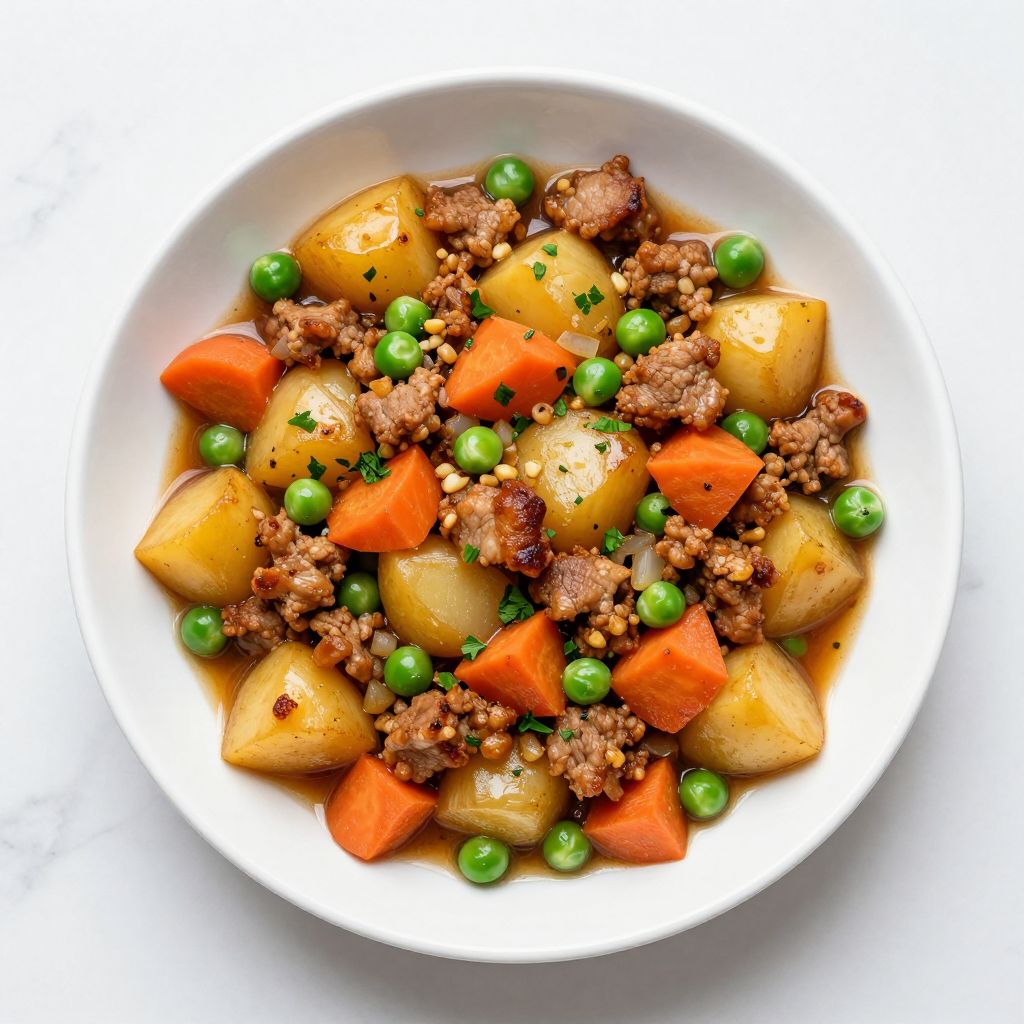
Pork Giniling
Ingredients
Equipment
Method
- Heat 2 tablespoons of vegetable oil in a large skillet over medium-high heat for about one minute.
- Add the minced garlic and diced onion, then stir constantly for 1 to 2 minutes until fragrant and golden.
- Add the 2 pounds of ground pork to the skillet and break it into small pieces with your wooden spoon as it cooks.
- Stir frequently for 5 to 7 minutes until the pork is no longer pink and has developed a light brown color on the edges.
- If the pork released a large pool of fat, tilt the skillet and carefully spoon off some of the excess oil, leaving a little fat for flavor.
- Stir in the diced potatoes and carrots, mixing well to coat them with the pork and oil.
- Let the potatoes and carrots cook undisturbed for about 2 minutes to slightly caramelize the cut surfaces.
- Add 3 tablespoons soy sauce, 1 tablespoon fish sauce, 1 teaspoon sugar, 1/2 teaspoon black pepper, and 1/2 cup water.
- Stir everything together until seasonings are evenly distributed.
- Reduce heat to medium and let the dish simmer uncovered for 8 to 10 minutes until the potatoes are soft and the liquid reduces slightly.
- Add 1 cup frozen peas and cook for another 2 to 3 minutes until heated through.
- Taste and adjust salt and seasonings as desired.
- Remove the skillet from heat and let the pork giniling rest for 2 minutes before serving.