Pork chops and rice is a comforting one-pan meal that delivers restaurant-quality flavor without the fuss. Tender, juicy pork chops paired with fluffy rice absorb savory broth and aromatics, creating a dish that feels elegant yet easy enough for a weeknight dinner.
This recipe comes together in under an hour and requires minimal cleanup, making it perfect for busy families or anyone seeking a satisfying meal without hours in the kitchen. Let’s walk through how to make this classic combination shine.
Why You’ll Love This Recipe
Pork chops and rice hits all the marks for a reliable dinner that tastes way better than it has any right to be.
- One-pan cooking means less cleanup and more time enjoying your meal.
- The rice absorbs all the flavorful broth, creating seasoned grains that need no extra side dish.
- Pork chops cook quickly and stay moist when seared properly, then finish gently in the oven.
- Budget-friendly ingredients that most people already have on hand.
- Versatile enough to swap vegetables and seasonings based on what you love.
My Experience Making This Recipe
I first fell in love with this dish years ago when a friend served it at a casual dinner party, and I was shocked at how effortless it seemed for something so delicious. The kitchen filled with the aroma of caramelized pork and toasted rice, and I knew I had to recreate it at home immediately.
The sear on the pork chops created this gorgeous golden crust that kept the meat tender inside, and watching the rice slowly absorb the broth was oddly satisfying. My family requested it again the following week, and now it rotates into our dinner lineup at least twice a month because everyone cleans their plate.
Recipe Overview
- Recipe Name: Pork Chops and Rice
- Servings: 4
- Prep Time: 10 minutes
- Cook Time: 35 minutes
- Total Time: 45 minutes
- Course: Main Dish
- Cuisine: American Comfort Food
- Calories per Serving: 485
Equipment You Will Need
- Large oven-safe skillet or Dutch oven
- Sharp knife for dicing vegetables
- Measuring cups and spoons
- Wooden spoon for stirring
- Meat thermometer to check doneness
- Paper towels for patting pork dry
- Cutting board
Ingredients for Pork Chops and Rice
- 4 bone-in or boneless pork chops (1 to 1.5 inches thick, about 6 ounces each)
- 1.5 cups long-grain white rice or brown rice if you prefer
- 3 cups chicken broth or vegetable broth
- 1 medium onion, diced
- 3 cloves garlic, minced
- 1 cup diced bell pepper (any color)
- 2 tablespoons olive oil
- 1 teaspoon salt, plus more to taste
- 1/2 teaspoon black pepper
- 1 teaspoon dried thyme or Italian seasoning
- 1/2 teaspoon garlic powder
Ingredient Notes and Substitutions
- Pork chops: Bone-in chops stay juicier because the bone conducts heat evenly and keeps the meat tender. You can use boneless chops, but watch them closely to avoid overcooking since they cook faster.
- Rice: Long-grain white rice produces fluffy, separate grains that won’t clump together. Brown rice works but adds 10 minutes to the cooking time and a nuttier flavor.
- Chicken broth: The liquid base that flavors the entire dish and cooks the rice. Bone broth adds deeper flavor if you have it on hand, or use beef broth for a richer taste.
- Olive oil: Creates the sear on the pork chops and prevents sticking. Vegetable oil or butter work equally well if that’s what you prefer.
- Dried thyme: Adds a subtle earthiness that complements pork beautifully. Dried oregano, sage, or poultry seasoning make solid replacements without changing the dish too much.
How to Make Pork Chops and Rice
Step 1: Prepare Your Ingredients
Dice the onion, mince the garlic, and chop the bell pepper into bite-sized pieces. Having everything prepped and ready makes the cooking process smooth and prevents you from scrambling mid-recipe.
Step 2: Season the Pork Chops
Pat the pork chops dry with paper towels and season both sides generously with salt, black pepper, thyme, and garlic powder. Drying the meat is the secret to achieving a proper golden crust instead of a gray, steamed surface.
Step 3: Heat the Skillet and Sear the Pork
Heat the olive oil in your oven-safe skillet over medium-high heat until it shimmers. Once hot, carefully place the pork chops in the skillet and sear for 3 to 4 minutes on each side until golden brown, then transfer them to a plate.
The sear seals in the juices and creates a flavorful crust that makes all the difference in the final dish. Do not skip this step or move the chops around constantly; let them sit undisturbed so they develop that beautiful color.
Step 4: Saute the Aromatics
In the same skillet with the oil and pork drippings, add the diced onion and saute for 2 to 3 minutes until softened and fragrant. Add the minced garlic and cook for another 30 seconds, stirring constantly to prevent burning.
These aromatic vegetables build the flavor foundation for the entire dish, so do not rush this step. The oil carries all those flavors into the rice as it cooks.
Step 5: Add the Bell Pepper
Stir in the diced bell pepper and cook for 2 minutes, allowing it to soften slightly. The pepper adds brightness and a slight sweetness that balances the savory pork and broth.
Step 6: Add Rice and Toast It Briefly
Pour in the uncooked rice and stir constantly for 1 to 2 minutes, coating every grain with the oil and aromatics. This toasting step develops a nutty flavor and helps the rice cook up fluffier and prevents it from becoming mushy.
Step 7: Add Broth and Return the Pork
Pour the chicken broth over the rice and stir well to combine, scraping up any browned bits from the bottom of the skillet. Place the seared pork chops back on top of the rice mixture, nestling them in so they rest partially on the rice.
Those browned bits stuck to the pan are pure flavor, so make sure to incorporate them by scraping with your spoon. The pork chops finish cooking in the residual heat, staying tender and moist.
Step 8: Cover and Bake
Cover the skillet with a lid or foil and transfer it to a preheated 350-degree oven. Bake for 20 to 25 minutes, or until the rice is tender and has absorbed most of the liquid and the pork reaches an internal temperature of 145 degrees Fahrenheit.
Using a meat thermometer removes all guesswork and ensures perfectly cooked, juicy pork every time. Overbaking dries out the meat, so check a few minutes early if your oven runs hot.
Pro Tip: Let the skillet rest for 5 minutes after removing it from the oven before serving so the rice finishes absorbing any remaining liquid and the pork retains its juices.
Tips for the Best Pork Chops and Rice
- Choose pork chops that are uniform in thickness so they cook at the same rate and finish at the same time. Uneven thickness leads to some pieces overdone while others stay undercooked.
- Do not skip the searing step, even though it feels like extra work. The golden crust adds incredible depth and keeps the meat from sticking to the pan.
- Use fresh minced garlic instead of jarred if possible, as it provides a sharper, cleaner flavor that makes the dish taste fresher overall.
- Stir the rice once before covering the skillet to ensure it sits evenly in the liquid and cooks uniformly. After that, leave it alone so it steams properly.
- Taste the rice before serving and adjust seasonings if needed, adding more salt or pepper to match your preference since broth strength varies by brand.
- Rest the meat after cooking to allow carryover cooking to finish the job and the fibers to relax, resulting in more tender, juicy chops.
Common Mistakes to Avoid
- Wet pork chops that don’t sear properly and steam instead of brown, resulting in pale meat and lost flavor development. Always pat them dry before seasoning.
- Overcooking the pork past 145 degrees Fahrenheit, which dries out the meat and makes it tough and unpleasant to eat no matter how flavorful everything else is.
- Using too little broth, which leaves the rice crunchy and undercooked because there is not enough liquid to hydrate the grains properly.
- Stirring the rice constantly after it begins cooking, which breaks down the grains and creates a starchy, mushy texture instead of fluffy, separate kernels.
- Skipping the resting period after baking, which prevents the rice from finishing its absorption and causes the pork to lose its internal juices onto the plate.
Serving Suggestions
This dish is hearty and complete enough to stand alone as a full meal, but a simple side or two rounds it out beautifully. Fresh vegetables or a light salad brighten the plate and add textural contrast to the soft rice and tender pork.
- Serve with a simple green salad dressed in lemon vinaigrette to cut through the richness of the pork.
- Pair with steamed broccoli or roasted asparagus for added vegetables and a pop of color.
- Add a dollop of sour cream or Greek yogurt on the side for those who enjoy a cool, tangy element.
- Offer crusty bread for soaking up any extra broth and sauce lingering on the plate.
- Finish with a squeeze of fresh lemon juice over the pork to brighten the flavors right before eating.
Variations to Try
- Mushroom and Thyme Version: Slice mushrooms and add them with the onions, then increase the thyme to 1.5 teaspoons for an earthier, more savory profile that feels like a cozy fall dinner.
- Asian-Inspired: Replace the broth with a mixture of chicken broth and soy sauce, swap the thyme for ginger, and add sliced snap peas and carrots instead of bell pepper for an entirely different flavor direction.
- Tomato and Basil: Use half chicken broth and half diced tomatoes with juice, add fresh basil at the end, and include diced zucchini in place of bell pepper for a lighter, summery take.
- Creamy Version: After the rice absorbs the broth, stir in a splash of heavy cream or half-and-half and a handful of grated Parmesan cheese for a richer, more indulgent dish.
- Spicy Cajun Style: Add cayenne pepper, paprika, and diced jalapeños to the aromatics, then include andouille sausage sliced and scattered over the rice for bold, smoky heat.
Dietary Adaptations
- Gluten-Free: This recipe is naturally gluten-free as written, but verify your broth is labeled gluten-free since some brands add thickeners containing wheat.
- Dairy-Free: The recipe contains no dairy, so it is already compliant; however, skip any creamy variations or use coconut milk as a substitute if desired.
- Low-Carb or Keto: Replace the rice with riced cauliflower in an equal amount, keeping everything else the same; the dish tastes just as good but with a fraction of the carbohydrates.
- Whole Grain Option: Swap white rice for quinoa or farro cooked in broth; both add protein and nuttiness, though cooking time increases slightly to 30 to 35 minutes.
Storage and Reheating
Refrigerator
Store leftovers in an airtight container for up to 3 days in the refrigerator. The rice firms up as it cools, which is perfectly fine.
- Let the dish cool to room temperature before sealing the container to prevent condensation.
- Keep the pork chops and rice together for maximum flavor as they reheat.
Freezer
This dish freezes well for up to 2 months in a freezer-safe container or heavy-duty freezer bag. Frozen portions reheat quickly and taste nearly as good as fresh.
- Portion into individual containers before freezing for easy single servings.
- Thaw overnight in the refrigerator before reheating for best results.
Reheating
Reheat gently on the stovetop with a splash of broth to restore moisture, or cover and warm in a 350-degree oven for 15 to 20 minutes. Avoid the microwave if possible, as it can dry out the pork.
- Add a tablespoon or two of broth or water to the pan to keep the rice from drying out.
- Stir occasionally to ensure even heating throughout.
Nutrition Information
| Nutrient | Amount |
|---|---|
| Calories | 485 |
| Total Fat | 18g |
| Saturated Fat | 5g |
| Carbohydrates | 45g |
| Fiber | 2g |
| Sugar | 2g |
| Protein | 32g |
| Sodium | 890mg |
| Cholesterol | 85mg |
These values are approximate and calculated based on standard ingredients. Individual nutrition may vary depending on specific brands and portion sizes used.
Frequently Asked Questions
Can I make this recipe with chicken breasts instead of pork chops?
Yes, boneless chicken breasts work perfectly and cook in about the same time. Pound them to an even thickness first to ensure uniform cooking, and reduce oven time by 5 minutes since chicken cooks faster than pork.
How do I know if my pork is done without a meat thermometer?
Cut into the thickest part of the meat and check that the juices run clear with no pink remaining. If still slightly pink in the center, return to the oven for another 3 to 5 minutes and check again.
Can I prepare this ahead of time?
You can chop all the vegetables and season the pork chops the night before, storing them separately in the refrigerator. Start the cooking from the searing step when you are ready to eat, which cuts actual hands-on time to about 35 minutes.
What if my rice turns out mushy or overcooked?
This happens when there is too much broth or the skillet is not covered properly, allowing extra steam to build up. Next time, use exactly 3 cups of broth for this amount of rice and verify that your lid or foil seals well around the edges.
Can I use instant rice instead of long-grain white rice?
Instant rice cooks much faster and would be done in about 8 to 10 minutes, so the pork would overcook sitting on top of it. Stick with long-grain white rice for proper timing, or reduce oven time significantly if you must use instant rice.
Should I cover the skillet during the stovetop cooking?
No, leave it uncovered while searing the pork and sauteing the aromatics so steam can escape. Cover only after adding the broth and returning the pork to the skillet for the final baking step.
Final Thoughts
Pork chops and rice delivers everything you want from a home-cooked meal: bold flavor, simple ingredients, and minimal fuss. Once you master this basic technique, you will find yourself making it regularly because it never disappoints and always feels like a bit of a treat.
Give this recipe a try this week and watch how quickly it becomes a family favorite you return to again and again. The combination of tender pork and flavorful rice is genuinely hard to beat, and your kitchen will smell absolutely incredible while it bakes.
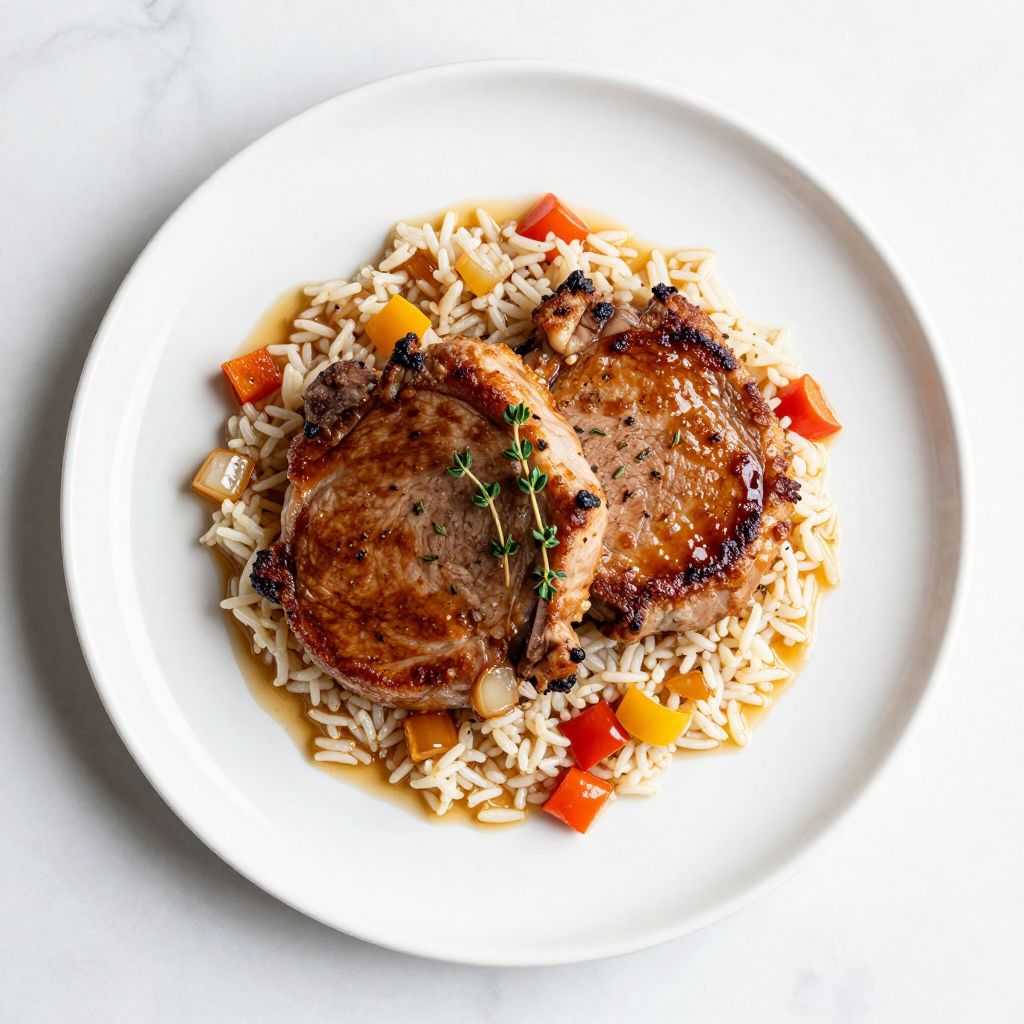
Pork Chops and Rice
Ingredients
Equipment
Method
- Dice the onion, mince the garlic, and chop the bell pepper into bite-sized pieces. Prepare all ingredients before starting to cook.
- Pat the pork chops dry with paper towels and season both sides generously with salt, black pepper, thyme, and garlic powder.
- Heat olive oil in a large oven-safe skillet over medium-high heat until shimmering.
- Add pork chops carefully to the skillet and sear for 3 to 4 minutes per side until golden brown, then remove and set aside on a plate.
- In the same skillet with the pork drippings, sauté the diced onion for 2 to 3 minutes until softened and fragrant.
- Add minced garlic and cook for another 30 seconds, stirring constantly to avoid burning.
- Stir in the diced bell pepper and cook for 2 minutes until slightly softened.
- Add the uncooked rice and stir constantly for 1 to 2 minutes to toast and coat the grains with oil and aromatics.
- Pour the chicken broth over the rice and stir well, scraping up any browned bits from the bottom of the skillet.
- Nestle the seared pork chops back on top of the rice mixture.
- Cover the skillet with a lid or foil and bake in a preheated 350°F oven for 20 to 25 minutes, until the rice is tender and liquid absorbed, and pork reaches an internal temperature of 145°F.
- Remove from oven and let the skillet rest, covered, for 5 minutes before serving to allow rice to finish absorbing liquid and retain pork juices.