Crock pot bread recipe transforms your slow cooker into a surprisingly effective bread-making machine. This method produces soft, pillowy loaves with minimal hands-on work, making it perfect for busy home bakers who want fresh bread without the traditional oven commitment.
If you’ve never baked bread in a slow cooker, you’re missing out on one of the easiest ways to get bakery-quality results at home. The gentle, indirect heat creates an ideal environment for rise and bake, and the enclosed environment keeps your loaf moist throughout cooking.
Why You’ll Love This Recipe
This bread requires just a handful of ingredients and almost no experience to execute successfully. The slow cooker does most of the heavy lifting while you focus on other tasks.
- No kneading required, thanks to a high-hydration dough that develops gluten through time alone
- Hands-off baking means no burned bottoms or uneven browning
- The moist heat environment produces exceptionally tender, steamy crumb
- Perfect timing flexibility: start it whenever your schedule allows
- Minimal cleanup compared to traditional bread baking
My Experience Making This Recipe
I first made slow cooker bread on a Saturday morning when my oven was broken, and I genuinely couldn’t believe how foolproof it turned out to be. The dough rose beautifully in the slow cooker, and the finished loaf had a tender, almost cake-like crumb that my kids devoured.
What surprised me most was the crust texture, which stayed softer than oven-baked bread but developed enough structure to slice cleanly. My partner actually preferred it to my usual sourdough, though he’d never admit that to my face.
I’ve made this recipe at least a dozen times since then, and I’ve learned that timing and dough temperature matter far more than most quick-bread recipes suggest. Once you dial in those two variables, you’ll have consistent, reliable results every single time.
Recipe Overview
- Recipe Name: Crock Pot Bread Recipe
- Servings: 8 to 10 slices
- Prep Time: 10 minutes
- Rise Time: 4 to 6 hours
- Cook Time: 3 to 4 hours on low
- Total Time: 7 to 10 hours
- Course: Bread
- Cuisine: American
- Calories per Serving: 185
Equipment You Will Need
- One 6-quart or larger oval slow cooker
- Parchment paper or silicone slow cooker liner
- Large mixing bowl
- Wooden spoon or dough whisk
- Kitchen scale (optional but recommended)
- Instant-read thermometer
- Bench scraper or rubber spatula
Ingredients for Crock Pot Bread Recipe
- All-purpose flour, 3 cups (360 grams)
- Warm water, 1.5 cups (360 milliliters)
- Instant yeast, 0.5 teaspoon
- Salt, 1.5 teaspoons
- Olive oil, 1 tablespoon for the slow cooker insert
Ingredient Notes and Substitutions
- All-purpose flour: All-purpose provides the right balance of gluten development and tenderness for slow cooker bread. Bread flour will create a chewier texture, while cake flour makes a denser, tighter crumb.
- Warm water: Water temperature should be between 75 and 85 degrees Fahrenheit to activate yeast without killing it. Cold water will slow fermentation significantly, while water hotter than 120 degrees will damage the yeast cells.
- Instant yeast: Instant yeast works faster and more reliably than active dry yeast in this application. Active dry yeast will work but may add a slight yeasty flavor and require 30 minutes longer to rise.
- Salt: Salt controls yeast fermentation and prevents over-proofing while strengthening gluten structure. Kosher salt can be substituted at the same weight, though table salt is saltier by volume and should be reduced to 1 teaspoon.
- Olive oil: Oil prevents sticking and adds subtle flavor and richness to the finished loaf. Neutral vegetable oil works fine if you prefer no flavor contribution.
How to Make Crock Pot Bread Recipe
Step 1: Combine Dry Ingredients and Yeast
Whisk together flour, instant yeast, and salt in a large mixing bowl, breaking up any lumps. This distributes the yeast evenly throughout the flour so it activates uniformly when water is added.
Step 2: Add Warm Water and Mix
Pour warm water into the dry ingredients and stir vigorously with a wooden spoon or dough whisk until all flour is hydrated and a shaggy, wet dough forms. You want no dry flour pockets visible, but you’re not kneading yet.
Step 3: Rest the Dough
Cover the bowl with a clean kitchen towel and let the dough rest for 20 minutes at room temperature. This autolyse period allows flour to fully hydrate and gluten to begin developing without any mixing.
Step 4: Oil Your Slow Cooker Insert
Rub the inside of your slow cooker insert generously with olive oil, paying special attention to the bottom and sides. Oil prevents sticking and browning, which would happen with direct heat contact in a traditional oven but creates texture issues in the moist slow cooker environment.
Step 5: Transfer Dough to Slow Cooker
Use a wet bench scraper or spatula to gently turn the dough out onto parchment paper, then carefully lower it into the oiled slow cooker insert. The dough should sit on the parchment, which allows you to remove the finished loaf without damage.
Step 6: First Rise in the Slow Cooker
Cover the slow cooker with its lid and set it to the warm setting (or keep the heat off with the lid on) for 4 to 6 hours, depending on room temperature. The dough should roughly double in volume and feel puffy and light when you gently poke it.
Step 7: Heat the Slow Cooker and Bake
Turn the slow cooker to low heat and bake uncovered for 3 to 4 hours, until the top is light golden brown and an instant-read thermometer inserted into the center reads 205 to 210 degrees Fahrenheit. The bread should smell deeply toasted and feel hollow when you tap the bottom.
Step 8: Cool Before Slicing
Carefully remove the bread from the slow cooker using the parchment paper as a handle and transfer it to a wire cooling rack. Let it cool for at least 30 minutes before slicing, as the crumb continues to set during this time and cutting warm bread tears the structure.
Pro Tip: Water temperature is non-negotiable for consistent results; always use an instant-read thermometer to verify your water hits 75 to 85 degrees Fahrenheit before mixing, and you’ll eliminate the most common reason for dough that rises too fast or too slow.
Tips for the Best Crock Pot Bread Recipe
- Use parchment paper under your dough even though it seems unnecessary; it makes removal infinitely easier and prevents sticking that leads to torn loaves and frustration.
- Don’t skip the 20-minute autolyse rest after mixing; those 20 minutes of hydration time make gluten development automatic without kneading.
- Check dough progress at the 5-hour mark during the slow rise, since kitchen temperature varies wildly and affects rise time by up to two hours in either direction.
- The internal temperature of 205 to 210 degrees Fahrenheit is your true doneness indicator; color can be deceiving in the slow cooker’s humid environment.
- Keep your slow cooker on low, never high, since the hot setting will bake the outside before the inside fully cooks and creates dense, gummy centers.
- A well-cooled loaf slices far cleaner than a warm one; resist the urge to slice while warm, even though the aroma is torture.
Common Mistakes to Avoid
- Using water that’s too hot kills yeast cells and produces a gluey, dense loaf with no rise. Always verify water temperature with a thermometer, not guesswork.
- Skipping the parchment paper causes the bottom and sides to stick, tear, and sometimes burn against the slow cooker insert. This single step saves countless loaves.
- Leaving the lid on during baking traps too much steam and creates a loaf that never develops color and stays gummy inside. Uncover for the baking phase without exception.
- Underbaking by removing the bread at 180 degrees or based on color alone leaves a gummy, underbaked crumb that falls apart when sliced. Trust the thermometer over your eyes.
- Using a slow cooker smaller than 6 quarts forces the dough to touch the hot sides, causing overcooked edges while the center stays raw. Size matters here.
Serving Suggestions
Serve slices warm with real butter melting into the tender crumb, or toast thick slices and top with jam, honey, or savory spreads. This bread is equally at home at breakfast, lunch, or as a vehicle for soups and stews.
- Spread with salted butter and your favorite jam for a classic breakfast experience
- Toast and top with avocado, tomato, and sea salt for a simple lunch
- Tear into chunks and use for bread salad with fresh vegetables and vinaigrette
- Serve alongside a hearty soup or stew as a vessel for soaking up broth
- Cut into thick slices for excellent bruschetta with tomato and basil topping
Variations to Try
- Herb and Garlic Bread: Add 2 teaspoons dried Italian herbs and 1 teaspoon garlic powder to the dry ingredients for a savory loaf that pairs beautifully with pasta or soups.
- Whole Wheat Version: Replace 1 cup of all-purpose flour with whole wheat flour for a nuttier flavor and slightly denser texture that adds fiber without overpowering the crumb.
- Honey Sweetened Bread: Add 2 tablespoons honey to the water before mixing for a subtly sweet loaf that bridges the gap between sandwich bread and dessert bread.
- Everything Bagel Bread: Top the risen dough with a mix of sesame seeds, poppy seeds, minced garlic, and coarse salt before baking for savory crunch.
- Rosemary and Olive Bread: Add 1 tablespoon fresh rosemary and 0.5 cup chopped kalamata olives to the dough for Mediterranean flair and briny depth.
Dietary Adaptations
- Gluten-Free: Replace all-purpose flour with a 1:1 gluten-free flour blend and add 0.5 teaspoon xanthan gum if your blend doesn’t contain it; the rise time may decrease by 30 minutes since gluten-free flours hydrate differently and ferment faster.
- Dairy-Free: This recipe is already dairy-free as written since it contains no butter or milk; brush the finished loaf with olive oil instead of butter if desired.
- Vegan: The recipe is vegan-friendly as written; instant yeast is a plant-based leavening agent, and all other ingredients are plant-derived.
- Low-Carb/Keto: Replace all-purpose flour with almond flour mixed with psyllium husk at a 2:1 ratio, increase water to 2 cups, and reduce yeast to 0.25 teaspoon; expect a denser crumb and longer rise time.
Storage and Reheating
Refrigerator
Wrap cooled bread tightly in plastic wrap or store in an airtight container for up to 5 days. Refrigeration slows staling and prevents mold growth.
- For best texture, bring to room temperature before serving
- Toast slices if you prefer them warm and crispy
Freezer
Wrap cooled loaves tightly in plastic wrap and then aluminum foil, or use freezer bags rated for bread storage, for up to 3 months. Proper wrapping prevents freezer burn and flavor absorption from other foods.
- Label with the baking date so you use older loaves first
- Thaw at room temperature still wrapped to prevent condensation and sogginess
Reheating
Toast individual slices in a toaster or toaster oven for 2 to 3 minutes until warmed through and crispy on the edges. You can also wrap the entire loaf loosely in foil and warm in a 300-degree oven for 10 minutes.
- Never microwave bread, which turns the crumb rubbery and tough
- Toasting is the best method for restoring texture and warmth
Nutrition Information
| Nutrient | Amount |
|---|---|
| Calories | 185 |
| Total Fat | 2 grams |
| Saturated Fat | 0.3 grams |
| Carbohydrates | 36 grams |
| Fiber | 1.2 grams |
| Sugar | 0.2 grams |
| Protein | 5 grams |
| Sodium | 520 milligrams |
| Cholesterol | 0 milligrams |
These values are approximate and calculated based on standard ingredient measurements and USDA databases. Actual nutrition varies with ingredient brands and preparation methods.
Frequently Asked Questions
Can I make this bread with active dry yeast instead of instant yeast?
Active dry yeast works, but it rises slightly slower and sometimes leaves a yeasty flavor that instant yeast avoids. Use the same amount and add 30 minutes to your rise time.
What if my dough hasn’t doubled after 6 hours?
A cold kitchen slows fermentation dramatically, so cover the slow cooker with a thick blanket or move it to a warmer spot and check again in 2 hours. Dough temperature matters far more than clock time.
Can I prepare the dough the night before and bake it the next morning?
Yes, mix the dough, cover it, and refrigerate overnight, then let it come to room temperature for 2 to 3 hours before placing it in the slow cooker. Cold dough rises more slowly but develops deeper flavor.
Why is my bread dense and gummy in the center?
Your dough likely wasn’t fully baked internally, so next time verify the center reaches 205 to 210 degrees Fahrenheit with a thermometer. Underbaking is the most common cause of dense, gummy interiors.
Can I use my round slow cooker instead of an oval one?
A round slow cooker works but produces a shorter, wider loaf that may bake unevenly if the sides touch the hot insert. An oval cooker is ideal since it mimics a traditional loaf shape and bakes more evenly.
Is there a way to add a crispy crust like oven-baked bread?
The slow cooker’s moist environment always produces a soft crust, but toasting slices after baking gives you crispy edges. For a chewier crust during baking, uncover the slow cooker for the last 45 minutes of cooking.
Final Thoughts
This crock pot bread recipe proves that exceptional bread doesn’t require a fancy Dutch oven, a marble countertop, or a culinary degree. Anyone with a slow cooker, basic ingredients, and a willingness to follow a few simple rules can produce a loaf that rivals bakery quality.
Make this bread this weekend and taste for yourself what patient fermentation and low, gentle heat can create. Your slow cooker is waiting to surprise you.
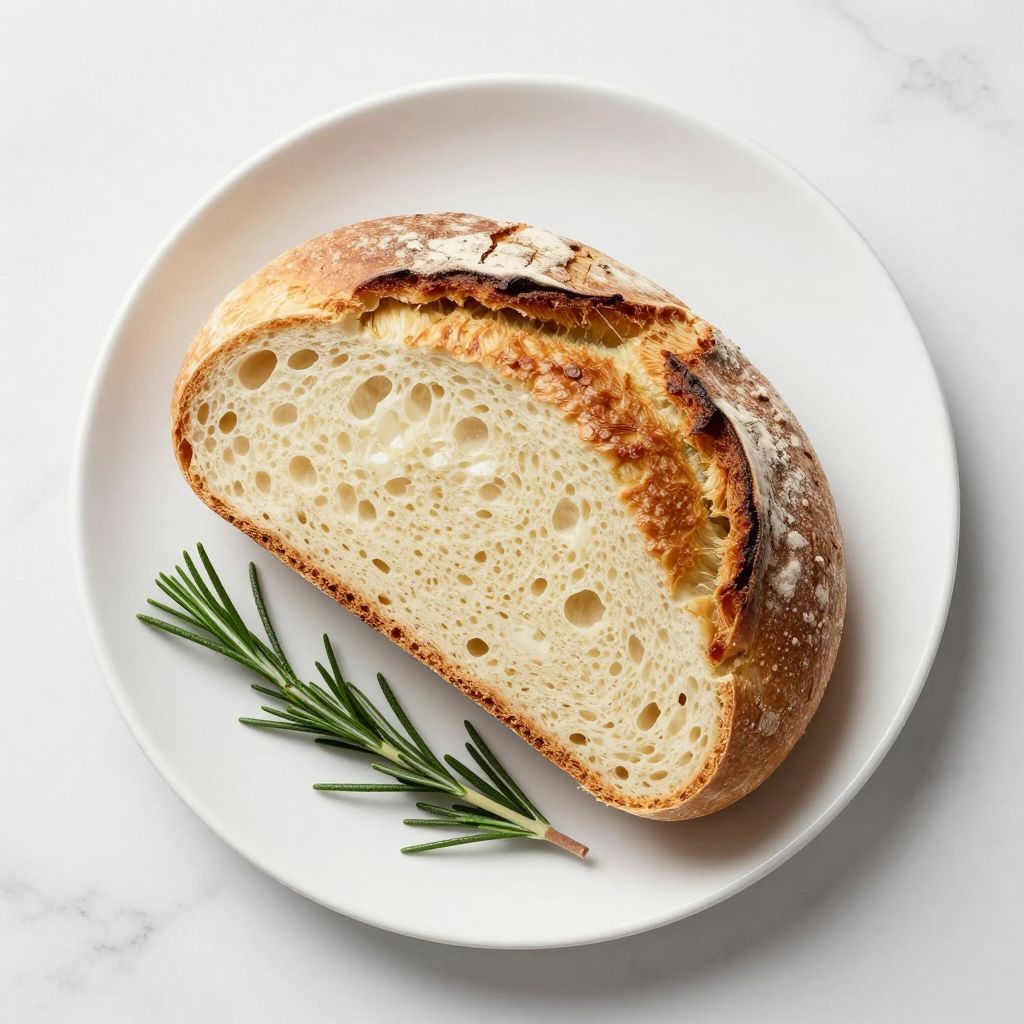
Crock Pot Bread Recipe
Ingredients
Equipment
Method
- Whisk together flour, instant yeast, and salt in a large mixing bowl, breaking up any lumps.
- Pour warm water (75 to 85 degrees Fahrenheit) into the dry ingredients and stir vigorously with a wooden spoon or dough whisk until all flour is hydrated and a shaggy, wet dough forms.
- Cover the bowl with a clean kitchen towel and let the dough rest for 20 minutes at room temperature.
- Rub the inside of your slow cooker insert generously with olive oil, especially bottom and sides.
- Use a wet bench scraper or rubber spatula to gently turn the dough onto parchment paper, then carefully lower it into the oiled slow cooker insert.
- Cover the slow cooker with its lid and set it to the warm setting (or keep heat off with lid on) for 4 to 6 hours, until dough roughly doubles in volume and feels puffy.
- Turn the slow cooker to low heat and bake uncovered for 3 to 4 hours until the top is light golden brown and an instant-read thermometer reads 205 to 210 degrees Fahrenheit.
- Carefully remove the bread using the parchment paper as a handle and transfer to a wire cooling rack.
- Let the bread cool for at least 30 minutes before slicing.