Beef cheeks recipe delivers the kind of melt-in-your-mouth tenderness that makes you wonder why you ever bothered with other cuts. This humble, affordable piece of meat transforms into something extraordinary with low and slow cooking.
Rich, gelatinous, and packed with deep beefy flavor, braised beef cheeks create a dish that feels like fine dining without the fancy price tag. Whether you’re impressing guests at a dinner party or treating your family to a cozy weekend meal, this recipe will become your new secret weapon.
Let me walk you through everything you need to know to nail this dish perfectly every single time.
Why You’ll Love This Recipe
Beef cheeks might sound intimidating, but they’re actually one of the most forgiving cuts to cook. Once you try them, you’ll understand why chefs have been obsessed with this cut for centuries.
- Incredibly tender meat that falls apart with just a fork
- Budget friendly compared to premium steak cuts
- The rich braising liquid doubles as an incredible sauce
- Mostly hands off cooking time lets you relax
- Impressive enough for special occasions yet simple to execute
My Experience Making This Recipe
The first time I made beef cheeks, I was honestly nervous. I’d heard horror stories about tough, chewy results from people who rushed the process.
After pulling the lid off my Dutch oven and seeing that glossy, caramelized meat practically dissolving into the wine sauce, I knew I’d found something special. The aroma that filled my kitchen was absolutely intoxicating.
My family devoured every last bite, and my partner literally scraped the pot clean with crusty bread. Now this recipe makes a regular appearance at our table, especially during colder months when comfort food calls.
Recipe Overview
- Recipe Name: Braised Beef Cheeks in Red Wine
- Servings: 6
- Prep Time: 30 minutes
- Cook Time: 3 hours 30 minutes
- Total Time: 4 hours
- Course: Main Course
- Cuisine: French
- Calories per Serving: 485 calories
Equipment You Will Need
- Large Dutch oven or heavy bottomed braising pot with lid
- Sharp knife for trimming
- Cutting board
- Wooden spoon
- Tongs
- Fine mesh strainer
- Measuring cups and spoons
- Kitchen twine (optional, for tying cheeks)
Ingredients for Beef Cheeks Recipe
For the Beef
- Beef cheeks, 2.5 pounds, trimmed of excess fat and silverskin
- Kosher salt, 2 teaspoons
- Black pepper, 1 teaspoon, freshly ground
- All purpose flour, 1/4 cup, for dredging
- Olive oil, 3 tablespoons
For the Braising Liquid
- Yellow onion, 1 large, roughly chopped
- Carrots, 2 medium, cut into 1 inch pieces
- Celery stalks, 2, cut into 1 inch pieces
- Garlic cloves, 6, smashed
- Tomato paste, 2 tablespoons
- Red wine, 2 cups, full bodied like Cabernet or Merlot
- Beef stock, 2 cups, preferably low sodium
- Fresh thyme, 4 sprigs
- Fresh rosemary, 2 sprigs
- Bay leaves, 2
Ingredient Notes and Substitutions
- Beef cheeks: High in collagen, which breaks down into silky gelatin during braising. Short ribs work as a substitute but cook slightly faster.
- Red wine: Adds acidity and depth to the braising liquid. Substitute with beef stock plus 2 tablespoons of red wine vinegar if avoiding alcohol.
- Tomato paste: Provides concentrated umami and color. Sun dried tomato paste offers even deeper flavor if available.
- Fresh herbs: Deliver aromatic complexity that dried herbs cannot match. Use 1 teaspoon each of dried thyme and rosemary in a pinch.
- Beef stock: Creates the base of your sauce. Homemade stock produces superior results, but quality store bought works fine.
How to Make Beef Cheeks Recipe
Step 1: Prepare and Season the Beef Cheeks
Remove beef cheeks from the refrigerator 30 minutes before cooking to bring them to room temperature. This ensures even cooking throughout the meat.
Pat the cheeks completely dry with paper towels, then season generously on all sides with salt and pepper. Dry meat sears better because moisture creates steam instead of browning.
Step 2: Dredge in Flour
Place flour on a shallow plate and lightly coat each beef cheek, shaking off any excess. The flour creates a barrier that helps develop a beautiful crust and later thickens the sauce naturally.
Step 3: Sear the Beef Cheeks
Heat olive oil in your Dutch oven over medium high heat until shimmering. Working in batches to avoid crowding, sear the beef cheeks for 3 to 4 minutes per side until deeply browned.
Resist the urge to move them around. That golden crust is flavor gold, and you need patience to achieve it. Transfer seared cheeks to a plate and set aside.
Step 4: Build the Aromatics
Reduce heat to medium and add onion, carrots, and celery to the pot. Cook for 6 to 8 minutes, stirring occasionally, until vegetables soften and begin to caramelize.
Add the smashed garlic and tomato paste, stirring constantly for about 1 minute until the paste darkens slightly and becomes fragrant. This step eliminates the raw tomato taste.
Step 5: Deglaze with Wine
Pour in the red wine and use your wooden spoon to scrape up all those delicious browned bits stuck to the bottom. Those fond bits contain concentrated flavor that will infuse your entire dish.
Let the wine simmer for 3 to 4 minutes to cook off some of the alcohol. You want the harsh boozy edge gone while keeping the wine’s fruity depth.
Step 6: Add Remaining Liquids and Herbs
Pour in the beef stock and add the thyme, rosemary, and bay leaves. Bring the liquid to a gentle simmer.
Nestle the seared beef cheeks back into the pot. The liquid should come about two thirds up the sides of the meat. Add more stock if needed.
Step 7: Braise Low and Slow
Cover the Dutch oven with a tight fitting lid and transfer to an oven preheated to 300 degrees Fahrenheit. Braise for 3 to 3.5 hours until the meat is completely tender.
You’ll know it’s ready when a fork slides through with zero resistance. The low temperature allows collagen to convert to gelatin without drying out the meat.
Step 8: Rest and Prepare the Sauce
Carefully transfer the beef cheeks to a serving platter and tent loosely with foil. Strain the braising liquid through a fine mesh strainer into a saucepan, pressing on the vegetables to extract maximum flavor.
Step 9: Reduce the Sauce
Bring the strained liquid to a boil over medium high heat. Reduce by about one third until the sauce coats the back of a spoon, roughly 10 to 15 minutes.
Taste and adjust seasoning with salt and pepper. The reduction concentrates flavors, so season carefully at this stage.
Step 10: Serve
Spoon the reduced sauce generously over the beef cheeks. Serve immediately while everything is piping hot.
Pro Tip: For the silkiest sauce, stir in 2 tablespoons of cold butter right at the end. This technique, called mounting, adds richness and a glossy restaurant quality finish.
Tips for the Best Beef Cheeks Recipe
- Ask your butcher to trim the beef cheeks for you to save time and effort at home.
- Never rush the searing step. Deep browning equals deep flavor in the final dish.
- Use a wine you’d actually drink. Cooking concentrates wine flavors, so bad wine makes bad sauce.
- Keep your oven temperature steady. Too high and the meat toughens before the collagen breaks down.
- Make this dish a day ahead. The flavors develop beautifully overnight in the refrigerator.
- Skim the fat from the surface of the sauce for a cleaner, more refined result.
Common Mistakes to Avoid
- Skipping the sear: Without proper browning, your dish will lack depth and taste flat and boiled.
- Braising at too high a temperature: This causes the meat to seize up and become tough instead of tender.
- Using too much liquid: The beef cheeks should braise, not boil. Too much liquid dilutes the sauce.
- Removing the lid too often: Every peek releases heat and steam, extending cooking time and drying out the meat.
- Not reducing the sauce enough: A thin, watery sauce wastes all that beautiful braising flavor you built.
Serving Suggestions
Beef cheeks deserve accompaniments that can soak up that incredible sauce. Choose something creamy or starchy to complete this comfort food masterpiece.
- Creamy mashed potatoes or buttery polenta
- Wide pappardelle pasta tossed in the sauce
- Crusty sourdough bread for mopping up every drop
- Roasted root vegetables like parsnips and turnips
- Creamy white bean puree with garlic
Variations to Try
- Italian style: Add crushed San Marzano tomatoes and swap rosemary for fresh basil. Serve over creamy polenta.
- Asian inspired: Replace wine with shaoxing and add star anise, ginger, and soy sauce. Serve with steamed rice.
- Mexican barbacoa: Use dried chilies, cumin, and oregano. Shred the meat for incredible tacos.
- Guinness braised: Swap red wine for stout beer and add a touch of brown sugar. Perfect for St. Patrick’s Day.
- Mediterranean: Add olives, capers, and orange zest for a Provencal twist on the classic.
Dietary Adaptations
- Gluten free: Replace all purpose flour with rice flour or tapioca starch for dredging with identical results.
- Dairy free: Skip the butter finishing step and the dish remains completely dairy free as written.
- Low carb and keto: Omit the flour dredging and serve over cauliflower mash instead of potatoes.
- Whole30 compliant: Use arrowroot instead of flour, skip the wine, and use compliant beef stock.
Storage and Reheating
Refrigerator
Store beef cheeks and sauce in an airtight container for up to 4 days. The flavors actually improve after a night in the fridge.
- Cool completely before refrigerating
- Store meat and sauce together
- Skim solidified fat from the surface before reheating
Freezer
This dish freezes beautifully for up to 3 months. Portion it into meal sized containers for easy future dinners.
- Freeze in the sauce to prevent drying
- Leave headspace for expansion
- Thaw overnight in the refrigerator before reheating
Reheating
Gentle reheating preserves the tender texture you worked so hard to achieve. Avoid high heat methods.
- Reheat gently in a covered pot over low heat
- Add a splash of stock if the sauce has thickened too much
- Microwave in 30 second intervals if short on time
Nutrition Information
| Nutrient | Amount |
|---|---|
| Calories | 485 kcal |
| Total Fat | 24g |
| Saturated Fat | 9g |
| Carbohydrates | 12g |
| Fiber | 2g |
| Sugar | 4g |
| Protein | 42g |
| Sodium | 580mg |
| Cholesterol | 125mg |
Nutritional values are estimates based on standard ingredients and may vary depending on specific products and portion sizes used.
Frequently Asked Questions
Can I make beef cheeks in a slow cooker?
Absolutely. Sear the cheeks and saute aromatics on the stovetop, then transfer everything to your slow cooker. Cook on low for 8 to 10 hours or high for 5 to 6 hours.
How do I know when beef cheeks are done?
The meat should offer no resistance when pierced with a fork. If you feel any toughness, continue braising in 30 minute increments until completely tender.
Can I prepare beef cheeks ahead of time?
This is actually the ideal make ahead dish. Prepare it a day before, refrigerate overnight, and reheat gently before serving for even better flavor.
Why are my beef cheeks tough?
Toughness means they need more time. Beef cheeks require long, slow cooking to break down the collagen. Return them to the oven and keep braising.
Where can I buy beef cheeks?
Check your local butcher shop or the meat counter at upscale grocery stores. You can request them specially if they’re not displayed.
Final Thoughts
This beef cheeks recipe proves that the most humble cuts often deliver the most spectacular results. With a little patience and attention to technique, you’ll create a dish that rivals any high end restaurant.
Give this recipe a try for your next special occasion or cozy weekend dinner. Once you experience that fork tender, richly flavored meat melting on your tongue, you’ll wonder why you waited so long to discover beef cheeks.
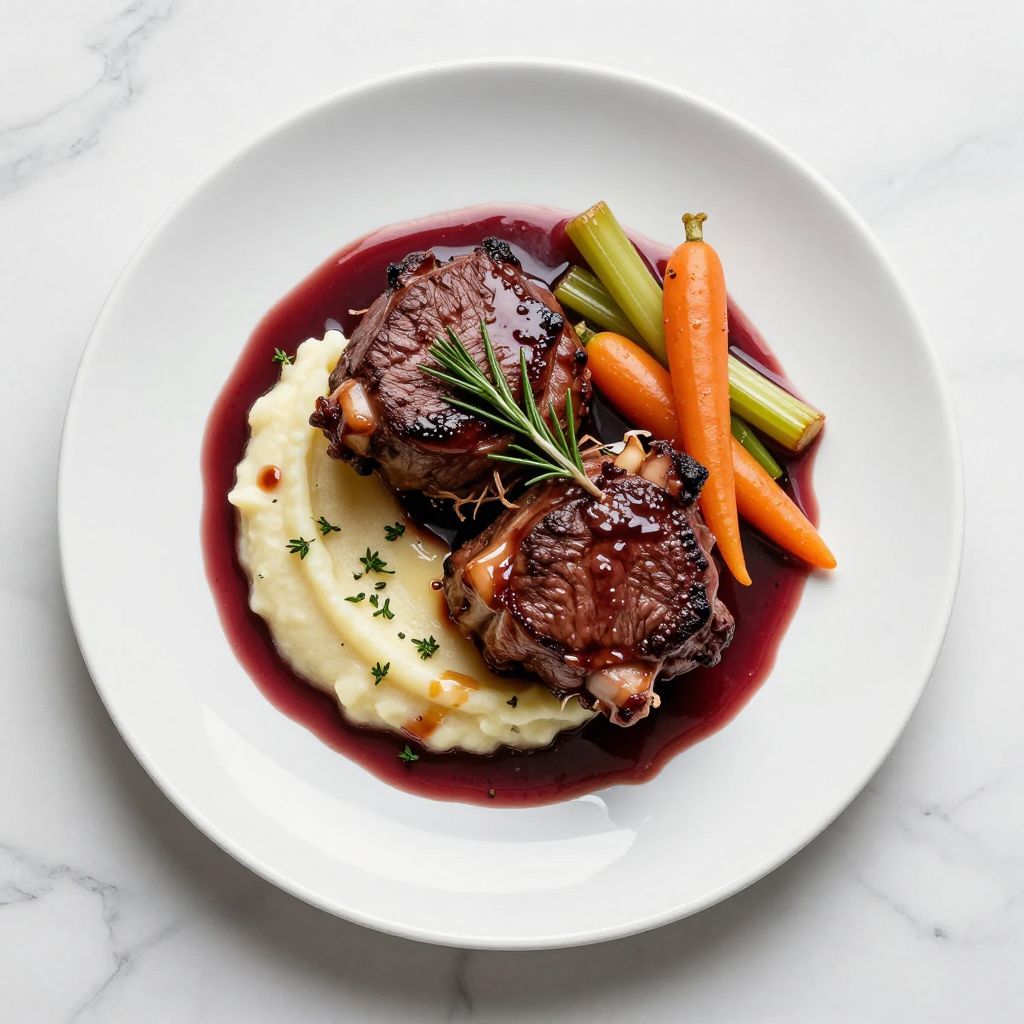
Braised Beef Cheeks in Red Wine
Ingredients
Equipment
Method
- Remove beef cheeks from the refrigerator 30 minutes before cooking to bring them to room temperature. Pat the cheeks completely dry with paper towels, then season generously on all sides with salt and pepper.
- Place flour on a shallow plate and lightly coat each beef cheek, shaking off any excess.
- Heat olive oil in your Dutch oven over medium high heat until shimmering. Working in batches to avoid crowding, sear the beef cheeks for 3 to 4 minutes per side until deeply browned. Transfer seared cheeks to a plate and set aside.
- Reduce heat to medium and add onion, carrots, and celery to the pot. Cook for 6 to 8 minutes, stirring occasionally, until vegetables soften and begin to caramelize.
- Add the smashed garlic and tomato paste, stirring constantly for about 1 minute until the paste darkens slightly and becomes fragrant.
- Pour in the red wine and use your wooden spoon to scrape up all the browned bits stuck to the bottom. Let the wine simmer for 3 to 4 minutes to cook off some of the alcohol.
- Pour in the beef stock and add the thyme, rosemary, and bay leaves. Bring the liquid to a gentle simmer. Nestle the seared beef cheeks back into the pot. The liquid should come about two thirds up the sides of the meat.
- Cover the Dutch oven with a tight fitting lid and transfer to an oven preheated to 300 degrees Fahrenheit. Braise for 3 to 3.5 hours until the meat is completely tender and a fork slides through with zero resistance.
- Carefully transfer the beef cheeks to a serving platter and tent loosely with foil. Strain the braising liquid through a fine mesh strainer into a saucepan, pressing on the vegetables to extract maximum flavor.
- Bring the strained liquid to a boil over medium high heat. Reduce by about one third until the sauce coats the back of a spoon, roughly 10 to 15 minutes. Taste and adjust seasoning with salt and pepper.
- Spoon the reduced sauce generously over the beef cheeks and serve immediately while everything is piping hot.