Crudo is an Italian seafood dish where raw fish or shellfish gets dressed with nothing but the finest olive oil, fresh lemon juice, and sea salt. This minimalist approach showcases the delicate flavor of pristine seafood, making it a restaurant-worthy appetizer you can prepare at home in minutes.
If you’ve ever wondered how to eat fish raw safely and beautifully, this recipe delivers that answer with elegant simplicity. Let’s explore how to build this stunning dish.
Why You’ll Love This Recipe
Crudo strips away all the fuss and lets the seafood speak for itself. You get restaurant-quality results without any cooking required.
- Takes just 10 minutes from start to table
- Impresses dinner guests with minimal effort
- Celebrates the natural briny sweetness of fresh fish
- Works as an elegant appetizer or light main course
- Completely customizable with your favorite garnishes
My Experience Making This Recipe
The first time I made crudo, I was nervous about serving raw fish to friends who weren’t sushi enthusiasts. I sourced the best fish I could find from a trusted fishmonger and followed the simplest preparation possible.
The moment my guests tasted it, their skepticism melted away. The briny sweetness of the raw fish combined with peppery olive oil and bright citrus created something genuinely magical on their palates.
Now I make crudo regularly for special occasions, and it’s become my go-to dish when I want to impress without spending hours in the kitchen. The key is respecting the ingredient and not overthinking it.
Recipe Overview
- Recipe Name: Crudo
- Servings: 4
- Prep Time: 10 minutes
- Cook Time: 0 minutes
- Total Time: 10 minutes
- Course: Appetizer
- Cuisine: Italian
- Calories per Serving: 180
Equipment You Will Need
- Sharp fillet knife or sashimi knife
- Cutting board (preferably wood or plastic)
- Small bowl for mixing dressing
- Whisk or fork
- Microplane zester (optional, for citrus zest)
- Small spoon or demitasse spoon for serving
- Chilled serving plates
Ingredients for Crudo
- 1 pound sushi-grade fish (yellowtail, fluke, sea bass, or scallops), skin removed
- 1/4 cup extra-virgin olive oil
- 2 lemons, freshly squeezed (about 1/4 cup juice)
- 1 teaspoon sea salt
- 1/4 teaspoon freshly cracked black pepper
- 1/2 teaspoon red pepper flakes (optional)
- Fresh herbs (thinly sliced scallions, microgreens, or parsley)
- Lemon zest for garnish
Ingredient Notes and Substitutions
- Sushi-grade fish: This designation means the fish has been frozen at proper temperatures to eliminate parasites, making it safe to eat raw. If sushi-grade isn’t available, ask your fishmonger which fish is safest for raw consumption, or substitute with sushi-grade scallops.
- Extra-virgin olive oil: The fruity, grassy notes of high-quality olive oil define the dish’s character. You can use a standard olive oil, but you’ll lose the sophisticated depth that makes this dish special.
- Fresh lemon juice: Bottled juice tastes hollow and metallic by comparison. Squeeze lemons by hand just before serving to preserve brightness.
- Sea salt: Its larger crystals dissolve slowly and provide better texture than table salt. Kosher salt works if sea salt isn’t on hand.
- Fish variety: Yellowtail, fluke, halibut, and snapper all work beautifully; scallops offer a sweeter, buttery alternative.
How to Make Crudo
Step 1: Source and Inspect Your Fish
Visit a reputable fishmonger and specifically request sushi-grade fish for raw consumption. Ask when the fish arrived and trust your nose: it should smell briny and oceanic, never fishy or ammonia-like.
Step 2: Chill Your Plates and Equipment
Place serving plates in the freezer for at least 10 minutes before plating. Cold surfaces keep the fish at the right temperature and enhance the eating experience.
Step 3: Prepare the Fish
Pat the fish dry with paper towels to remove excess moisture. Using a sharp knife, gently remove any remaining skin, pin bones, or bloodline.
Step 4: Slice the Fish
Using a very sharp, long knife, slice the fish thinly at a slight angle (about 1/8 inch thick). Dip your knife in warm water between cuts to keep the blade sharp and prevent ragging the delicate flesh.
Step 5: Arrange on Plates
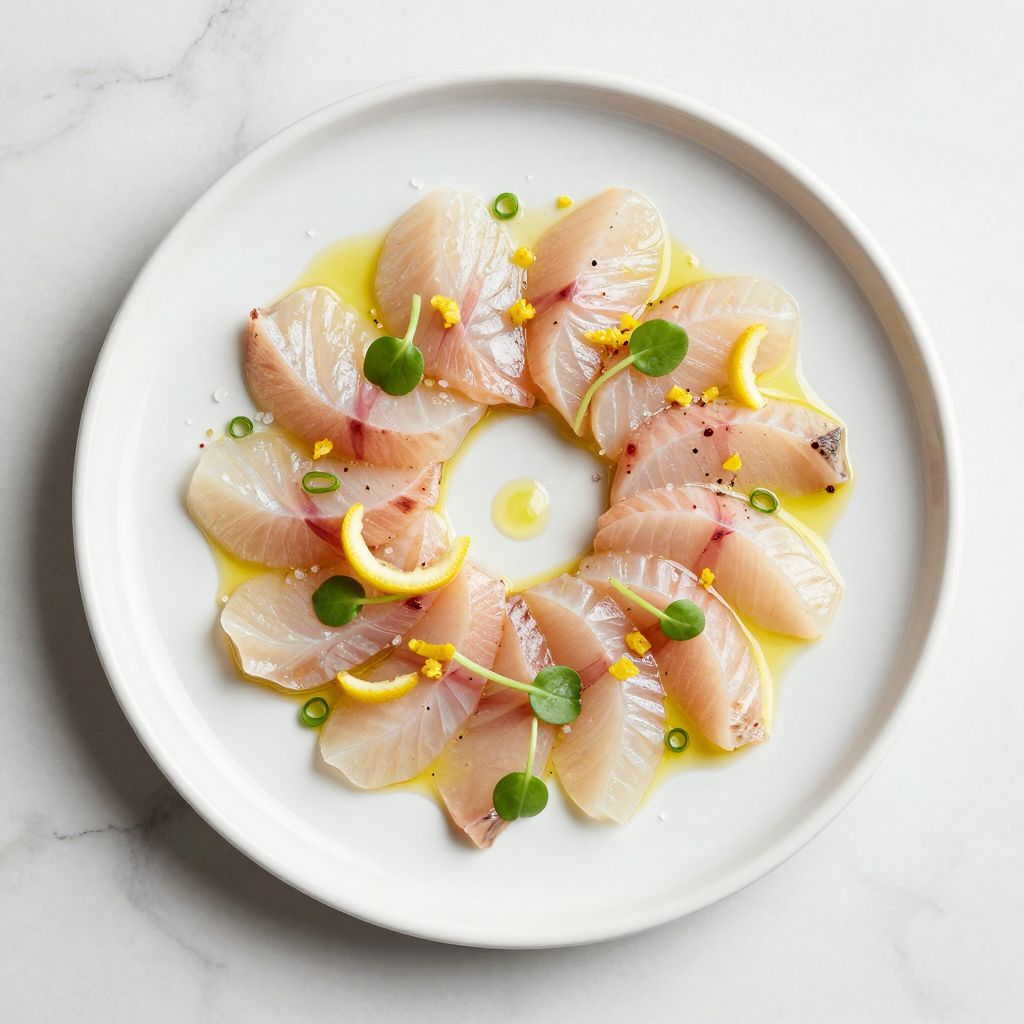
Lay the sliced fish slightly overlapping on your chilled plates in a gentle pattern. Leave some white space on the plate for visual elegance.
Step 6: Make the Dressing
In a small bowl, whisk together the lemon juice, olive oil, sea salt, and black pepper. Taste it on a piece of fish before dressing the plate to ensure the balance feels right.
Step 7: Dress and Garnish
Drizzle the dressing carefully over the fish slices, using about 2 tablespoons per plate. Scatter fresh herbs, red pepper flakes, and lemon zest on top for color and flavor complexity.
Step 8: Serve Immediately
Serve the crudo right away while the fish is coldest and the flavors are brightest. Each bite should taste of pure seafood, oil, and citrus in perfect balance.
Pro Tip: The quality of your olive oil makes or breaks this dish, so splurge on a bottle you genuinely love tasting by itself.
Tips for the Best Crudo
- Buy your fish the day you plan to serve it, and ask the fishmonger to slice it if you’re nervous about the technique. Most will happily oblige.
- Taste your dressing on a piece of fish before applying it to the plate; acidity levels vary with lemon variety and olive oil brand.
- Use a very sharp knife and work quickly to minimize the fish sitting exposed to air. Dull blades crush the delicate flesh.
- Never add the salt directly to the fish more than a few minutes before serving, as it draws out moisture and makes the fish weep.
- Serve on ice or chilled plates to keep the fish at the perfect temperature throughout eating.
- Don’t oversauce the dish; the goal is to complement the fish, not mask it.
Common Mistakes to Avoid
- Using non-sushi-grade fish creates food safety risks and ruins the eating experience. Always confirm with your fishmonger that the fish is safe for raw consumption.
- Cutting the fish too thick makes it tough and chewy instead of tender and silky. Thin slicing is essential.
- Adding salt too far in advance causes the fish to release liquid and become mushy. Season just before serving.
- Dressing the fish more than a few minutes before service lets the acid cook the fish slightly, creating an undesirable texture.
- Using bottled lemon juice or low-quality olive oil creates a flat, one-dimensional flavor profile that defeats the whole purpose.
Serving Suggestions
Crudo shines as the opening act of a multi-course meal or paired with chilled white wine for a light lunch. A few bites transport you straight to an Italian coastal village.
- Serve with crusty bread or crostini to soak up the beautiful dressing
- Pair with crisp white wines like Vermentino or Pinot Grigio
- Follow with a pasta course for a complete Italian experience
- Add a small side salad of peppery arugula dressed simply with olive oil
- Top with crispy breadcrumbs or toasted panko for textural contrast
Variations to Try
- Crudo with Citrus Mix: Combine lemon, lime, and grapefruit juice for a more complex acid profile that adds tropical brightness and depth.
- Spicy Crudo: Add sliced fresh chilies or increase red pepper flakes for a more aggressive kick that pairs beautifully with shellfish.
- Crudo with Avocado: Layer thin avocado slices between the fish for a richer, creamier dish that softens the acidity.
- Scallop Crudo: Substitute large sushi-grade scallops for a sweeter, more delicate eating experience that feels luxurious.
- Mixed Seafood Crudo: Combine two or three types of fish and shellfish on one plate for a showcase of different briny flavors and textures.
Dietary Adaptations
- Gluten-free: Crudo is naturally gluten-free; simply skip the bread accompaniment or serve with gluten-free crackers if desired.
- Dairy-free: This recipe contains no dairy whatsoever, making it perfectly suitable for anyone avoiding animal products.
- Vegan/Vegetarian: Replace fish with thinly sliced mushrooms (like king oyster) or firm tofu prepared the same way for a plant-based version, though the flavor profile shifts significantly.
- Low-carb/Keto: Crudo is an ideal keto appetizer with zero carbohydrates and healthy fats from olive oil and fish.
Storage and Reheating
Refrigerator
Crudo does not keep well because the acid continues to cook the fish, and flavors fade quickly. Eat it immediately after preparation for the best results.
- If you must store leftovers, keep them in an airtight container for no more than 2 hours
Freezer
Never freeze crudo, as freezing changes the delicate texture of the raw fish irreversibly. Prepare only what you plan to eat.
- Uncooked fish can be frozen before slicing if you need to store it, then thawed and sliced fresh
Reheating
This dish is meant to be served raw and cold, so reheating is not applicable. Enjoy it fresh from preparation for optimal flavor and texture.
Nutrition Information
| Nutrient | Amount |
|---|---|
| Calories | 180 |
| Total Fat | 14 g |
| Saturated Fat | 2 g |
| Carbohydrates | 2 g |
| Fiber | 0 g |
| Sugar | 0 g |
| Protein | 20 g |
| Sodium | 420 mg |
| Cholesterol | 35 mg |
These values are approximate and based on a serving of 4 ounces of fish with dressing. Values vary depending on the specific fish variety chosen.
Frequently Asked Questions
Is it safe to eat raw fish at home?
Yes, when you source sushi-grade fish from a reputable fishmonger. Sushi-grade means the fish has been properly frozen to eliminate parasites, making it safe for raw consumption.
Can I make crudo ahead of time?
No, crudo must be prepared just before serving. The acid in the lemon juice will gradually cook the fish, and flavors fade rapidly.
What’s the difference between crudo and ceviche?
Crudo is dressed with oil and served immediately, while ceviche is “cooked” by citrus acid over several hours. Crudo focuses on the raw fish’s natural texture, ceviche creates a firmer, cooked-like consistency.
Can I use frozen fish from the grocery store?
Standard frozen fish is not treated the same way as sushi-grade fish and carries parasitic risks. Always buy sushi-grade from a dedicated fishmonger or upscale grocery store.
What if I don’t like one of the garnishes?
Crudo is endlessly customizable: skip the red pepper flakes if you dislike heat, omit the herbs if you prefer simplicity, or add capers and olives for briny complexity. Make it your own.
How do I know if my fish is fresh enough?
Fresh fish smells briny and oceanic, never “fishy” or ammonia-like. The flesh should be firm, the color vibrant, and it should feel cold to the touch.
Final Thoughts
Crudo proves that the simplest dishes often deliver the most impact. With just a few pristine ingredients and a sharp knife, you create something elegant enough for the finest restaurants.
Give this recipe a try the next time you want to impress without stress. Your guests will taste the quality of every single element, and you’ll wonder why you didn’t make crudo sooner.
Crudo
Ingredients
Equipment
Method
- Visit a reputable fishmonger and request sushi-grade fish for raw consumption. Ensure the fish smells briny and oceanic.
- Place serving plates in the freezer for at least 10 minutes to chill.
- Pat the fish dry with paper towels, then remove any skin, pin bones, or bloodline using a sharp knife.
- Slice the fish thinly at a slight angle, about 1/8 inch thick, dipping the knife in warm water between cuts.
- Arrange the sliced fish slightly overlapping on the chilled plates, leaving some white space for presentation.
- In a small bowl, whisk together lemon juice, olive oil, sea salt, and black pepper. Taste on a piece of fish and adjust seasoning.
- Drizzle about 2 tablespoons of the dressing over the fish slices on each plate.
- Scatter fresh herbs, red pepper flakes (if using), and lemon zest over the dressed fish as garnish.
- Serve immediately while the fish is cold and flavors are fresh and bright.