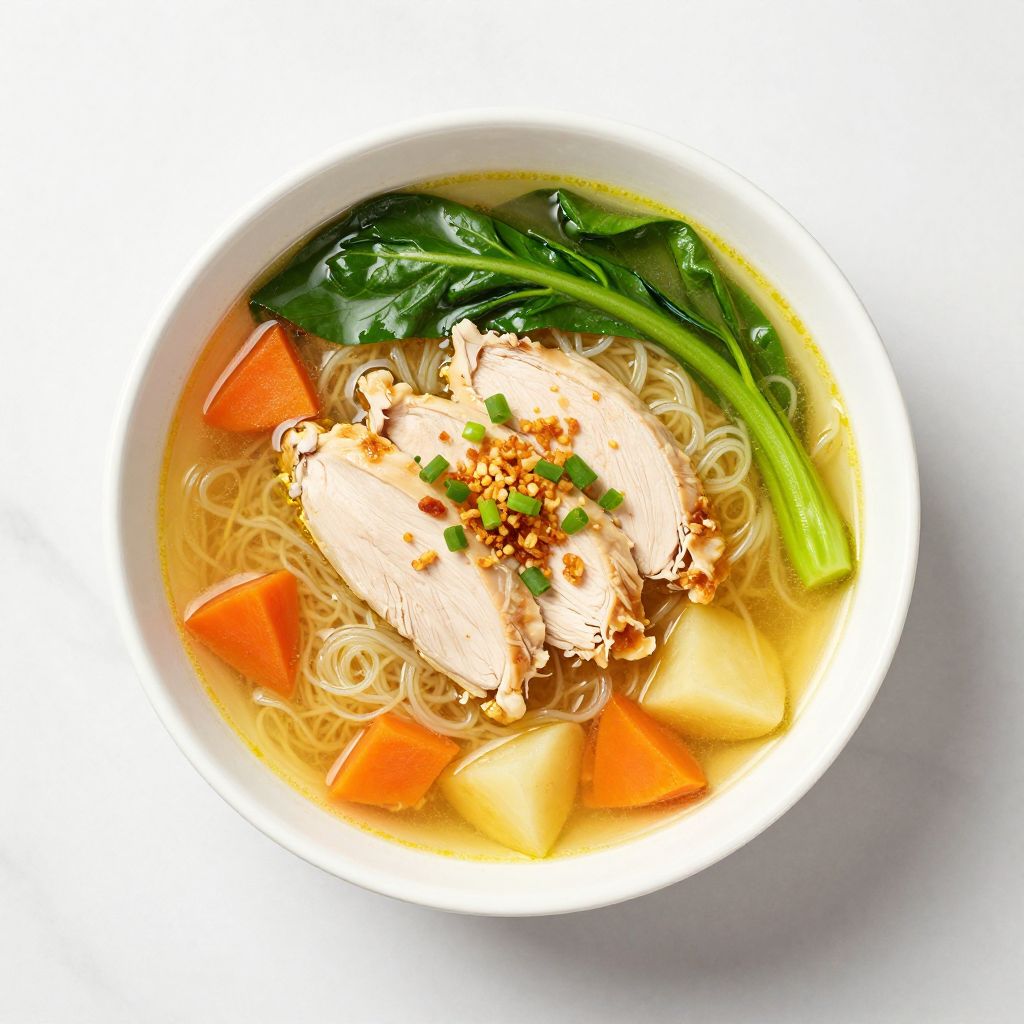
Lomi recipe is a Filipino comfort food that brings warmth to any table with its thick, egg-enriched broth and tender noodles.
This humble yet satisfying dish combines simple ingredients like flour dumplings, fresh vegetables, and eggs into something truly special that tastes far more complicated than it actually is.
Whether you’re feeding a family on a budget or craving authentic Filipino cuisine, lomi delivers comfort in a single bowl.
Why You’ll Love This Recipe
Lomi feels like a warm hug from someone who knows exactly what you need.
- Rich, silky broth that clings to every noodle thanks to the cornstarch-egg mixture.
- Ready in under 30 minutes from start to finish.
- Uses affordable pantry staples and whatever vegetables you have on hand.
- Endlessly customizable to match your taste preferences and dietary needs.
- One-pot cooking means minimal cleanup and maximum satisfaction.
My Experience Making This Recipe
I first tried lomi at my neighbor’s kitchen, and I was shocked by how humble ingredients transformed into something so craveable. The moment she cracked those eggs into the simmering broth, I watched the magic happen right before my eyes.
What struck me most was how the cornstarch slurry created this gorgeous silky texture that made the broth coat your mouth in the best possible way. My kids asked for seconds without prompting, which practically never happens in my house.
Now I make it at least twice a month, and each time feels like discovering it again for the first time. The sensory experience is pure comfort: the aroma of simmering broth filling your kitchen, the slight wobble of the egg threads, and that first spoonful hitting your palate.
Recipe Overview
- Recipe Name: Lomi Recipe
- Servings: 4 servings
- Prep Time: 15 minutes
- Cook Time: 20 minutes
- Total Time: 35 minutes
- Course: Main Course
- Cuisine: Filipino
- Calories per Serving: 285 calories
Equipment You Will Need
- Large pot (at least 3-quart capacity)
- Wooden spoon for stirring
- Measuring cups and spoons
- Knife and cutting board
- Small bowl for mixing cornstarch slurry
- Ladle for serving
- Fork for whisking eggs
Ingredients for Lomi Recipe
- 2 tablespoons vegetable oil
- 4 cloves garlic, minced
- 1 medium onion, diced
- 8 ounces chicken breast, thinly sliced
- 6 cups chicken or vegetable broth
- 1 cup fresh egg noodles or fresh ramen noodles
- 1 cup choy sum or bok choy, chopped
- 1/2 cup carrots, diced
- 2 medium potatoes, diced small
- 3 tablespoons cornstarch
- 4 tablespoons water
- 3 eggs, beaten
- 1 teaspoon salt, or to taste
- 1/2 teaspoon black pepper
- 1 tablespoon fish sauce (patis), optional but recommended
Ingredient Notes and Substitutions
- Chicken breast: Provides lean protein and neutral flavor that lets the broth shine. Substitute with pork, shrimp, or tofu for different flavor profiles.
- Fresh egg noodles: Create the signature tender texture and absorb the silky broth beautifully. Dried ramen noodles work if you cook them separately first to prevent mushiness.
- Choy sum: Adds peppery freshness and holds its shape when cooked briefly. Any leafy green like spinach, cabbage, or kale works, though the flavor will shift slightly.
- Potatoes: Add body and subtle sweetness to the broth. Sweet potatoes create a slightly different flavor, or omit entirely for a lighter version.
- Cornstarch: Thickens the broth into that signature silky consistency. Flour slurry or tapioca starch work as substitutes with minor texture variations.
- Fish sauce: Deepens umami and authenticity without making the dish taste fishy. Soy sauce or salty broth adjustment works if you prefer to skip it.
How to Make Lomi Recipe
Step 1: Heat Oil and Cook Aromatics
Pour the vegetable oil into your large pot over medium-high heat and let it shimmer for about 30 seconds. Add the minced garlic and diced onion, stirring constantly until they turn fragrant and softened, roughly 2 minutes total.
This aromatic foundation builds deeper flavor in your broth and prevents the soup from tasting flat. You want the garlic golden but not brown, since burnt garlic tastes bitter.
Step 2: Sear the Chicken
Add the thinly sliced chicken breast to the pot and cook for about 3 minutes, stirring occasionally until the chicken is mostly opaque. The meat doesn’t need to cook through completely since it will finish cooking in the broth.
Searing the chicken briefly helps seal in flavor and keeps the pieces tender rather than shredded. This step takes just a few minutes and makes a noticeable difference in the final dish.
Step 3: Pour In the Broth
Pour all 6 cups of chicken or vegetable broth into the pot and increase the heat to high until it reaches a gentle boil. This will take about 5 minutes depending on your stove’s power.
Using a flavorful broth matters here since it’s the foundation of the entire dish. Homemade broth is ideal, but quality store-bought broth works perfectly fine too.
Step 4: Add Root Vegetables
Add the diced potatoes and carrots to the boiling broth, then reduce the heat to medium and let them simmer for about 8 minutes. These vegetables need time to soften and release their flavors into the broth.
Cutting them into small, uniform pieces ensures they cook at the same rate and look appealing in the final bowl. Larger chunks take longer and create uneven cooking.
Step 5: Add Noodles and Greens
Once the potatoes are almost tender, add the fresh egg noodles and chopped choy sum to the pot, stirring gently to separate the noodles. Cook for about 3 minutes until the noodles are nearly tender and the greens have wilted slightly.
Fresh noodles cook fast, so watch them closely to avoid mushiness. Adding the greens at the end preserves their fresh taste and bright color.
Step 6: Make the Cornstarch Slurry
While the noodles cook, whisk together 3 tablespoons of cornstarch and 4 tablespoons of water in a small bowl until completely smooth with no lumps. This mixture is what creates lomi’s signature silky, thickened broth.
Mixing the cornstarch and water separately prevents lumps from forming in the soup. A smooth slurry thickens evenly throughout the pot rather than creating clumpy texture.
Step 7: Thicken the Broth
Slowly pour the cornstarch slurry into the simmering pot while stirring constantly to distribute it evenly. Continue stirring for about 1 minute until the broth visibly thickens and turns slightly cloudy.
Stirring continuously prevents the starch from settling and clumping at the bottom of the pot. The broth should coat the back of a spoon when it reaches the right consistency.
Step 8: Add Eggs and Season
Reduce the heat to low, then slowly pour the beaten eggs into the pot while stirring gently in a circular motion to create those beautiful egg threads throughout the broth. Stop stirring after about 30 seconds and let the eggs set for another minute.
Adding eggs to a gentle simmer rather than a rolling boil prevents them from becoming tough and rubbery. The circular stirring motion creates attractive, silky egg strands instead of lumpy scrambled texture.
Step 9: Taste and Adjust
Stir in the salt, black pepper, and fish sauce if using, then taste the broth carefully. Add more salt or seasoning as needed since flavors develop differently in each pot.
Seasoning at the end allows you to control the final flavor precisely. Fish sauce adds authentic depth but is optional if you prefer a milder profile.
Pro Tip: Pour the beaten eggs in a slow, steady stream while stirring gently in circles to create silky threads rather than scrambled texture, and your lomi will look restaurant-worthy in your own kitchen.
Tips for the Best Lomi Recipe
- Use fresh egg noodles whenever possible since they create a superior silky texture compared to dried noodles. If using dried noodles, cook them separately until just tender, then add them near the very end.
- Don’t skip the cornstarch slurry step because it’s what transforms a simple chicken soup into authentic lomi. Mix it smoothly beforehand and add it slowly while stirring to avoid lumps.
- Keep the broth at a gentle simmer rather than a rolling boil when adding eggs to prevent them from becoming tough. Slow, gentle cooking creates those gorgeous silky egg threads.
- Taste the broth before serving and adjust seasoning aggressively because lomi is all about bold, comforting flavors. A pinch more salt or fish sauce makes a huge difference.
- Cut all vegetables into uniform, small pieces so they cook evenly and look appealing in the bowl. Uneven cutting creates texture inconsistency and looks sloppy.
- Add delicate greens near the end of cooking to preserve their color and fresh taste. Early addition turns them drab and mushy.
Common Mistakes to Avoid
- Adding cornstarch directly to the broth causes lumps and uneven thickening. Always mix it with water first to create a smooth slurry.
- Cooking the eggs at too high a temperature turns them into small tough pieces instead of silky threads. Lower the heat before adding eggs.
- Using pre-cooked or canned noodles instead of fresh noodles creates mushy, unappetizing texture. Fresh noodles are worth seeking out for this dish.
- Overseasoning too early prevents you from adjusting flavors properly at the end. Wait until the final step to taste and correct the seasoning.
- Skipping the sear step on the chicken means losing that caramelized depth and the meat cooks unevenly in the broth. A quick sear makes a real difference.
Serving Suggestions
Lomi shines as a complete meal on its own, but a few simple sides elevate the experience beautifully.
- Serve in warmed bowls with a squeeze of fresh calamansi or lemon juice stirred in just before eating.
- Pair with crispy fried egg on the side for extra richness and texture contrast.
- Add a small dish of fish sauce mixed with chili on the side for those who enjoy extra heat and umami.
- Serve alongside steamed white rice for guests who prefer to mix their lomi into rice.
- Top with crispy garlic chips and fresh green onion slices for added crunch and brightness.
Variations to Try
- Seafood Lomi: Replace chicken with shrimp or a mix of shrimp, mussels, and squid for briny sweetness. The seafood cooks faster, so add it just before the noodles.
- Vegetarian Lomi: Use vegetable broth and replace chicken with extra mushrooms, tofu, or chickpeas for protein. The earthiness from mushrooms creates a deeply satisfying broth.
- Creamy Coconut Lomi: Stir in 1 cup of coconut milk after thickening to create a richer, tropical version. This shifts the profile entirely while keeping the egg threads.
- Spicy Lomi: Add minced fresh chili or chili flakes to the aromatics at the beginning for persistent heat throughout. Adjust heat level by controlling the amount.
- Loaded Lomi: Toss in extra vegetables like green beans, corn, bell peppers, or broccoli for more volume and nutrition. This versatility means you can use whatever fresh vegetables you have.
Dietary Adaptations
- Gluten-Free: Substitute fresh egg noodles with gluten-free pasta or rice noodles, and use tamari instead of regular soy sauce if using it. The cornstarch slurry is naturally gluten-free.
- Dairy-Free: Lomi is already dairy-free as written, making it naturally accommodating for those avoiding dairy. No substitutions needed.
- Vegan/Vegetarian: Use vegetable broth and replace chicken with pressed tofu or extra mushrooms, and substitute eggs with a cashew cream mixed in gently at the end. The texture differs but the comfort level remains high.
- Low-Carb/Keto: Skip the potatoes and noodles entirely and replace with cauliflower rice or zucchini noodles added at the very end. The cornstarch slurry would need to be omitted or replaced with xanthan gum, which reduces the silky broth signature.
Storage and Reheating
Refrigerator
Cool the lomi completely before transferring to an airtight container, where it keeps for up to 3 days. The broth thickens further as it cools due to the cornstarch.
- Store noodles, broth, and solids together for easiest reheating.
- Refrigerated lomi tastes even better the next day as flavors meld.
Freezer
Lomi freezes reasonably well for up to 2 months, though the egg texture becomes slightly grainy upon thawing. Pour cooled lomi into freezer-safe containers leaving about an inch of headspace for expansion.
- Freeze without eggs if you plan to keep it longer than a week.
- Thaw overnight in the refrigerator before reheating.
Reheating
Reheat gently over medium-low heat, stirring occasionally and adding a splash of broth if the mixture thickened too much during storage. Never use high heat because the eggs can become tough and the noodles can turn mushy.
- Microwave in 2-minute intervals, stirring between each interval, until steaming hot.
- If the broth broke down, whisk a teaspoon of cornstarch with water and stir it in while heating for restored silkiness.
Nutrition Information
| Nutrient | Amount |
|---|---|
| Calories | 285 |
| Total Fat | 8g |
| Saturated Fat | 2g |
| Carbohydrates | 32g |
| Fiber | 2g |
| Sugar | 3g |
| Protein | 22g |
| Sodium | 850mg |
| Cholesterol | 95mg |
These values are estimates based on standard ingredient amounts and can vary based on specific brands used and portion sizes. If following specific dietary requirements, calculate more precisely based on your exact ingredients.
Frequently Asked Questions
Can I make lomi ahead of time?
You can prepare all ingredients and store them separately, then assemble and cook when ready. For best results, add the eggs and serve immediately rather than storing the finished dish with eggs already added.
What if my broth isn’t thickening properly?
Make sure your cornstarch slurry is completely smooth with no lumps before adding it to the pot. If you still see a thin broth after one minute of stirring, prepare another small slurry and add it slowly while stirring.
Can I use regular noodles instead of fresh ones?
Dried noodles work if you cook them separately until just tender, then drain and add them in the final minute of cooking. Fresh noodles create superior texture and are worth the hunt at Asian markets.
Why are my eggs coming out scrambled instead of in threads?
Your broth temperature is too high when you add the eggs. Lower the heat to a gentle simmer, pour the eggs in slowly while stirring gently in circles, then stop stirring and let them set.
Is fish sauce really necessary?
Fish sauce adds authentic depth and umami, but you can absolutely skip it for a milder, cleaner taste. Taste your broth first, and add a teaspoon at a time if you decide to use it.
Can I double this recipe?
Doubling works perfectly as long as you use a large enough pot, roughly 5 quarts or bigger. Double all ingredients including the cornstarch slurry, and the cooking times remain nearly the same.
Final Thoughts
Lomi recipe captures everything beautiful about Filipino comfort food: humble ingredients, minimal technique, and maximum satisfaction. This is the kind of dish you crave at
Lomi Recipe
Ingredients
Equipment
Method
- Pour the vegetable oil into your large pot over medium-high heat and let it shimmer for about 30 seconds.
- Add the minced garlic and diced onion, stirring constantly until they turn fragrant and softened, roughly 2 minutes total.
- Add the thinly sliced chicken breast to the pot and cook for about 3 minutes, stirring occasionally until the chicken is mostly opaque.
- Pour all 6 cups of chicken or vegetable broth into the pot and increase the heat to high until it reaches a gentle boil, about 5 minutes.
- Add the diced potatoes and carrots to the boiling broth, then reduce the heat to medium and let them simmer for about 8 minutes.
- Once the potatoes are almost tender, add the fresh egg noodles and chopped choy sum to the pot, stirring gently to separate the noodles.
- Cook the noodles and greens for about 3 minutes until the noodles are nearly tender and the greens have wilted slightly.
- While the noodles cook, whisk together the cornstarch and water in a small bowl until completely smooth with no lumps.
- Slowly pour the cornstarch slurry into the simmering pot while stirring constantly to distribute it evenly.
- Continue stirring for about 1 minute until the broth visibly thickens and turns slightly cloudy.
- Reduce the heat to low, then slowly pour the beaten eggs into the pot while stirring gently in a circular motion to create egg threads.
- Stop stirring after about 30 seconds and let the eggs set for another minute.
- Stir in the salt, black pepper, and fish sauce if using, then taste the broth and adjust seasoning as needed.