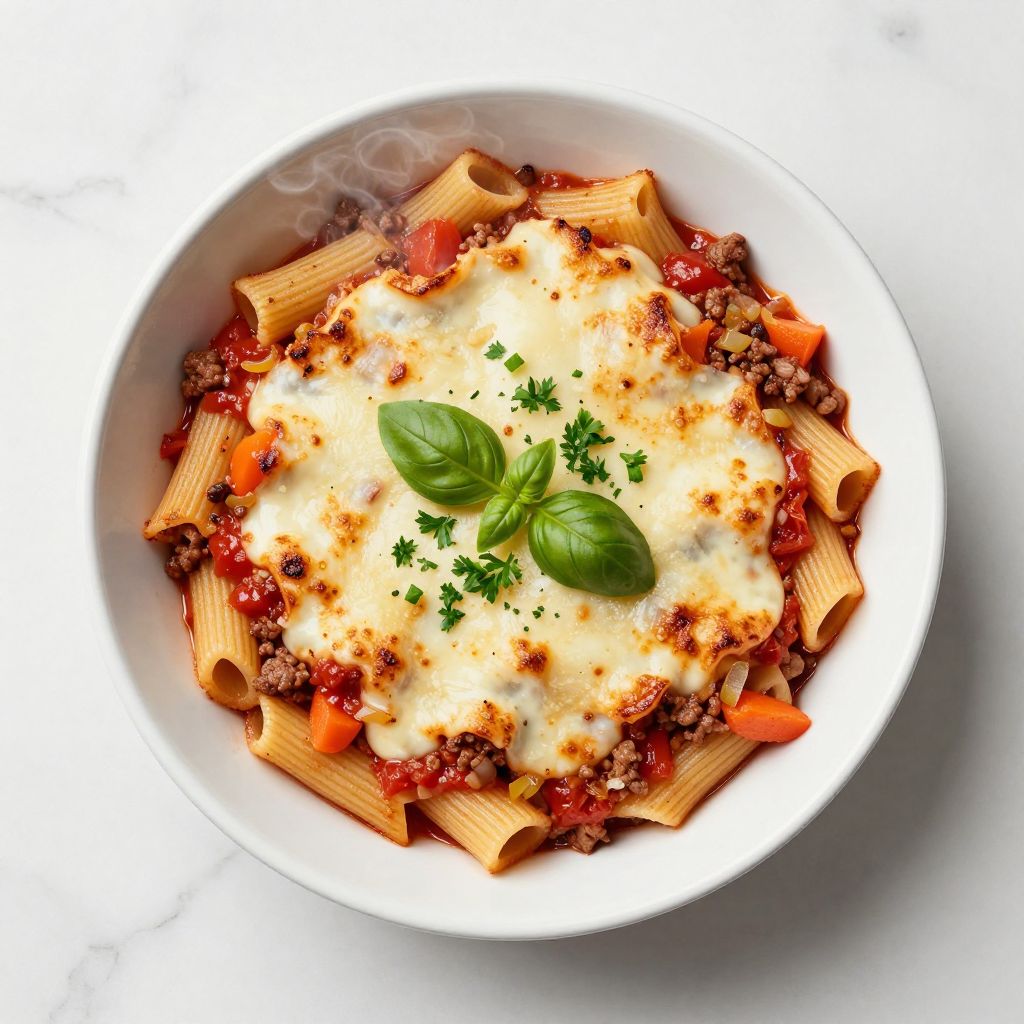
Pasta al Forno is an Italian baked pasta casserole that combines tender noodles, rich meat sauce, and creamy béchamel under a golden layer of melted cheese. This comforting dish delivers restaurant-quality results in your own kitchen and feeds a crowd without fuss.
Unlike quick weeknight pasta, this baked version improves as it sits, making it perfect for dinner parties or meal prep. The layering technique creates distinct textures that separate dishes from simple pasta with sauce tossed together.
Why You’ll Love This Recipe
Pasta al Forno checks every box for a showstopping dinner that actually feels manageable to prepare. The make-ahead option means less stress on serving day, and the results taste like you spent hours in the kitchen.
- Feeds 8 to 10 people in one baking dish with minimal last-minute effort
- Layers of ragù, béchamel, and cheese create complex flavor without being complicated
- Reheats beautifully, making it ideal for batch cooking and leftovers
- Impresses guests with an authentic Italian technique that feels fancy but is totally doable
- Customizable with different meats, cheeses, or vegetables to match what you have on hand
My Experience Making This Recipe
I first made Pasta al Forno for a dinner party of ten people, and I was honestly nervous about pulling it off. The moment I pulled that bubbling golden casserole from the oven, all the stress melted away because every single guest asked for the recipe.
What surprised me most was how the flavors deepen and marry together as it bakes, creating something that tastes nothing like throwing pasta sauce over noodles. The béchamel isn’t just a fancy addition either; it creates pockets of creamy texture that make each bite different from the last.
I’ve since made it for family gatherings, potlucks, and weeknight dinners when I have a little extra time. The dish always earns compliments, and friends consistently tell me it’s their favorite thing I cook.
Recipe Overview
- Recipe Name: Pasta al Forno
- Servings: 8 to 10 servings
- Prep Time: 30 minutes
- Cook Time: 45 minutes
- Total Time: 1 hour 15 minutes (plus cooling time)
- Course: Main Course
- Cuisine: Italian
- Calories per Serving: 520
Equipment You Will Need
- 9×13 inch baking dish or similar casserole dish
- Large heavy-bottomed pot or Dutch oven for the ragù
- Medium saucepan for the béchamel
- Large pasta pot for cooking the noodles
- Wooden spoon for stirring
- Whisk for the béchamel
- Colander for draining pasta
- Cheese grater for fresh Parmigiano-Reggiano
- Measuring cups and spoons
- Aluminum foil for covering the dish while baking
Ingredients for Pasta al Forno
For the Ragù
- 2 tablespoons olive oil
- 1 pound ground beef (80/20 blend works best)
- 4 ounces ground pork (optional but adds depth)
- 1 medium yellow onion, finely diced
- 2 medium carrots, finely diced
- 2 celery stalks, finely diced
- 4 garlic cloves, minced
- 1 cup whole milk
- 1/2 cup dry white wine
- 2 cans (28 ounces each) crushed San Marzano tomatoes
- 2 tablespoons tomato paste
- 1 teaspoon dried oregano
- 1 bay leaf
- Salt and black pepper to taste
For the Béchamel
- 4 tablespoons unsalted butter
- 1/4 cup all-purpose flour
- 3 cups whole milk, warmed
- 1/2 teaspoon salt
- 1/4 teaspoon white pepper
- Pinch of freshly grated nutmeg
For Assembly
- 1 pound dried penne or rigatoni
- 2 cups freshly grated Parmigiano-Reggiano cheese
- 2 tablespoons unsalted butter for the baking dish
Ingredient Notes and Substitutions
- Ground beef: The primary protein that builds the ragù’s savory base. Substitute with ground veal or lamb for different flavor profiles, though beef remains the most traditional choice.
- Crushed tomatoes: San Marzano tomatoes have lower acidity and fewer seeds, creating a smoother sauce. You can use regular crushed tomatoes, but reduce the liquid slightly since they retain more water.
- Whole milk: Adds richness to both the ragù and béchamel without heaviness. Half-and-half creates an even creamier dish but increases calories; skim milk works but won’t feel as luxurious.
- Parmigiano-Reggiano: This aged cheese adds a sharp, complex flavor that defines the dish. Grana Padano is nearly identical and works well; pre-grated cheese contains anti-caking agents that prevent melting smoothly.
- Penne or rigatoni: The tubes hold sauce beautifully inside and out. Rigatoni offers larger tubes while penne is more widely available; avoid thin spaghetti, which becomes mushy when baked.
How to Make Pasta al Forno
Step 1: Build the Ragù Base
Heat the olive oil in a large heavy-bottomed pot over medium-high heat until it shimmers. Add the ground beef and pork, breaking them into small pieces with a wooden spoon, and cook until no pink remains, about 5 to 7 minutes.
Step 2: Cook the Soffritto
Add the diced onion, carrot, and celery (known as soffritto, the holy trinity of Italian cooking) and stir well. Cook for 5 to 7 minutes, stirring often, until the vegetables soften and release their sweetness.
Step 3: Add Tomato and Wine
Stir in the tomato paste and cook for 1 minute, which concentrates its flavor and removes the raw taste. Pour in the white wine and let it simmer for 2 minutes to burn off the alcohol while adding acidity and depth.
Step 4: Simmer the Ragù
Add the crushed tomatoes, milk, oregano, and bay leaf, stirring gently to combine. Lower the heat to a bare simmer and cook uncovered for 25 to 30 minutes, stirring occasionally, until the sauce thickens and the flavors meld together.
Step 5: Prepare the Béchamel
While the ragù simmers, make the béchamel in a separate medium saucepan. Melt the butter over medium heat, then whisk in the flour to create a paste (called a roux), cooking for 1 minute without browning.
Step 6: Finish the Béchamel
Remove the pan from heat and slowly pour in the warm milk while whisking constantly to prevent lumps from forming. Return to medium heat and cook, stirring often, for 3 to 4 minutes until the sauce thickens enough to coat the back of a spoon.
Season with salt, white pepper, and a pinch of nutmeg, whisking to blend. Set aside and cover with plastic wrap touching the surface to prevent a skin from forming.
Step 7: Cook the Pasta
Bring a large pot of salted water to a rolling boil and add the pasta. Cook until just under al dente (about 1 minute less than the package instructions), since the pasta will continue cooking in the oven.
Drain the pasta in a colander but do not rinse it; the starch helps everything bind together. Return the pasta to the pot and toss with 2 tablespoons of butter to prevent sticking.
Step 8: Assemble the Casserole
Preheat the oven to 375 degrees Fahrenheit and butter the bottom of a 9×13 inch baking dish. Layer the assembly as follows: spread a thin layer of ragù on the bottom, then add one-third of the pasta, followed by one-third of the remaining ragù and one-third of the béchamel.
Repeat the layers two more times, ending with béchamel on top. Sprinkle the grated Parmigiano-Reggiano evenly over the surface.
Step 9: Bake Until Golden
Cover the dish loosely with aluminum foil (so steam can escape) and bake for 25 minutes. Remove the foil and bake for another 15 to 20 minutes until the top is golden brown and the sauce bubbles around the edges.
Let the casserole rest for 10 minutes before serving; this allows the layers to set so each serving stays intact rather than sliding around the plate.
Pro Tip: Make the ragù and béchamel a full day ahead and refrigerate them separately, then assemble and bake when you’re ready; this saves time on serving day and lets the flavors deepen overnight.
Tips for the Best Pasta al Forno
- Simmer the ragù low and slow; a rolling boil breaks down the tomatoes too quickly and makes the sauce taste cooked rather than integrated. Patience here pays off in flavor.
- Warm the milk before adding it to the roux to prevent lumps and speed up the cooking process. Cold milk shocking a hot roux creates a grainy texture that ruins the béchamel.
- Slightly undercook the pasta since it will soften further in the oven during baking. Al dente pasta stays tender in the final dish instead of becoming mushy.
- Use freshly grated Parmigiano-Reggiano rather than pre-grated cheese; the added ingredients in store-bought versions prevent smooth melting and create a grainy texture.
- Don’t skip the resting period after baking; it allows the béchamel to set and hold the layers together for clean, beautiful servings.
- Taste the ragù and adjust seasoning near the end of cooking; salt and pepper are the only seasonings that matter, so don’t be shy with either.
Common Mistakes to Avoid
- Overcooking the pasta before baking will result in mush since it continues cooking in the oven for another 40 minutes. Aim for just under al dente, which preserves texture through the final bake.
- Using cold milk in the béchamel creates lumps that never fully dissolve, leaving a grainy sauce instead of a smooth, creamy one. Always warm the milk first.
- Making the ragù too thin causes the layers to slide apart and creates a soupy casserole instead of distinct, structured layers. Let it simmer until it coats a spoon.
- Skipping the resting period after baking means the casserole falls apart when you cut it because the béchamel hasn’t set yet. Ten minutes makes all the difference.
- Using low-quality or pre-grated cheese prevents proper melting and creates a grainy, separated top layer. Fresh grating takes two minutes and transforms the result.
Serving Suggestions
Pasta al Forno stands as a complete main course but shines with a few simple accompaniments. Fresh salad and crusty bread round out the meal and help clean the plate of every last bit of sauce.
- Crisp green salad with lemon vinaigrette to cut through the richness
- Garlic bread or crusty ciabatta for soaking up the sauce
- Roasted asparagus or broccoli for a fresh vegetable side
- Simple tomato and basil salad for brightness and acidity
- Dry white wine such as Pinot Grigio or Vermentino to complement the cream and tomato
Variations to Try
- Seafood Version: Replace the beef and pork with shrimp and diced scallops, reduce the cooking time to 15 minutes for the sauce, and use a splash of seafood stock instead of wine for briny depth.
- Vegetable-Forward: Layer in roasted eggplant, zucchini, and mushrooms alongside the pasta; reduce the meat to 8 ounces and add a 10-ounce package of frozen spinach to boost vegetables and create texture contrast.
- Spicy Version: Add red pepper flakes to the ragù and a pinch of cayenne to the béchamel; the gentle heat builds through the layers and wakes up the palate without overwhelming the dish.
- Lighter Cream Sauce: Replace half the béchamel with ricotta mixed with milk to reduce calories and create a lighter, slightly tangy creaminess that lets the ragù flavors shine.
- Four-Cheese Version: Mix equal parts Parmigiano-Reggiano, mozzarella, pecorino, and Gruyère in the top layer for complexity; each cheese melts differently and creates pockets of varied flavor.
Dietary Adaptations
- Gluten-Free: Substitute gluten-free pasta (brown rice or chickpea varieties hold sauce well) and use cornstarch or a gluten-free flour blend for the béchamel roux; the flavor remains the same, though texture may be slightly different.
- Dairy-Free: Use olive oil instead of butter, replace milk with unsweetened oat or almond milk in the sauces, and swap Parmigiano-Reggiano for nutritional yeast; the dish loses some richness but remains satisfying.
- Vegan: Use plant-based ground meat (lentil or mushroom-based brands work best), replace all dairy with non-dairy alternatives, and use olive oil throughout; embrace the vegetables by adding extra mushrooms and spinach for depth.
- Low-Carb/Keto: Replace pasta with spiralized zucchini or shirataki noodles and use full-fat cream instead of milk in the béchamel; the texture differs but the flavor profile transfers well to lower-carb options.
Storage and Reheating
Refrigerator
Store covered pasta al forno in the baking dish or transfer to an airtight container for up to 4 days. The flavors actually improve as the layers continue to meld and soften together.
- Keep in the original baking dish for easy reheating
- Cover tightly with aluminum foil or plastic wrap to prevent drying
- Store sauce components separately if you prefer (keeps up to 5 days)
Freezer
Pasta al Forno freezes beautifully for up to 3 months, making it perfect for batch cooking. Freeze the assembled but unbaked casserole, or freeze after baking; both work equally well.
- Wrap the baking dish tightly in plastic wrap, then aluminum foil to prevent freezer burn
- Label with the date so you remember when it was made
- Thaw overnight in the refrigerator before reheating
Reheating
Reheat covered in a 350 degree Fahrenheit oven for 25 to 30 minutes if refrigerated, or 35 to 40 minutes if coming from frozen. Add a splash of milk or stock before covering to prevent the top from drying out.
- Remove foil for the final 5 minutes if you want the top to crisp slightly
- Microwave individual portions for 2 to 3 minutes, covered loosely with a damp paper towel
- Stovetop reheating works if you transfer to a skillet over low heat with a splash of milk (stir often to prevent sticking)
Nutrition Information
| Nutrient | Amount |
|---|---|
| Calories | 520 |
| Total Fat | 22g |
| Saturated Fat | 11g |
| Carbohydrates | 48g |
| Fiber | 2g |
| Sugar | 6g |
| Protein | 32g |
| Sodium | 680mg |
| Cholesterol | 78mg |
These values are approximations based on standard ingredient databases and will vary based on specific brands and preparation methods used. Always consult a nutritionist for precise dietary information.
Frequently Asked Questions
Can I make Pasta al Forno ahead of time?
Yes, absolutely. Prepare the ragù and béchamel up to 2 days ahead, or assemble the entire casserole and refrigerate unbaked for up to 24 hours. Simply add 5 to 10 minutes to the baking time if baking directly from the refrigerator.
What type of pasta works best?
Tube shapes
Pasta al Forno
Ingredients
Equipment
Method
- Heat the olive oil in a large heavy-bottomed pot over medium-high heat until it shimmers.
- Add the ground beef and pork, breaking them into small pieces with a wooden spoon, and cook until no pink remains, about 5 to 7 minutes.
- Add the diced onion, carrot, and celery and stir well.
- Cook for 5 to 7 minutes, stirring often, until the vegetables soften and release their sweetness.
- Stir in the tomato paste and cook for 1 minute.
- Pour in the white wine and let it simmer for 2 minutes to burn off the alcohol.
- Add the crushed tomatoes, milk, oregano, and bay leaf, stirring gently to combine.
- Lower the heat to a bare simmer and cook uncovered for 25 to 30 minutes, stirring occasionally, until the sauce thickens and flavors meld.
- While the ragù simmers, melt the butter over medium heat in a medium saucepan.
- Whisk in the flour to create a roux, cooking for 1 minute without browning.
- Remove the pan from heat and slowly pour in the warm milk while whisking constantly.
- Return to medium heat and cook, stirring often, for 3 to 4 minutes until the sauce thickens to coat the back of a spoon.
- Season with salt, white pepper, and a pinch of nutmeg; whisk to blend and cover with plastic wrap directly on the surface to prevent skin.
- Bring a large pot of salted water to a rolling boil and add the pasta.
- Cook until just under al dente, about 1 minute less than package instructions.
- Drain the pasta in a colander but do not rinse.
- Return pasta to pot and toss with 2 tablespoons of butter to prevent sticking.
- Preheat oven to 375°F (190°C) and butter the bottom of a 9x13 inch baking dish.
- Layer the casserole: spread a thin layer of ragù on the bottom.
- Add one-third of the pasta, one-third of the remaining ragù, and one-third of the béchamel.
- Repeat layers two more times, ending with béchamel on top.
- Sprinkle the grated Parmigiano-Reggiano evenly over the surface.
- Cover the dish loosely with aluminum foil and bake for 25 minutes.
- Remove the foil and bake for another 15 to 20 minutes until the top is golden brown and bubbly.
- Let the casserole rest for 10 minutes before serving.