Salmon candy is one of those addictive treats that disappears faster than you can make it. This sweet, smoky, and slightly sticky fish snack transforms fresh salmon into a caramelized masterpiece perfect for parties, gift giving, or sneaking bites straight from the cooling rack.
If you have never tried making candied salmon at home, you are in for a serious treat. The process takes some patience, but the payoff is absolutely worth every hour of low and slow smoking.
Why You’ll Love This Recipe
This salmon candy recipe delivers restaurant quality results with straightforward techniques anyone can master. Once you taste homemade candied salmon, store bought versions simply will not cut it anymore.
- Perfectly balanced sweet and savory flavor profile with a hint of smokiness
- Impressive appetizer that looks like it took way more effort than it did
- Makes excellent gifts during the holiday season
- High protein snack that satisfies cravings without the guilt
- Stores well for weeks, so you can make large batches
My Experience Making This Recipe
The first time I made salmon candy, I was genuinely nervous about drying out the fish. That fear vanished the moment I pulled those glistening, mahogany colored pieces off the smoker.
My family gathered around like seagulls spotting an unattended picnic. Half the batch disappeared before it even cooled completely, and I learned quickly to double my recipe every time.
The smell of maple, brown sugar, and wood smoke lingering in the air became one of my favorite cooking memories. Now I make this recipe at least four times each year, and it never gets old.
Recipe Overview
- Recipe Name: Salmon Candy
- Servings: 8 servings
- Prep Time: 30 minutes plus 12 to 24 hours curing
- Cook Time: 4 to 6 hours
- Total Time: 17 to 31 hours
- Course: Appetizer or Snack
- Cuisine: Pacific Northwest American
- Calories per Serving: 285 calories
Equipment You Will Need
- Smoker or pellet grill with smoking capability
- Sharp fillet knife
- Large glass or plastic container for brining
- Wire cooling racks
- Sheet pans lined with parchment paper
- Basting brush
- Instant read thermometer
- Wood chips or pellets such as alder, apple, or cherry
Ingredients for Salmon Candy
For the Salmon
- 2 pounds salmon fillet, skin removed, cut into 1 inch strips
- 1 cup brown sugar, packed
- 1/4 cup kosher salt
- 1 tablespoon black pepper, coarsely ground
- 1 teaspoon garlic powder
- 1 teaspoon onion powder
For the Glaze
- 1/2 cup pure maple syrup
- 1/4 cup brown sugar
- 2 tablespoons soy sauce
- 1 tablespoon honey
- 1/2 teaspoon cayenne pepper, optional for heat
Ingredient Notes and Substitutions
- Salmon: Wild caught salmon like sockeye or king provides the best flavor and texture. Atlantic farmed salmon works but tends to be fattier and softer.
- Brown sugar: The molasses content creates that signature caramelized exterior. Coconut sugar substitutes well for a slightly different flavor profile.
- Maple syrup: Use pure maple syrup for authentic flavor. Pancake syrup contains artificial flavoring and produces inferior results.
- Kosher salt: The large flakes distribute evenly and cure gently. If using table salt, reduce the amount by half.
- Soy sauce: Adds umami depth to the glaze. Coconut aminos work as a lower sodium alternative.
How to Make Salmon Candy
Step 1: Prepare the Salmon
Remove the skin from your salmon fillet using a sharp knife held at a slight angle. Cut the salmon into strips about 1 inch wide and 3 to 4 inches long, keeping the pieces relatively uniform so they cure and smoke evenly.
Step 2: Mix the Dry Cure
Combine brown sugar, kosher salt, black pepper, garlic powder, and onion powder in a bowl. This cure mixture draws moisture from the fish while infusing it with flavor, and the balance between salt and sugar matters for proper preservation.
Step 3: Apply the Cure
Coat each salmon strip generously with the cure mixture, making sure all surfaces are covered. Layer the coated pieces in a glass container, sprinkling extra cure between layers.
Step 4: Refrigerate and Cure
Cover the container and refrigerate for 12 to 24 hours. The longer cure time produces firmer, more intensely flavored candy, while shorter times yield a softer texture.
Step 5: Rinse and Dry
Rinse each piece of salmon under cold water to remove excess cure. Pat dry thoroughly with paper towels and place on wire racks, then let them sit uncovered in the refrigerator for 2 to 4 hours until a tacky pellicle forms on the surface.
This pellicle is a thin protein layer that helps smoke adhere to the fish. Skipping this step means less smoky flavor and potential moisture issues during cooking.
Step 6: Prepare the Smoker and Glaze
Preheat your smoker to 175 degrees Fahrenheit using alder, apple, or cherry wood. While it heats, combine maple syrup, brown sugar, soy sauce, honey, and cayenne in a small saucepan and warm over low heat until the sugar dissolves.
Step 7: Smoke the Salmon
Place the salmon strips on the smoker racks with space between each piece for smoke circulation. Smoke at 175 degrees for 2 hours, then begin basting with the glaze every 30 minutes.
The low temperature allows the smoke to penetrate deeply without cooking too fast. Rushing this step with higher heat creates a dry, tough product instead of that perfect chewy texture.
Step 8: Increase Heat and Finish
After 3 hours of smoking, raise the temperature to 200 degrees Fahrenheit. Continue smoking and basting until the internal temperature reaches 150 degrees and the exterior looks glossy and deeply caramelized.
Step 9: Cool and Rest
Remove the salmon candy from the smoker and place on clean wire racks. Let cool completely at room temperature for at least one hour before eating or storing, as this allows the texture to firm up properly.
Pro Tip: Apply the final glaze about 15 minutes before removing from the smoker, then do not baste again. This creates that signature sticky, lacquered finish without making the candy overly wet.
Tips for the Best Salmon Candy
- Choose thicker pieces of salmon from the center of the fillet for the most consistent results. Thin tail sections dry out faster and can become tough.
- Keep your smoker temperature steady and resist the urge to open the lid frequently. Every peek releases smoke and heat.
- Use a spray bottle with apple juice to add moisture if your candy starts looking too dry during smoking.
- Let the pellicle form completely before smoking. If the surface still feels wet, give it more time.
- Warm your glaze before each basting session so it spreads smoothly and penetrates the fish.
- Rotate your racks halfway through smoking if your smoker has hot spots.
Common Mistakes to Avoid
- Overcuring the salmon: More than 24 hours in the cure makes the fish unpleasantly salty and overly firm.
- Smoking at too high a temperature: Anything above 225 degrees cooks the fish too quickly and produces a dry, flaky texture instead of that chewy candy consistency.
- Skipping the pellicle step: Without that tacky surface, smoke cannot adhere properly and you lose significant flavor development.
- Basting too early: Adding glaze before the exterior sets creates a soggy mess rather than a beautiful caramelized coating.
- Cutting pieces unevenly: Thick and thin pieces in the same batch means some will be perfect while others are overcooked or underdone.
Serving Suggestions
Salmon candy works beautifully as a standalone snack or as part of a larger spread. The sweet and savory profile pairs wonderfully with both casual and elegant accompaniments.
- Arrange on a charcuterie board with crackers, cream cheese, and fresh dill
- Serve alongside bagels for a weekend brunch spread
- Flake over salads for a smoky, protein rich topping
- Pair with a crisp white wine or light bodied beer
- Include in homemade food gift baskets during the holidays
Variations to Try
- Spicy Sriracha Candy: Add 2 tablespoons of sriracha to the glaze for a sweet heat combination that tingles the lips.
- Teriyaki Style: Replace the maple syrup with teriyaki sauce and add minced ginger for an Asian inspired twist.
- Bourbon Glazed: Mix 2 tablespoons of bourbon into the glaze for a deeper, more complex sweetness with subtle oak notes.
- Black Pepper Forward: Double the black pepper in the cure and add cracked pepper to the glaze for a spicier bite.
- Citrus Brightened: Add orange or lemon zest to the cure for a subtle citrus note that cuts through the richness.
Dietary Adaptations
- Gluten Free: Use tamari or coconut aminos instead of regular soy sauce. All other ingredients are naturally gluten free.
- Dairy Free: This recipe contains no dairy and requires no modifications.
- Lower Sugar: Reduce brown sugar by half and use sugar free maple syrup. The texture will be slightly different but still delicious.
- Lower Sodium: Cut the salt in the cure by one third and use low sodium soy sauce. Extend curing time by a few hours to compensate.
Storage and Reheating
Refrigerator
Properly stored salmon candy keeps well and actually improves in flavor over the first few days.
- Store in an airtight container for up to 2 weeks
- Separate layers with parchment paper to prevent sticking
- Let come to room temperature before serving for best texture
Freezer
Freezing extends the life of your salmon candy significantly without major quality loss.
- Vacuum seal or wrap tightly in plastic wrap, then place in freezer bags
- Freeze for up to 3 months
- Thaw overnight in the refrigerator
Reheating
Most people enjoy salmon candy cold or at room temperature, but gentle warming can refresh the texture.
- Warm in a 200 degree oven for 5 to 10 minutes
- Avoid microwaving as it can make the fish rubbery
- Brush with a touch of fresh glaze before warming for extra shine
Nutrition Information
| Nutrient | Amount |
|---|---|
| Calories | 285 kcal |
| Total Fat | 9g |
| Saturated Fat | 1.5g |
| Carbohydrates | 28g |
| Fiber | 0g |
| Sugar | 26g |
| Protein | 23g |
| Sodium | 980mg |
| Cholesterol | 55mg |
Nutritional values are estimates based on standard ingredients and may vary depending on specific brands and preparation methods.
Frequently Asked Questions
Can I make salmon candy without a smoker?
You can use an oven set to its lowest temperature with liquid smoke added to the glaze. The flavor will not be identical, but you will still get tasty candied salmon.
How do I know when the salmon candy is done?
The internal temperature should reach 150 degrees Fahrenheit, and the exterior should look glossy and deeply colored. The texture should be firm but still slightly bendable.
Can I make this recipe ahead of time?
Absolutely, and many people think it tastes better after a day or two in the refrigerator. The flavors meld and intensify as it rests.
Why is my salmon candy too salty?
You likely cured it too long or did not rinse thoroughly enough after curing. Next time, reduce cure time or give each piece an extra rinse under cold water.
What type of wood chips work best for salmon candy?
Alder is the traditional Pacific Northwest choice and produces a mild, slightly sweet smoke. Apple and cherry also work beautifully without overpowering the fish.
Final Thoughts
Making salmon candy at home feels like a real accomplishment, and the results speak for themselves. That perfect balance of sweet, salty, and smoky flavors creates something truly special that store bought versions simply cannot match.
Give this recipe a try the next time you get your hands on quality salmon. Whether you are hosting a party, making holiday gifts, or just treating yourself, this candied salmon will not disappoint.
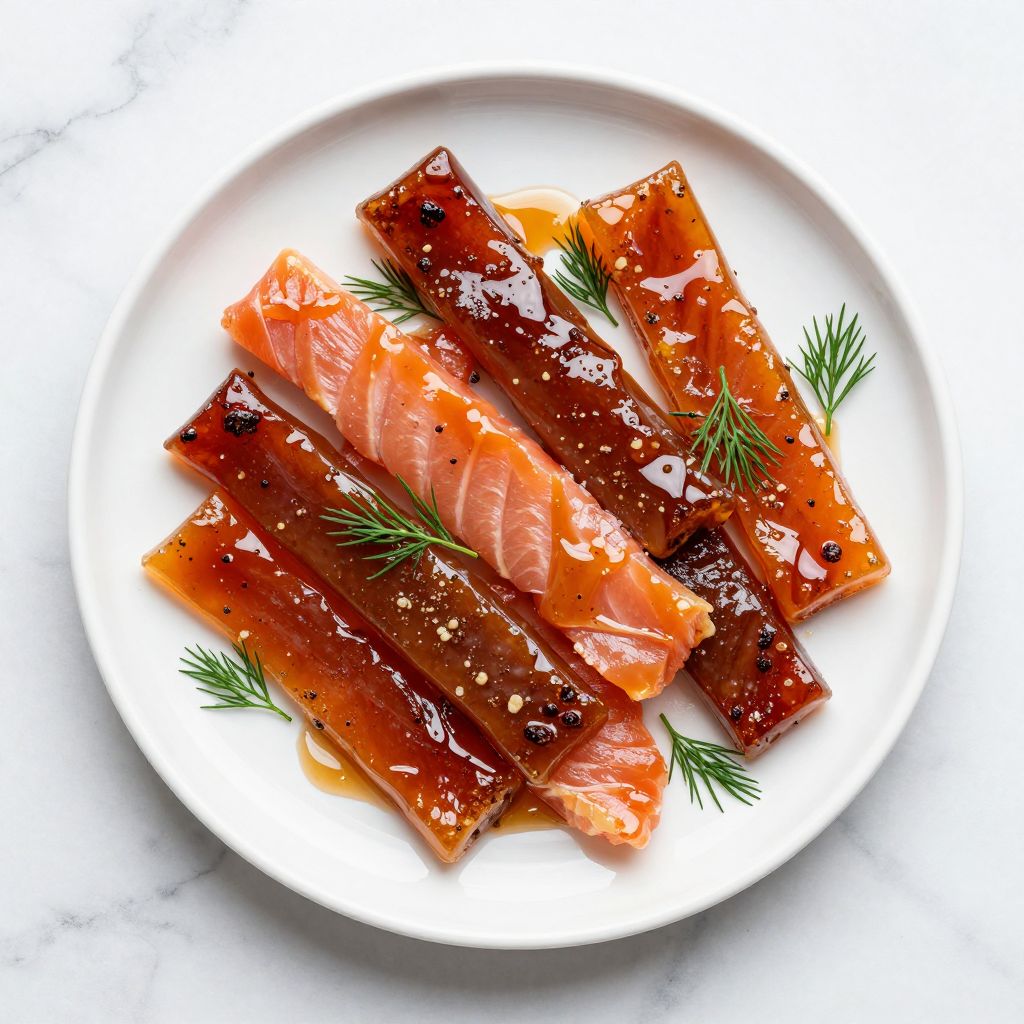
Salmon Candy
Ingredients
Equipment
Method
- Remove the skin from your salmon fillet using a sharp knife held at a slight angle. Cut the salmon into strips about 1 inch wide and 3 to 4 inches long, keeping the pieces relatively uniform so they cure and smoke evenly.
- Combine brown sugar, kosher salt, black pepper, garlic powder, and onion powder in a bowl to create the dry cure mixture.
- Coat each salmon strip generously with the cure mixture, making sure all surfaces are covered. Layer the coated pieces in a glass container, sprinkling extra cure between layers.
- Cover the container and refrigerate for 12 to 24 hours. The longer cure time produces firmer, more intensely flavored candy, while shorter times yield a softer texture.
- Rinse each piece of salmon under cold water to remove excess cure. Pat dry thoroughly with paper towels and place on wire racks, then let them sit uncovered in the refrigerator for 2 to 4 hours until a tacky pellicle forms on the surface.
- Preheat your smoker to 175 degrees Fahrenheit using alder, apple, or cherry wood. While it heats, combine maple syrup, brown sugar, soy sauce, honey, and cayenne in a small saucepan and warm over low heat until the sugar dissolves.
- Place the salmon strips on the smoker racks with space between each piece for smoke circulation. Smoke at 175 degrees Fahrenheit for 2 hours, then begin basting with the glaze every 30 minutes.
- After 3 hours of smoking, raise the temperature to 200 degrees Fahrenheit. Continue smoking and basting until the internal temperature reaches 150 degrees Fahrenheit and the exterior looks glossy and deeply caramelized, about 1 to 3 more hours.
- Apply the final glaze about 15 minutes before removing from the smoker, then do not baste again to create that signature sticky, lacquered finish.
- Remove the salmon candy from the smoker and place on clean wire racks. Let cool completely at room temperature for at least one hour before eating or storing.