Fruit Custard is a creamy, comforting dessert that combines silky smooth custard with fresh fruit, making it perfect for warm afternoons or dinner parties. This classic dish delivers restaurant-quality results at home with just a few simple ingredients and basic kitchen skills.
Whether you’re new to custard-making or a seasoned baker, this recipe walks you through every step to ensure perfect texture every time. Keep reading to discover how to build layers of flavor and create a dessert that’ll have everyone asking for your secret.
Why You’ll Love This Recipe
Fruit Custard hits all the right notes for a dessert that feels indulgent but isn’t complicated to make.
- Silky, creamy texture that melts on your tongue without any lumps or graininess
- Versatile base that works with any seasonal fruit you have on hand
- Makes ahead beautifully, so you can prep it hours before serving
- Naturally elegant plating that looks far more impressive than the effort required
- Comes together in under 30 minutes of active cooking time
My Experience Making This Recipe
I first made custard years ago, convinced I’d either end up with scrambled eggs or soup. The key moment came when I realized how much low heat mattered, so I slowed down and actually paid attention to the temperature.
The texture that emerged was pure magic: thick enough to coat a spoon but still pourable, with a vanilla richness that made me question why I’d ever bought store-bought versions. My family devoured it with fresh berries, and my mum asked if I’d taken a culinary class.
Now I make this whenever I want to impress without stressing, which is honestly every other week at this point. The best part is watching people’s faces when they taste how creamy it is.
Recipe Overview
- Recipe Name: Fruit Custard
- Servings: 4-6 servings
- Prep Time: 10 minutes
- Cook Time: 12-15 minutes
- Total Time: 25-30 minutes, plus chilling
- Course: Dessert
- Cuisine: British/International
- Calories per Serving: 185 calories
Equipment You Will Need
- Heavy-bottomed saucepan or small pot
- Wooden spoon or silicone spatula for stirring
- Whisk for mixing eggs and sugar
- Fine-mesh strainer for removing lumps if needed
- Mixing bowl for whisking egg mixture
- Measuring cups and spoons
- Thermometer for monitoring temperature (optional but helpful)
- Serving bowls or glasses for plating
Ingredients for Fruit Custard
- Whole milk: 2 cups (480 ml), full-fat works best for richness
- Egg yolks: 4 large
- Caster sugar: 1/3 cup (65 grams)
- Cornstarch: 2 tablespoons (16 grams)
- Vanilla extract: 1 teaspoon pure vanilla
- Fresh fruit: 2 cups mixed berries, stone fruit, or tropical fruit, chopped into bite-sized pieces
- Butter: 1 tablespoon unsalted, optional but adds silkiness
- Salt: A pinch to balance sweetness
Ingredient Notes and Substitutions
- Whole milk: Creates the rich, creamy base custard needs. You can substitute half-and-half for extra richness or use 2% milk if you prefer a lighter version, though the texture won’t be quite as luxurious.
- Egg yolks: These are what makes custard silky and give it structure. Whole eggs work in a pinch but produce a thinner custard that’s more like pudding.
- Caster sugar: Fine granules dissolve quickly without grittiness. Granulated sugar works fine but may need an extra minute of whisking to fully dissolve.
- Cornstarch: Stabilizes the custard so it sets without curdling. If you don’t have it, use 1 additional egg yolk instead, though the texture will be slightly thinner.
- Vanilla extract: Adds warmth and depth that ties the whole dessert together. Vanilla paste gives more flecks and flavor, or use a vanilla bean scraped fresh for maximum elegance.
- Fresh fruit: Any fruit works here, so use what’s seasonal and looks beautiful. Frozen fruit thaws and releases water, diluting your custard, so fresh is strongly preferred.
How to Make Fruit Custard
Step 1: Heat the Milk
Pour the 2 cups of milk into your heavy-bottomed saucepan and place it over medium heat. Heat the milk until steam rises and small bubbles form around the edges, but do not let it boil (around 170-180 degrees F if using a thermometer).
Heating the milk cooks out a raw flavor and helps it blend smoothly with your egg mixture without creating lumps or a cooked-egg taste.
Step 2: Whisk Eggs and Sugar
While the milk heats, add your 4 egg yolks and caster sugar to a mixing bowl. Whisk vigorously for 2-3 minutes until the mixture becomes pale, thick, and ribbons form when you lift the whisk.
This whisking step incorporates air and helps the sugar dissolve completely, which prevents grittiness in your final custard and creates a smoother texture.
Step 3: Add Cornstarch and Salt
Sift the cornstarch directly into your egg and sugar mixture, then add the pinch of salt. Whisk continuously until no lumps of cornstarch remain and everything is fully combined.
Sifting prevents lumpy pockets of cornstarch from forming later, and salt rounds out the sweetness so the custard tastes balanced rather than one-note.
Step 4: Temper the Eggs
Remove the hot milk from heat and slowly pour about 1/4 of it into your egg mixture while whisking constantly. This gradual process is called tempering and raises the egg temperature slowly without scrambling them.
If you pour hot milk too quickly into cold eggs, the eggs cook unevenly and you’ll get bits of scrambled egg in your custard, which looks and tastes unpleasant.
Step 5: Combine Mixtures
Once the egg mixture has been warmed by the first pour, pour the tempered eggs back into the saucepan with the remaining milk while stirring constantly. Keep your wooden spoon or spatula in contact with the bottom and sides of the pan as you stir.
Constant stirring ensures heat distributes evenly and prevents any spots from cooking too fast, which is the enemy of smooth custard.
Step 6: Cook Over Low Heat
Return the saucepan to the stove over medium-low heat, stirring constantly with your wooden spoon. Watch for the mixture to thicken and coat the back of the spoon, which takes about 8-12 minutes.
Low heat is critical here because it allows the cornstarch to thicken the mixture gently without risking scrambled eggs or a grainy texture. You’ll know it’s done when you can run your finger across the coated spoon and it leaves a clear trail.
Step 7: Add Vanilla and Butter
Remove the pan from heat and stir in the vanilla extract and butter (if using). Stir for 30 seconds until the butter melts and everything is smooth and glossy.
Adding vanilla at the end preserves its delicate flavor and prevents heat from cooking off its aromatic compounds, so you get maximum vanilla impact.
Step 8: Strain if Needed
Pour the custard through a fine-mesh strainer into a clean bowl to catch any lumps that may have formed. This step is optional if your custard looks completely smooth, but it guarantees a silky result.
Even with careful cooking, tiny specks sometimes form, and straining removes them without any effort, giving you that restaurant-quality finish.
Step 9: Chill the Custard
Press plastic wrap directly onto the surface of the custard to prevent a skin from forming. Refrigerate for at least 2-3 hours, or until completely chilled and set.
The custard continues to thicken slightly as it cools, and chilling brings all the flavors into focus so each spoonful tastes balanced and rich.
Step 10: Add Fruit and Serve
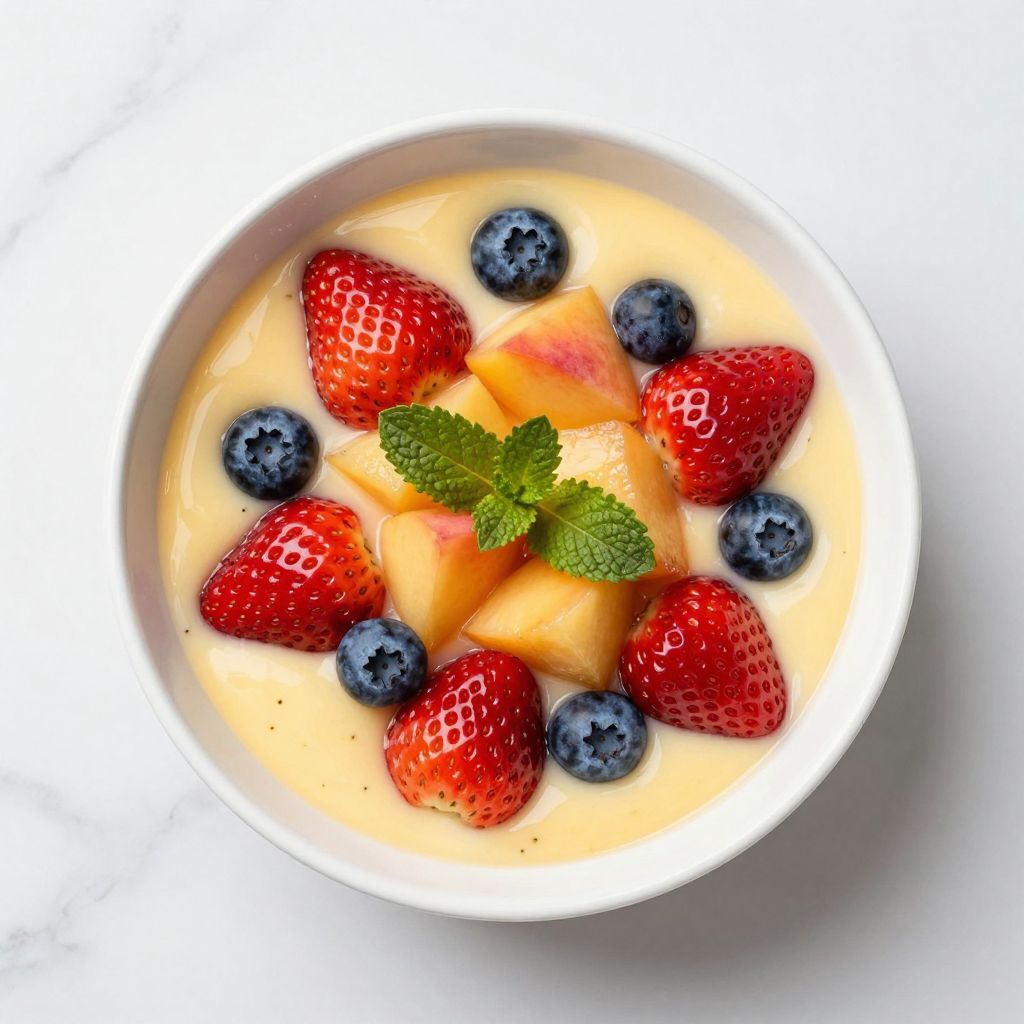
Just before serving, gently fold your fresh fruit into the custard or layer it in serving glasses for a more elegant presentation. Spoon the fruit custard into bowls or glasses and serve immediately.
Adding fruit right before serving keeps it fresh and prevents excess juice from watering down your custard, which would happen if fruit sat in it for hours.
Pro Tip: If your custard breaks or looks grainy while cooking, pour it through a fine strainer into a clean bowl, whisk in 1 tablespoon of cold milk, and refrigerate; it often smooths out as it cools.
Tips for the Best Fruit Custard
- Use full-fat milk and fresh egg yolks from good eggs if possible; cheaper eggs sometimes don’t emulsify as smoothly and you’ll notice a slight grainy texture.
- Keep your heat at medium-low and never walk away from the stove while cooking the custard; even 30 seconds of neglect can mean the difference between silky and broken.
- If you’re nervous about temperature, use a thermometer and aim for 160-170 degrees F at the thickest point, which ensures food safety while keeping the texture creamy.
- Chill your custard completely before serving; warm custard tastes watery and loses its appealing thickness that makes it special.
- Choose ripe, flavorful fruit that you’d be happy eating on its own; bad fruit makes bad custard, no matter how perfect your technique is.
- If making ahead, store custard and fruit separately in the refrigerator, then combine just before serving so flavors stay bright and fruit stays firm.
Common Mistakes to Avoid
- Skipping the tempering step and pouring hot milk directly into cold eggs scrambles them, creating an unpleasant grainy texture that’s impossible to fix after the fact.
- Using high heat to speed up cooking causes the custard to break or curdle, leaving you with a separated, watery mess that tastes like disappointment.
- Forgetting to stir constantly leaves hot spots that cook unevenly, resulting in lumps or even scrambled egg bits floating in your otherwise smooth custard.
- Adding fruit too early and letting it sit in the custard releases juice that dilutes the mixture and makes your final dessert watery and less impressive.
- Not straining out the skin that forms on top makes your custard taste stale and textured rather than silky smooth from first spoonful to last.
Serving Suggestions
Fruit Custard shines as a standalone dessert but reaches new heights when paired thoughtfully with complementary flavors and textures.
- Serve with crispy biscuits or shortbread cookies on the side for textural contrast and something to dip into the creamy custard
- Layer in a parfait glass with granola and fresh berries for a breakfast-dessert hybrid that feels special but takes seconds to assemble
- Top with a dollop of whipped cream and a dusting of cinnamon for warmth and elegance
- Pair with a crisp white wine like Sauvignon Blanc or a light dessert wine that won’t overpower the delicate vanilla flavor
- Serve chilled on hot summer evenings as a lighter alternative to heavier desserts, with fresh mint leaves for a refreshing touch
Variations to Try
- Brown Butter Custard: Toast the butter in a separate pan until golden and fragrant (about 5 minutes), then whisk it into the finished custard for a nuttier, more complex flavor that takes this dessert from simple to sophisticated.
- Lavender Custard: Steep 1 tablespoon of dried culinary lavender in the warm milk for 10 minutes, then strain it out before mixing with eggs; this creates a subtle floral note that pairs beautifully with berries.
- Coffee Custard: Dissolve 2 teaspoons of instant espresso powder in the warm milk for a rich coffee flavor that pairs wonderfully with chocolate fruit or stone fruits.
- Liqueur-Infused Custard: Replace 2 tablespoons of milk with your favorite liqueur like Cointreau, Grand Marnier, or Amaretto, added after cooking for a sophisticated twist without the alcohol burning off.
- Mascarpone Custard: Whisk 1/4 cup of mascarpone cheese into the finished custard while it’s still warm for a richer, slightly tangy version that’s especially good with tart berries.
Dietary Adaptations
- Gluten-Free: This recipe is naturally gluten-free as written, since cornstarch is the thickener and none of the other ingredients contain gluten; just verify your vanilla extract and any cookies you serve are certified gluten-free.
- Dairy-Free: Substitute whole milk with full-fat oat or coconut milk for richness, and use dairy-free butter or coconut oil instead; the texture will be slightly less silky but still delicious.
- Vegan: Replace 4 egg yolks with 1 tablespoon of cornstarch mixed with 3 tablespoons of water, and use plant-based milk and butter; the result is less creamy but still satisfying with fruit.
- Low-Carb/Keto: Use a keto-friendly sweetener like erythritol or monk fruit instead of caster sugar in a 1:1 ratio, and choose berries over high-carb fruits; the texture stays the same and carbs drop significantly.
Storage and Reheating
Refrigerator
Store your finished custard in an airtight container with plastic wrap pressed directly onto the surface to prevent a skin from forming. Fruit Custard keeps for 3-4 days in the refrigerator.
- Keep custard and fresh fruit in separate containers until ready to serve for best results
- Stir gently before serving if any liquid has separated on top
Freezer
You can freeze custard for up to 2 months in an airtight container, though the texture becomes slightly grainy and less creamy after thawing. Freezing is best for custard without fruit already added.
- Leave 1/2 inch of headspace in the container to allow for expansion during freezing
- Thaw overnight in the refrigerator before serving
Reheating
Chilled Fruit Custard is meant to be served cold and tastes best that way, but if you need to serve it warm, reheat gently over a double boiler on low heat. Never reheat on direct heat, which can cause curdling or separation.
- Whisk occasionally while reheating to maintain smooth texture
- Stop heating as soon as it reaches your desired temperature
Nutrition Information
| Nutrient | Amount |
|---|---|
| Calories | 185 |
| Total Fat | 7 grams |
| Saturated Fat | 3.5 grams |
| Carbohydrates | 26 grams |
| Fiber | 1.5 grams |
| Sugar | 22 grams |
| Protein | 4 grams |
| Sodium | 65 milligrams |
| Cholesterol | 115 milligrams |
Nutritional values are estimates based on average ingredients and serving sizes of six portions per batch. Actual nutrition varies based on specific fruit choices and portion sizes.
Frequently Asked Questions
Can I make Fruit Custard without cornstarch?
Yes, you can use 1-2 additional egg yolks instead of cornstarch to thicken the custard, which creates a richer but slightly thinner final texture. The cooking time might extend by 2-3 minutes since eggs thicken more slowly than cornstarch.
Why did my custard break or look curdled?
Custard breaks when heat is too high or the mixture isn’t stirred constantly, causing the eggs to scramble. Strain it through a fine mesh into a clean bowl and whisk in a tablespoon of cold milk, then refrigerate; it often smooths out as it cools.
Can I make this ahead and store it?
Absolutely, the custard keeps for 3-4 days in an airtight container in the refrigerator. Store the custard and fruit separately, then combine just before serving to keep the fruit fresh and the custard from getting watery.
What’s the difference between custard and pudding?
Fruit Custard
Ingredients
Equipment
Method
- Pour the 2 cups of whole milk into a heavy-bottomed saucepan and heat over medium heat until steam rises and small bubbles form around the edges, without boiling (around 170-180°F/75-82°C).
- While the milk heats, whisk 4 large egg yolks and 1/3 cup caster sugar in a mixing bowl vigorously for 2-3 minutes until pale, thick, and ribbons form when lifting the whisk.
- Sift 2 tablespoons cornstarch into the egg and sugar mixture, add a pinch of salt, and whisk continuously until fully combined and no lumps remain.
- Remove the hot milk from heat and slowly pour about 1/4 of it into the egg mixture while whisking constantly to temper the eggs.
- Pour the tempered egg mixture back into the saucepan with the remaining milk while stirring constantly using a wooden spoon or silicone spatula, scraping the bottom and sides of the pan.
- Return the saucepan to medium-low heat and cook the mixture, stirring constantly for about 8-12 minutes until it thickens and coats the back of a spoon (temperature around 160-170°F/71-77°C).
- Remove from heat and stir in 1 teaspoon vanilla extract and 1 tablespoon unsalted butter (if using) until melted and fully incorporated.
- Optionally, pour the custard through a fine-mesh strainer into a clean bowl to remove any lumps for an extra smooth texture.
- Press plastic wrap directly onto the surface of the custard to prevent a skin from forming and refrigerate for at least 2-3 hours until completely chilled and set.
- Just before serving, gently fold 2 cups of fresh fruit into the chilled custard or layer fruit and custard in serving bowls or glasses. Serve immediately.