Stewed potatoes are the ultimate comfort food that transforms humble spuds into something truly special. This simple dish combines tender potatoes with savory broth and aromatics to create a warm, satisfying meal that works for any occasion.
Whether you’re looking for a quick weeknight dinner or a cozy side dish, stewed potatoes deliver serious flavor with minimal fuss. Let’s explore how to make this classic recipe perfectly every single time.
Why You’ll Love This Recipe
Stewed potatoes hit all the right notes: they’re affordable, filling, and endlessly customizable to match whatever’s in your pantry.
- Ready in under 45 minutes from start to finish
- Uses just 6 to 8 basic ingredients you probably already have
- Perfect as a main course or hearty side dish
- Naturally vegetarian and adaptable for dietary restrictions
- Tastes even better as leftovers the next day
My Experience Making This Recipe
I discovered the magic of stewed potatoes during a particularly cold January when I had nothing but potatoes, onions, and broth in the house. What emerged from that pot was pure comfort, and I’ve made it at least twice a month ever since.
The first time I served it to guests, I worried it seemed too simple for a dinner party. One bite of those creamy, herb-infused potatoes changed their minds fast, and now several friends text me asking for this exact recipe.
The sensory experience is honestly what keeps me coming back: the aroma of onions softening in oil, potatoes absorbing all that savory liquid, and fresh herbs brightening everything at the end. It’s the kind of dish that makes your kitchen smell like home.
Recipe Overview
- Recipe Name: Stewed Potatoes
- Servings: 4 to 6
- Prep Time: 15 minutes
- Cook Time: 30 minutes
- Total Time: 45 minutes
- Course: Main Dish or Side
- Cuisine: American, Mediterranean-inspired
- Calories per Serving: 210
Equipment You Will Need
- Large heavy-bottomed pot or Dutch oven
- Cutting board
- Sharp chef’s knife
- Wooden spoon
- Vegetable peeler (optional)
- Measuring cups and spoons
- Colander (for draining)
Ingredients for Stewed Potatoes
- 2 pounds russet or Yukon gold potatoes, cut into 1-inch cubes
- 3 tablespoons olive oil
- 1 large yellow onion, diced
- 4 cloves garlic, minced
- 3 cups vegetable or chicken broth
- 1 teaspoon dried thyme or 1 tablespoon fresh thyme
- 1 teaspoon paprika
- Salt and black pepper to taste
- 2 tablespoons fresh parsley, chopped (optional garnish)
Ingredient Notes and Substitutions
- Russet potatoes are starchy and break down slightly, creating a creamier stew, while Yukon golds stay firmer and keep their shape. Either works beautifully depending on your texture preference.
- Olive oil provides fruity richness and pairs well with Mediterranean flavors, but vegetable oil or butter work just fine if that’s what you have on hand.
- Yellow onions caramelize nicely and add sweetness to the broth, while white onions offer a sharper bite and red onions bring mild sweetness. Choose based on your flavor preference.
- Vegetable broth keeps this dish vegetarian, but chicken or beef broth adds deeper savory notes if you prefer a meatier flavor profile.
- Fresh thyme tastes more vibrant than dried, but dried thyme is convenient and actually more concentrated in flavor, so use less if substituting.
How to Make Stewed Potatoes
Step 1: Prep Your Potatoes
Scrub your potatoes under cold water to remove any dirt, then cut them into 1-inch cubes. You want consistent sizing so they cook evenly throughout without some pieces turning to mush while others stay hard.
Step 2: Heat the Oil
Add olive oil to your pot over medium heat and let it warm for about one minute. You’ll know it’s ready when the oil shimmers slightly across the surface.
Step 3: Sauté the Onion
Add your diced onion to the hot oil and cook for 5 to 7 minutes, stirring occasionally, until it turns translucent and softens. This step builds flavor by breaking down the onion’s natural sugars and making them sweet rather than harsh.
Step 4: Add Garlic
Stir in your minced garlic and cook for another minute, stirring constantly so it doesn’t stick to the bottom of the pot. Garlic burns easily and tastes bitter when scorched, so keep your heat at medium and watch closely.
Step 5: Add the Potatoes
Pour your prepared potatoes into the pot and stir well to coat them with the oil and aromatics. This quick coating helps them pick up all those savory flavors right from the start.
Step 6: Pour in the Broth
Add your broth, which should mostly cover the potatoes with about an inch of liquid above them. The potatoes release starch as they cook, thickening the liquid naturally, so you don’t need everything submerged.
Step 7: Season and Simmer
Stir in thyme, paprika, and a generous pinch of salt and pepper, then bring the mixture to a boil. Once boiling, reduce heat to low, partially cover the pot, and simmer for 20 to 25 minutes until potatoes are completely tender when pierced with a fork.
Step 8: Taste and Adjust
Remove the pot from heat and taste a spoonful of broth along with a piece of potato. Add more salt, pepper, or thyme until the flavors feel perfectly balanced for your palate.
Pro Tip: Don’t overcrowd your pot or cook on high heat, or the broth will reduce too quickly and your potatoes won’t have time to become truly tender.
Tips for the Best Stewed Potatoes
- Cut potatoes to uniform size so each piece cooks at the same rate. Uneven chunks lead to some pieces mushy and others hard.
- Use a mix of both fresh garlic and dried thyme for layered, complex flavor that tastes homemade and thoughtful.
- Don’t skip sauteing the onion and garlic first. That step builds an aromatic base that transforms the entire dish from bland to crave-worthy.
- Taste as you go and season gradually rather than all at once. You can always add more salt, but you can’t take it out.
- Let the stew rest off heat for 5 minutes before serving so the flavors meld and the potatoes fully absorb the broth.
- Save any leftover broth after eating. It makes an incredible base for soups or can be used to reheat the potatoes later.
Common Mistakes to Avoid
- Cutting potatoes into pieces that are too large causes them to take forever to cook, or worse, stay crunchy in the center while the edges fall apart.
- Cooking on high heat reduces the broth too fast and prevents potatoes from becoming creamy and tender since they need time to absorb the liquid.
- Using cold broth straight from the fridge slows down cooking time significantly. Warm or room temperature broth gets the stew simmering faster.
- Skipping the sauté step for onions and garlic results in a flat, one-note flavor since you’re missing that crucial caramelization that builds depth.
- Adding potatoes to the pot before the aromatics are cooked leaves raw onion and garlic flavor that tastes harsh and unfinished rather than mellow and savory.
Serving Suggestions
Stewed potatoes shine on their own but pair beautifully with crusty bread, roasted vegetables, or a simple salad. Think of this as your canvas for building a complete meal.
- Serve with crusty garlic bread to soak up every drop of the savory broth
- Top with crispy bacon bits and fresh chives for a heartier twist
- Pair with roasted Brussels sprouts or grilled asparagus for a balanced dinner
- Add a simple green salad dressed with lemon vinaigrette to cut through the richness
- Sprinkle crumbled feta cheese on top for tangy creaminess
Variations to Try
- Add bell peppers, carrots, and celery for a heartier vegetable stew. These aromatics extend the cooking time slightly but create a truly one-pot meal.
- Stir in diced tomatoes and Italian herbs for a Mediterranean take that tastes lighter and brighter than the classic version.
- Top with a dollop of sour cream mixed with fresh dill for a tangy, Eastern European twist that works especially well with russet potatoes.
- Use coconut milk instead of half the broth and add curry powder, turmeric, and ginger for a creamy Thai-inspired version that’s utterly addictive.
- Toss in mushrooms, leeks, and fresh rosemary for an earthy, umami-rich stew that feels more sophisticated and restaurant-quality.
Dietary Adaptations
- Gluten-free: This recipe is naturally gluten-free, just verify your broth container says certified gluten-free if cross-contamination is a concern for you.
- Dairy-free: The recipe contains no dairy, so it works perfectly for dairy-free eating as written without any substitutions needed.
- Vegan or vegetarian: Use vegetable broth instead of chicken broth and skip any meat toppings. The recipe is naturally vegetarian and easily becomes vegan.
- Low-carb or keto: Substitute potatoes with cauliflower florets or zucchini chunks and increase the oil slightly for added fat and richness.
Storage and Reheating
Refrigerator
Transfer cooled stewed potatoes to an airtight container and refrigerate for up to 4 days. The flavors actually develop and deepen after sitting overnight.
- Store in a glass container with a tight-fitting lid to prevent odors from spreading
- Keep the broth with the potatoes to prevent them from drying out
Freezer
Cool the stew completely, then pour into freezer-safe containers or bags, leaving a half-inch of headspace for expansion. It keeps for up to 3 months frozen.
- Flat freezer bags save space and thaw faster than rigid containers
- Label with the date so you remember when you made it
Reheating
Thaw overnight in the refrigerator if frozen, then reheat gently over medium-low heat or in the microwave. Add a splash of broth if the mixture seems dry.
- Stovetop: Heat in a covered pot over medium-low heat for 5 to 10 minutes, stirring occasionally
- Microwave: Heat in a microwave-safe bowl for 2 to 3 minutes, stirring halfway through
Nutrition Information
| Nutrient | Amount |
|---|---|
| Calories | 210 |
| Total Fat | 11g |
| Saturated Fat | 1.5g |
| Carbohydrates | 28g |
| Fiber | 3g |
| Sugar | 2g |
| Protein | 4g |
| Sodium | 720mg |
| Cholesterol | 0mg |
Nutrition values are approximate and calculated based on standard ingredient sizes and portions. Individual results may vary depending on specific brands used and any recipe modifications you make.
Frequently Asked Questions
Can I make stewed potatoes in a slow cooker?
Absolutely, yes. Sauté your aromatics on the stovetop first, then transfer everything to a slow cooker with broth and cook on low for 4 to 5 hours or high for 2 to 3 hours. The flavors develop even more slowly this way.
What type of potato works best?
Russet and Yukon gold potatoes are ideal because they hold their shape reasonably well while becoming creamy inside. Red potatoes work too but stay firmer and result in a brothier stew rather than a thick one.
Can I prep this the night before?
You can chop your potatoes and onions the night before, storing them in the refrigerator separately. Don’t mix them until cooking time or they’ll oxidize and turn gray.
Why is my stew too watery?
Simmer uncovered for the last 5 to 10 minutes to reduce excess liquid, or mix a tablespoon of cornstarch with 2 tablespoons cold water and stir it in slowly while cooking. You’re also looking for the potatoes to release starch naturally, which thickens the broth over time.
Can I add meat to this recipe?
Definitely. Brown 1 pound of diced chicken, beef, or pork before adding the onion, then proceed as written. Add 5 to 10 extra minutes to the cooking time to ensure the meat cooks through completely.
Final Thoughts
Stewed potatoes prove that sometimes the simplest recipes deliver the biggest comfort and satisfaction. This dish respects potatoes as a star ingredient rather than treating them as an afterthought, and it rewards that respect with incredible flavor.
Make this recipe this week and taste why it’s been a kitchen staple across cultures for generations. Your weeknight dinner or next potluck just got infinitely easier and more delicious.
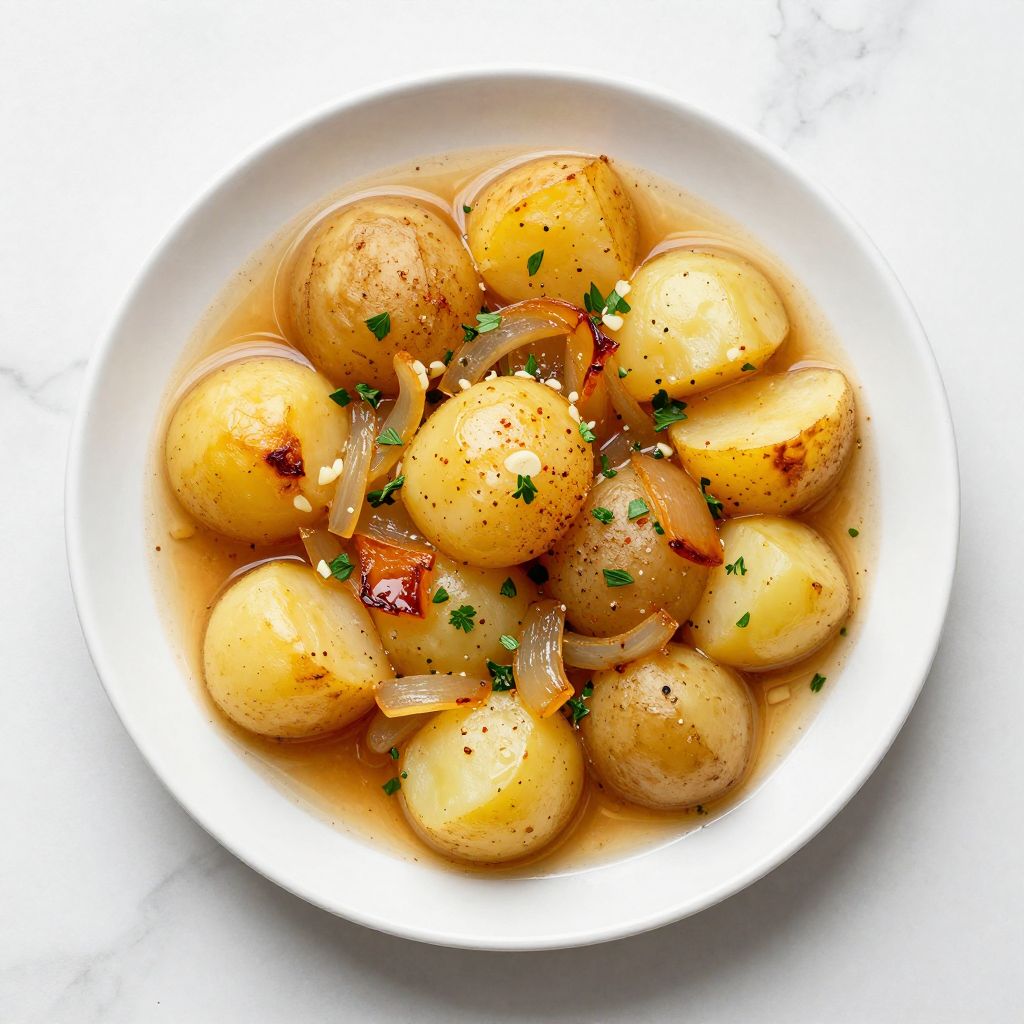
Stewed Potatoes
Ingredients
Equipment
Method
- Scrub your potatoes under cold water to remove any dirt, then cut them into 1-inch cubes, ensuring uniform size.
- Add olive oil to a large heavy-bottomed pot over medium heat and warm for about one minute until the oil shimmers.
- Add diced onion to the hot oil and cook for 5 to 7 minutes, stirring occasionally, until translucent and softened.
- Stir in minced garlic and cook for another 1 minute, stirring constantly to avoid burning.
- Pour the prepared potatoes into the pot and stir well to coat them with the oil and aromatics.
- Add broth to the pot until it mostly covers the potatoes with about an inch of liquid above them.
- Stir in thyme, paprika, and salt and black pepper to taste.
- Bring the mixture to a boil, then reduce heat to low. Partially cover the pot and simmer for 20 to 25 minutes until potatoes are tender when pierced with a fork.
- Remove the pot from heat and taste the broth and potatoes; adjust seasoning with more salt, pepper, or thyme as needed.
- Optionally, sprinkle fresh parsley on top before serving.